
Kansas Cowboy Hall of Fame Inductees
The Kansas Cowboy Hall of Fame honors and celebrates cowboys that have made significant contributions to western heritage lifestyle, past or present, and to the preservation of the cowboy culture in Kansas.
Directory of Inductees
2025 Inductees
-
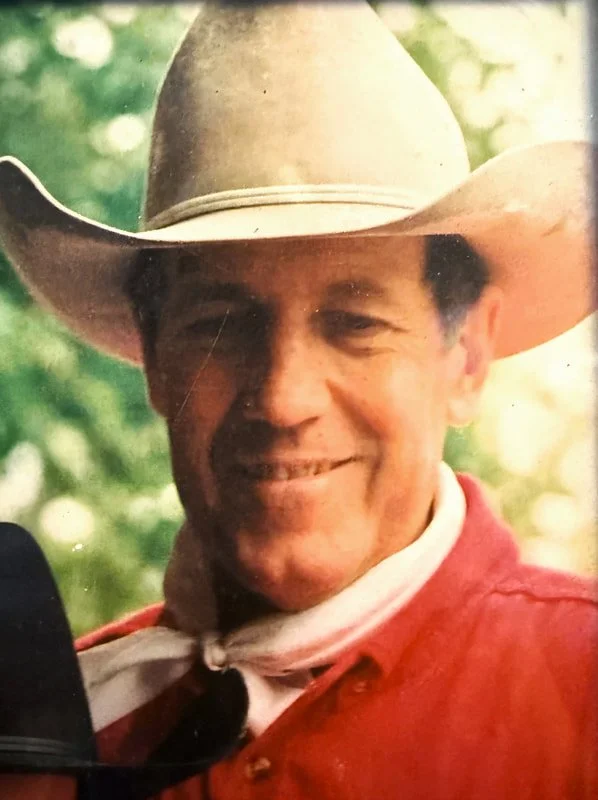
Frankie J. Buchman
COWBOY HISTORIAN
Frankie J. Buchman was born January 19, 1951 in Council Grove, Kansas to Clarence E. and Laura Mae Buchman. Frankie grew up working in Buchman's Grocery Store riding his stick horse, attired in cowboy hat and boots with toy six guns at his side, wishing for a real horse. In the 6th grade he got his first real horse and was active in saddle club and 4-H. He graduated from Council Grove High School in 1969. After high school he attended Kansas State University where he graduated with a degree in agriculture education in 1972. While at Kansas State he met Margaret Mary Gronau. They were married on August 21, 1971, in Newton, Kansas and have two children, Tyson and Jennie. After college they settled on their current ranch near Alta Vista, Kansas where they started a ranching operation. Frankie was hired in December 1972 to be the editor, photographer and advertising salesman for the Grass & Grain newspaper where he worked for over thirty-six years. He trained outside horses while growing a beef cow/calf herd and broodmare horse
operation. The family had 25 horse production sales, hosted over 23 livestock judging field days and initiated the State FFA Horse Judging Contest. Frankie was a member of and officer in the Eastern Kansas Horsman’s Association (EKHA), the North East Kansas Small Area Group (NEKSAG), the Kansas Western Horsman’s Association (KWHA), the Kansas State Horse Show Circuit (KSHSC), and the National Barrel Horse Association (NBHA). He composed a syndicated spiritual reflections column “A Cowboy’s Faith” published weekly. He also wrote thousands of published columns titled “For the Love of Horses” reflecting his love of horses, cowboys, the horse industry, and cowboy way of life. Frankie was a dedicated member of several Morris County organizations including the county 4-H Foundation, county fair board, and the youth rodeo association. Frankie J. Buchman passed away on December 13, 2024. -
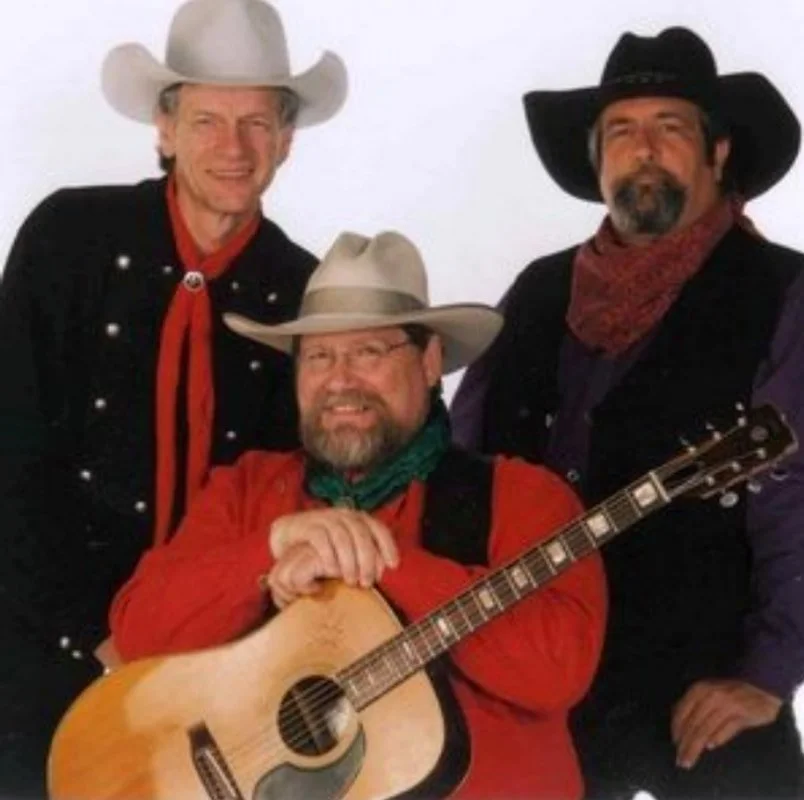
Diamond D Wranglers
COWBOY ENTERTAINERS/ARTISTS
Since 1999, the Diamond W Wranglers have shared and introduced cowboy music to audiences around the world. First known as the Prairie Rose Wranglers, the original members were Stu Stuart, Orin Friesen, Jim Farrell. They performed concerts and served a chuckwagon meal at the Prairie Rose Ranch near Benton, Kansas. In 2003, they were joined by Steve Crawford on drums and percussion. In 2003-2004 they performed two sold-out shows at New York’s Carnegie Hall. In 2006 at the request of the Ministry of Culture for the People’s Republic of China, the Prairie Rose Wranglers along with special guests Rex Allen Jr. and Johnny Western played concerts in Beijing and Shanghai. They also performed the first concert on the Great Wall of China. After the Prairie Rose closed in 2007, they moved to Old Cowtown Museum in Wichita, Kansas and were renamed the Diamond W Wranglers. Tenor singer Chip Worthington joined them in 2009, replacing Orin Friesen on bass. In 2010, the group performed in front of thousands of Europeans at the Americana Festival in Germany. The Diamond W ended their chuckwagon dinner show in 2014, continuing to perform concerts around the region. They returned to the Prairie Rose on a regular basis in 2017. Chip Worthington left the group in 2019, and Orin Friesen returned. In 2021 guitarist Jim Hill joined the group for one year, and drummer Steve Crawford left for a job in Texas. Original member Jim Farrell passed away in 2022. Jesse Friesen then joined original members Orin Friesen and Stu Stuart to make the group a trio again. In their 26 years the Wranglers have recorded 19 CDs and have performed with many great western performers
including Rex Allen Jr., Riders in the Sky, Roy Rogers Jr., Michael Martin Murphey, and Red
Steagall. Their original songs have contributed greatly to the legacy of cowboy music in Kansas. -
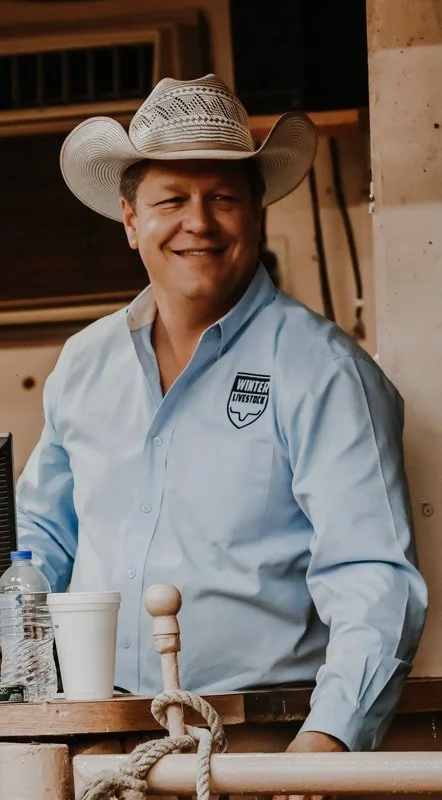
Winter Family
RANCHERS/CATTLEMEN
The Winter Family can trace its Kansas roots to 1887 when Henry Winter left his Iowa home in search of land. He brought his springboard wagon to rest by Pawnee Creek in Finney County, Kansas where he built a sod home on what was soon to be known as Winter Ranch. Henry filed his claim on January 18, 1888, and immediately sent for his wife Kate and three children to join him at their new home. On April 21, 1889, a fourth child, Karl Mark Winter was born to Henry and Kate. As a youngster Karl saw great herds of cattle trailed in from the south. Some were driven across the eastern corner of the Winter Ranch to water at the Pawnee Creek. It was a great source of entertainment for young Karl and his brothers to ride alongside the drovers and marvel at the herds. Karl farmed and ranched alongside his father until age 21, when he took over the ranch. In Karl’s capable hands the ranch increased in size many times over. The brown-eyed
neighbor girl who won young Karl Winter’s heart was Gladys Brown, whose parents had come from Cherokee County, Kansas. After marrying in 1914, Gladys and Karl ranched on his home place. They were the parents of three sons: Ralph, Ross and Ray. In 1936, Karl and his family moved to Dodge City because of Gladys’ failing health. That year, Karl purchased the livestock auction facilities in Dodge City from J.C. Renner and leased the adjoining Santa Fe stockyards used in the heyday of the cattle drives. Gladys’ illness brought about her death in 1936. In 1942 Karl married Grace Bayless. Together they made a home for his sons and their daughter, Phyllis. Winter Livestock Commission Company was the name of Karl’s new enterprise. In the years to come the business grew at a steady pace. Winter Livestock Inc. acquired the La Junta, Colorado sale facility in 1940 in effort to further serve the farmer, rancher and cattleman. Sixteen years later Karl and Ross Winter built Winter Feed Yard. In effort to further serve the cattleman, Ray Winter
expanded the family business to Enid, Oklahoma. In 1993, construction of a new sale pavilion was
completed in Enid, Oklahoma. Brian & Darci Winter and Mark & Katrena Winter turned their internet marketing services into a broadcasting company known as CattleUSA.com. Winter Livestock added the Riverton Livestock Auction in Riverton, Wyoming in 2005 and the Pratt Livestock Auction of Pratt, Kansas in 2009. In 2024, fourth generation Winter Family members, Mason Winter, Baron Winter, Grace Winter, and Jeff and Whitney Smith added Farmers and Ranchers Livestock in Salina, Kansas and in 2025 Reno County Stockyards in Hutchinson, Kansas. -
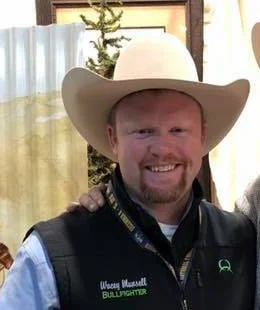
Wacey Munsel
RODEO COWBOY
Wacey Munsell was born October 15, 1986, in Liberal, Kansas to Doug Munsell, Jr. and Lorrie Munsell. Fighting bulls is in Wacey’s DNA. His grandfather, Doug, started the rodeo wildmen tradition and passed it along to his children, Doug Jr. and Danny, who passed it along to Wacey. In 2004, he was the youngest ever to be allowed on the TwoBulls Protection Tour and the World Championship Rodeo Bullfighting tour, finishing as the world champion, and earning the gold buckle just eight days after his 18th birthday. He repeated his title again in 2006. During the same season (2004) Wacey won the National Finals Rodeo's Bucking Stock Sale and he was approved for his PRCA card. In 2005 and 2006, he won the freestyle bullfighting National Championship when it was associated with the PBR World Finals. Wacey has also won the California Rodeo-Salinas freestyle championship in 2005 and 2006. "I was 13 the first time I ever got in front of a big bull," Munsell said. "I just really enjoy the rush and the feeling I get when I save a cowboy. It's what I'm best at in life, so it's why I do it." Wacey understands the intricacies it takes to be a quality bullfighter, whether it's in the freestyle pen or protecting fallen bull riders. Wacey has been voted six times as one of the top five bullfighters chosen to be considered for the Wrangler National Finals Rodeo in Las Vegas. He was nominated twice as a finalist for the PRCA Bullfighter of the Year award in 2019 and 2020. He has worked the PRCA Prairie Circuit Finals Rodeo 10 times. He has worked the National High School Finals Rodeo four times. He and bullfighting partner and fellow Kansan, Sam Gress, were the 2007 Daisy Protection Tour World Champions. They were judged on their abilities to protect bull riders at several events and their finals. He has worked many major rodeos in the PRCA including Denver, Colorado, Tucson, Arizona, Austin, Texas, Gladewater, Texas, North Platte, Nebraska, Greeley, Colorado, Dodge City, Kansas, Lawton, Oklahoma, Pueblo, Colorado, Elk City, Oklahoma, Oklahoma City, Oklahoma and Omaha, Nebraska. In December 2018, a dream came true as he was called to work nine performances of the Wrangler National Finals Rodeo in Las Vegas, Nevada. With over twenty years’ experience as a professional bullfighter, he is one of the top performers in the game. -
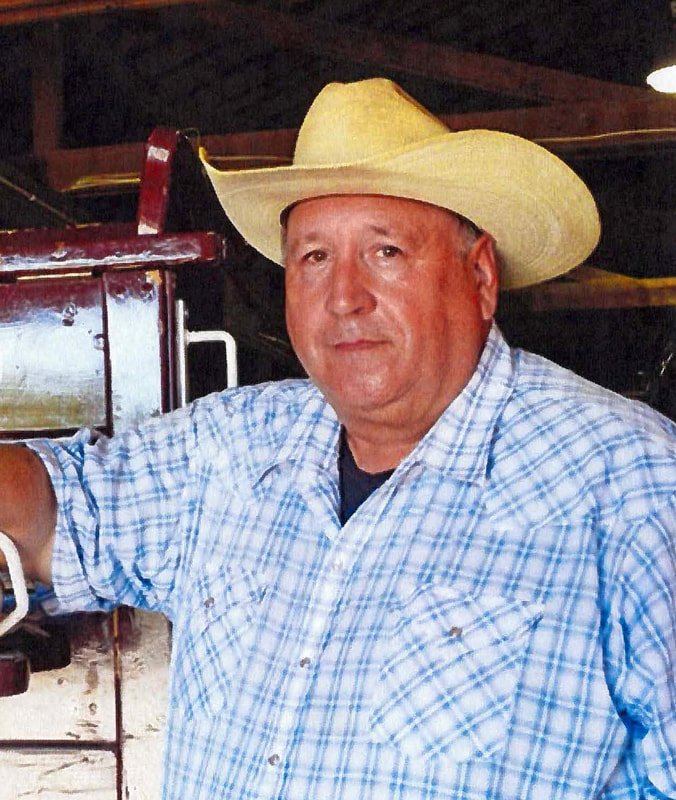
Ron Ruller
WORKING COWBOY
Ron Roller was born on November 18, 1956, in Germany to Richard and Erika Roller. As the child of a military family, Ron spent his early years moving from base to base. Among his favorite memories were visits to his grandparents’ farm in Indiana and the family’s two tours at Fort Riley in the heart of Kansas’ Flint Hills region. He loved life in the Flint Hills, working on farms, caring for horses, and spending weekends with his family at Old Abilene Town. When his father retired from the military and returned to Indiana, Ron chose to stay in Woodbine, Kansas, to complete his education at Hope High School. After graduation, he became the general manager of the Woodbine Farmers Union Co-op, a position he held for nearly fifteen years. On August 15, 1981, Ron married MarySue Davis in Manhattan, Kansas. Together, they have two daughters, Julie Roller Weeks and Lindsey Roller Pannbacker. After leaving the Co-op, Ron became the farm manager for the Kansas 4-H Foundation at Rock Springs Ranch, where he purchased and trained horses and led the summer wrangler program. He later served as Equestrian Trainer for the Commanding General’s Mounted Color Guard at Fort Riley for seventeen years. In that role, he provided leadership and continuity for the unit, guiding soldiers in horsemanship and representing Kansas at events such as the Professional Bull Riders (PBR) World Finals in Las Vegas and multiple inaugural parades in Washington, D.C. Ron also operated Triple “R” Carriage Service, offering horse-drawn carriage rides for weddings, holidays, and special events across Kansas. He continues to manage his wife’s Kansas Farm Bureau Century Farm in Pottawatomie County. In addition to his equestrian work, Ron has served his community as a Woodbine City Councilmember, Mayor, and Dickinson County Commissioner. His dedication to agriculture, rural development, and youth programs has left a lasting mark on the region. Known for his storytelling, humor, and easygoing cowboy spirit, Ron brings warmth and laughter wherever he goes, whether on horseback, behind the reins, or around the table swapping stories with friends. His life’s work reflects a deep commitment to preserving Kansas’ cowboy heritage and passing it on to future generations.
-
Nominate a Cowboy
Have a cowboy or cowgirl deserving of an induction into the Kansas Cowboy Hall of Fame?
Submit a nomination here.
2024 Inductees
-
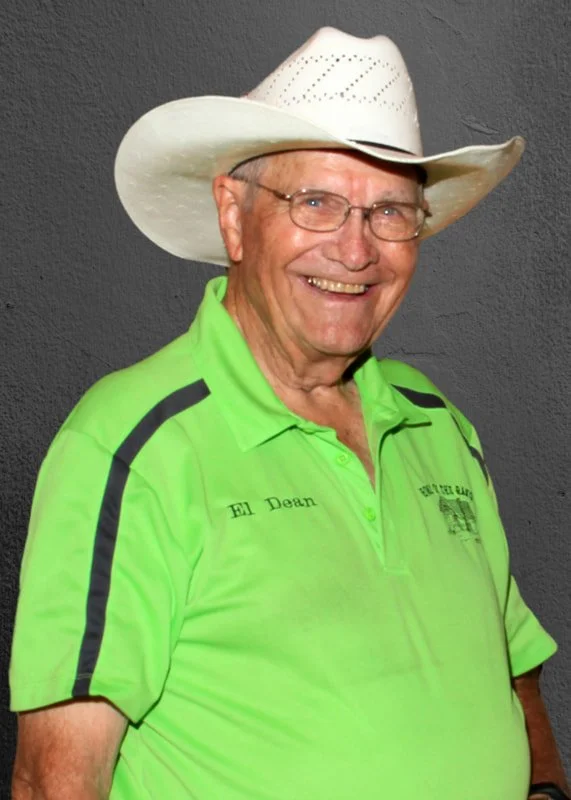
Eldean Holthus
COWBOY HISTORIAN
ElDean Holthus was born December 6, 1932, in Pleasant Township, Smith County, Kansas to Fred and Laura Holthus. His schooling began in a one room school near his home and in 1950 he graduated from Smith Center High School. ElDean graduated from Kansas State University in 1954 with a bachelor’s degree in Agronomy along with distinguished military honors. He met Kathryn (Kathy) Mary Brannagan at Kansas State, and they were married on August 16, 1953, at St. Luke’s Lutheran Church in Manhattan. ElDean and Kathy had 3 sons, Lyle, Michael, and Mitchell. They were married over 63 years with Kathy passing on October 9, 2016. ElDean served in the Army from1954 to 1959. After the Army him and Kathy moved to the family farm, and he became the third generation to work the home half section where he was active in farming until his retirement in 2004. Along with farming ElDean became a pre-licensing and continuing education instructor for A.D. Banker of Overland Park until he retired from the position in 2010. ElDean along with fellow Trustees of the Ellen Rust Living Trust, became actively involved in management and promotion of the Home on the Range Cabin near Athol, Kansas. The cabin was where Dr. Brewster M. Higley wrote the poem, “My Western Home” which became the popular song “Home on the Range.” ElDean spearheaded grant writing and fundraising efforts to restore the aging cabin and keep it standing for generations to come with historical reconstruction completed in 2014, along with footbridges and a nature trail. In 2018, he assisted with the transfer of the Home on the Range Cabin and site from the Ellen Rust Living Trust to the Peoples Heartland Foundation, a 501(c)3 nonprofit. At age 91, ElDean shares his knowledge and passion with school groups, civic organizations, and various others visiting the Cabin and remains an enthusiastic and dedicated ambassador for this special piece of Kansas history. -
Ernie Rodina
COWBOY ENTERTAINER/ARTIST
Ernie Rodina was born April 7, 1955, in Kansas City, Kansas to Elaine and Ernest Sr. Rodina. Ernie was raised and attended school in Kansas City, Kansas. In 1977, Ernie graduated from Ottawa University. He married Connie Rodina in 1995, and they had four sons: Brent, Luke, Matthew, and Nicholas. Ernie was a district and later regional sales manager for Purina Mills, Inc. where he pursued his passion for helping the equine industry including both the horse and the owner/rider. Through his Purina connections Ernie sponsored countless horsemanship clinics in Kansas and the first ever three-day Kansas 4-H Horse Camp in the early 1980’s at the Linn County Fairgrounds, Mound City. Ernie started the Better Horse Horses Network which sponsored the Eastern Kansas Pro Rodeo Series from 1984 to 2023 which promoted eastern Kansas PRCA Rodeos at Mound City, Fredonia, Coffeyville and Eureka. Ernie also served as a director of the Kansas Horse Council and was an ardent supporter of the Kansas Equi Fest horse expo. He passed away after a long illness on July 12, 2023. -
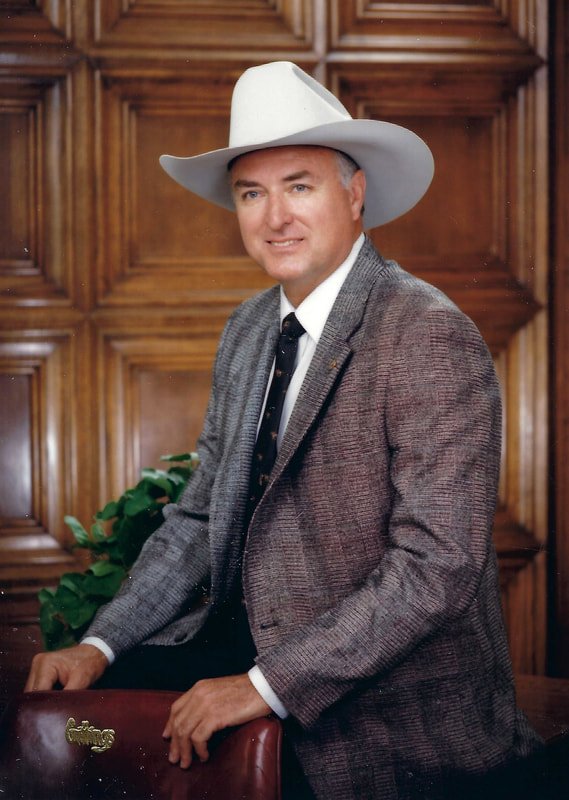
Brad Tate
RANCHER/CATTLEMAN
Brad Tate was born August 28, 1935, in Hamilton County, Kansas to Cecil and Maude Tate. Brad was born with ranching in his blood. He is the fourth generation of his family to reside in southwest Kansas and make a life from horses, cattle, and agriculture. Brad worked cattle and was associated with rodeo in high school and college. He graduated from Lakin High School in 1952. Brad went to Colorado State University pursuing a degree in animal husbandry. He met Ann Counter in college, and they got married in 1956. A year later Brad joined the Army and served two years at Fort Bliss later earning the status of lieutenant. He returned to Lakin where he ranched and farmed with his father. In 1960, Brad and Cecil started Tate Quarter Horse Ranch one mile north of Lakin. Two years later Brad became a member of the board of directors for the Kansas Quarter Horse Racing Association. He was recognized in 1998 as a 30-year cumulative breeder. In 2000, Brad was inducted into the American Quarter Horse Hall of Fame. In the early 2000s, the Tates moved their ranching operation to northeast Oklahoma. -
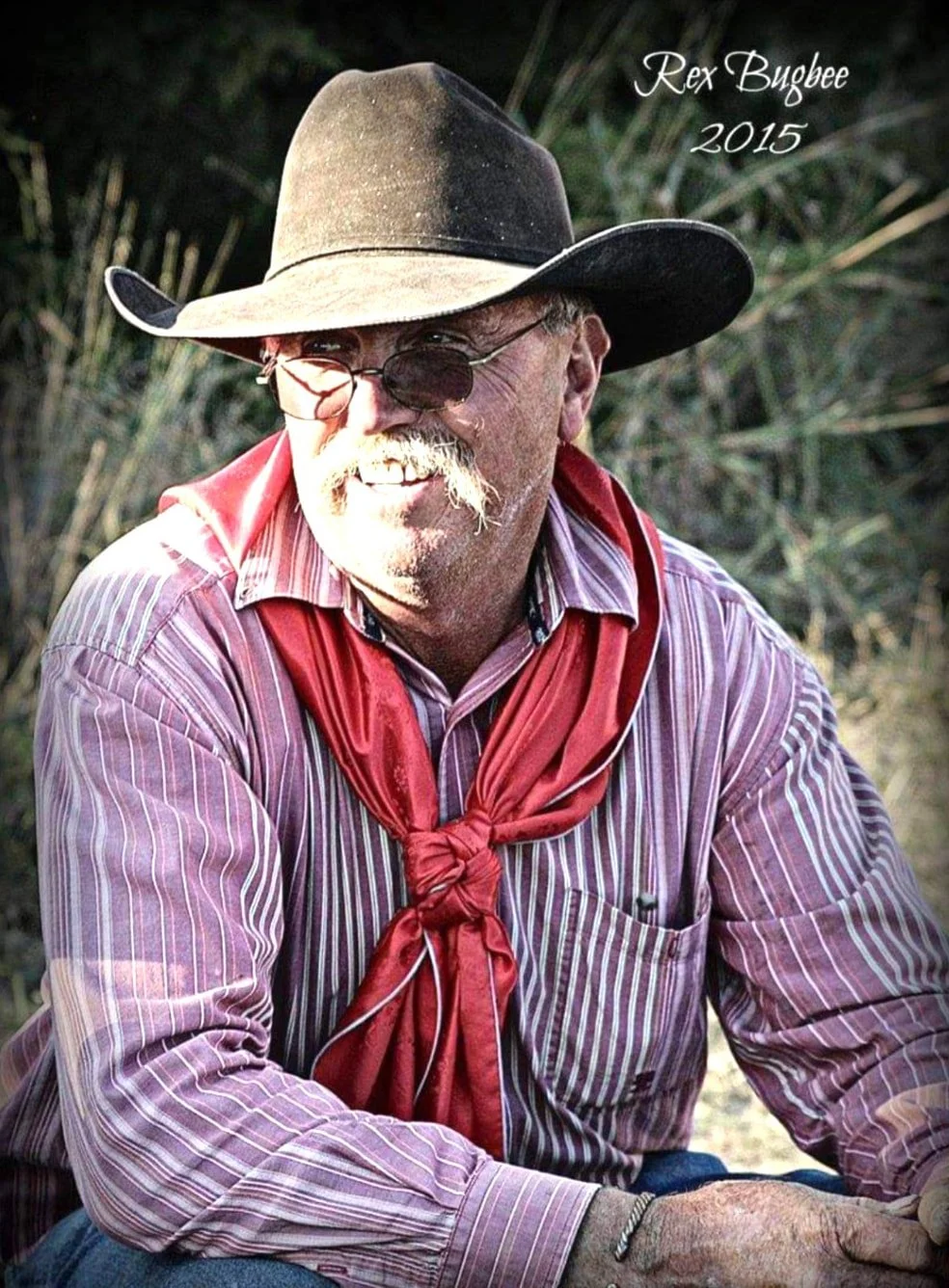
Rex Bugbee
RODEO COWBOY
Rex Bugbee was born November 8, 1954, in Emporia, Kansas to William and Marla Bugbee. Rex was raised in Emporia graduating from Emporia High School in 1973. He later attended Flint Hills Technical College. Rex married Teri Ann Neighbors on October 17, 1981, in Pawhuska, Oklahoma and they had two children, Jay and Josh. Rex worked at the Chain Ranch, Emporia Livestock Company, Frontier Rodeo Company, JC Rodeo Company, and the Wheelock Ranch. He was a member of the Medicine Lodge Peace Treaty Association, the Medicine Lodge Ranch Rodeo, the PRCA, and the WRCA. Rex was the Top hand at KCRR Multi pickup man of the year in the CPRA
2020 and PRCA Pickup man of the year 2020. Along with the rodeo he enjoyed several hobbies including coyote hunting, leather working, playing pitch, and snow skiing. He also enjoyed spending time with family and friends and was a member of Sardis Congregational Church in Emporia. Rex Bugbee passed away on August 25, 2020, from injuries sustained from a rodeo in Guymon, Oklahoma. -
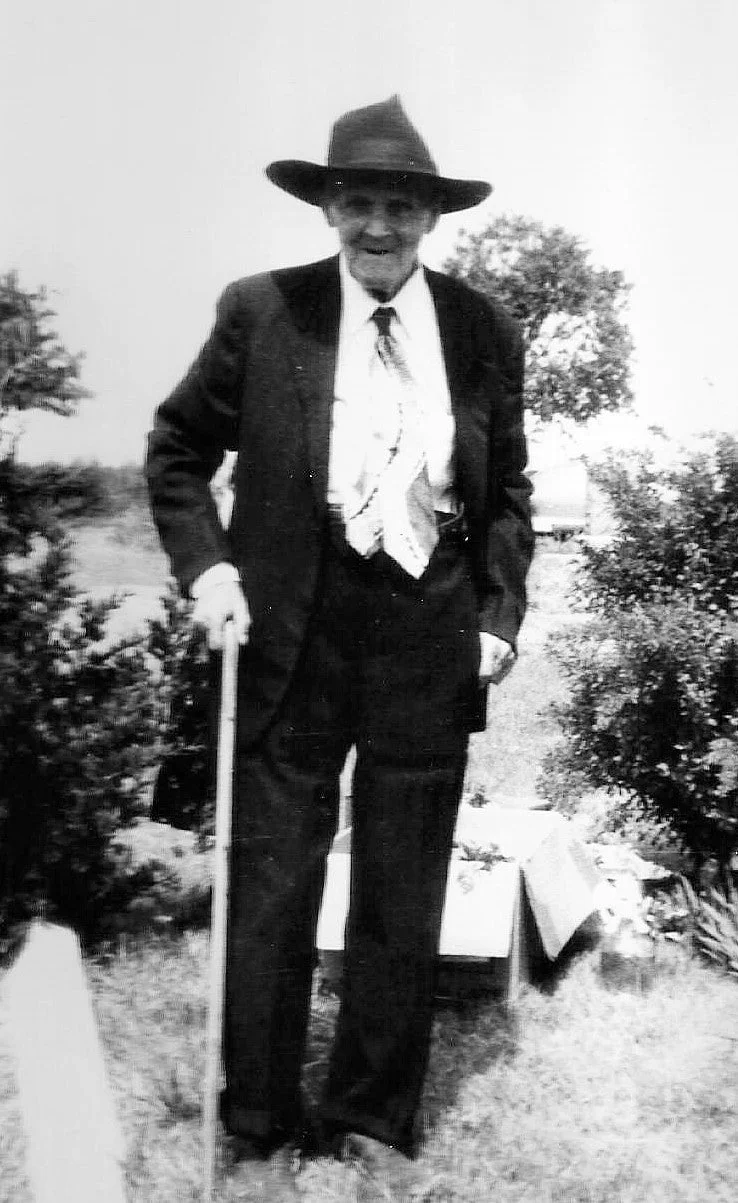
Charles Albert "Charley" Vest
WORKING COWBOY
Charles Albert “Charley” Vest was born March 29, 1862, in Edgar County Illinois to Andrew W. Vest and Elizabeth Vest. In the 1870s Charles and his family came to Kansas by wagon. Crossing the Wabash river his horse and him were dragged under a log and his hip was crushed. The family hollowed out a log so his mother could soak him during the trip. He also rode a horse most of the trip so the leg could stretch. Due to this injury, he limped the rest of his life. At the age of 15 Charles joined his brothers cowboying for cattle operations and the few establish ranchers in Decatur and Rawlins counties. He soon found work with Christopher Abbott who had a sizable and established ranch near Herdon, Kansas, in Rawlins County. As a working cowboy, he developed skills riding and roping livestock and working roundups where calves were branded, and large herds were sorted and kept on the move being fed until they were ready for market.
Charles found the frontier range an exciting place where buffalo and Cheyenne could still be found free on the plains. He continued to work for the Abbott’s until the cattle operation moved to Cherry County Nebraska in 1888. Charles returned to Phillips County and married Rebecca Ann Loyd in 1888. They had six children: Elizabeth, Elmer, Floyd, Fred, Grace, and Phebe. In 1898, he moved his family and established a homestead a few miles south of Speed, Kansas where he farmed, helped establish and build roads through the county, and helped build pond damns for farmers’ livestock. Rebecca passed away in Phillipsburg on October 14, 1939. Charles Albert Vest died February 27, 1960, in Phillipsburg, Kansas.
2023 Inductees
-
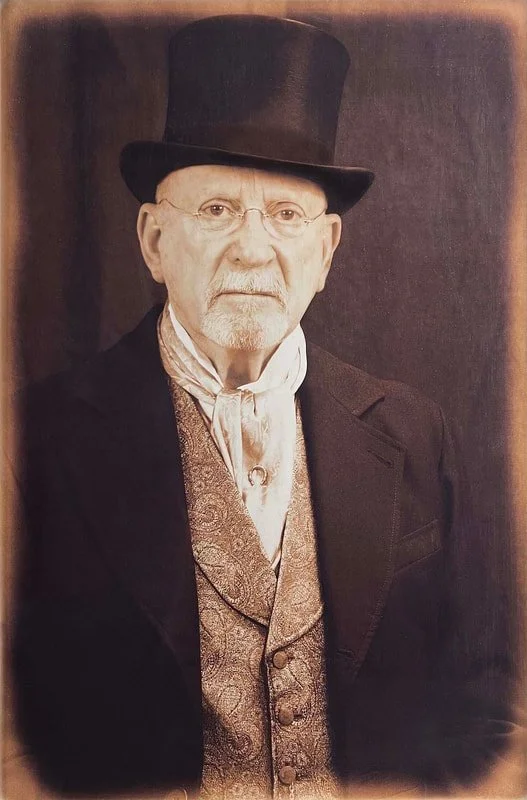
Rodney Cook
COWBOY HISTORIAN
Rodney Cook was born June 24, 1939 in Caldwell, Kansas to Perry Jay and Opal May Cook. From an early age he became interested in and intrigued by the rich old west history of Caldwell. In 1957, Rodney graduated from Caldwell High School. After high school he joined the United States Air Force in 1959 and was stationed in France. In France, he worked as a military police dog handler. He returned to the states and married Elaine Turner and had two children, David Russell Cook and Gretta Nike Wise. Rodney worked in many jobs and trades. After his retirement he moved to Caldwell spending time with friends and continued his interest in Caldwell history. He co-authored along with Len Gratteri and James Williams William Sherod Robinson, Alias Ben Wheeler. He also authored George and Maggie and the Red Light Saloon: Depravation, Debauchery, Violence, and Sundry Cussedness in a Kansas Cowtown. He wrote several articles on Caldwell old west history and the Chisholm Trail that were published in True West magazine and in newspapers. Rodney was instrumental in preserving several of Caldwell’s historic
landmarks including saving the Opera House from demolition, locating the “Old Caldwell Cemetery,” founding the “Border Queen Museum,” and the relocation of the Chisholm Trail historical marker. He also participated by portraying Dr. Noble in the “Talking Tombstones” events held in the Caldwell Cemetery. Most of his research and published works were presented to the Caldwell Public Library and the Caldwell Historical Society for use and enjoyment by historians and Old West enthusiasts. He was also instrumental in researching and mapping of most of Caldwell’s early-day business establishments. Due to his earnest and in-depth research, Caldwell’s history is preserved for use by future generations. Rodney Cook passed away February 7, 2017, at the age of 77. -
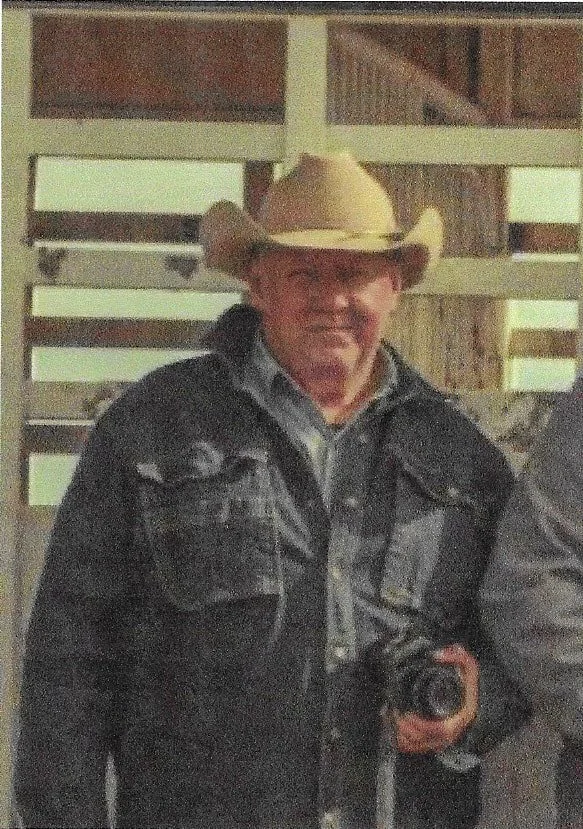
Ernie Rodina
COWBOY ARTIST
“The wide-open spaces and the horses, cowboys, Native Americans, and prairie
creatures that inhabit this empty landscape have been a lifelong passion.”
Phil Epp was born August 28, 1946 in York, Nebraska to Isaac and Rose Epp. He was raised in rural Nebraska on a crop and cattle farm. The celebration of the open sky and landscape with a hint of human occupation are reflected in his paintings. He also strives to include into the landscape timeless universal icons. His recent works place an emphasis on content and subject over technique and medium. This was done to better communicate with the viewer. Phil has received several awards and accolades by several associations and individuals. They include the Kansas Governors Artist award in 1985, 8 wonders of Kansas Art in 2009, Water Tower of the Year in 2010, Best of Show award at the Panhandle Plains Invitational in 2010, and the best 2-D work at the Buffalo Bill Art Show and Sale in Cody, Wyoming in 2023. His paintings have been shown at galleries in Chicago, Kansas City, New Mexico, and New York. His work has also been displayed in American Embassies in Africa, Fiji, and Latvia. In 2009, Phil was selected as a U.S. cultural ambassador to Kazakhstan as part of the U.S. Department of State's Art in Embassies program. In 2013, he completed three large paintings for the Kansas City Chiefs that are hanging in Arrowhead Stadium. His induction into the Cowboy Artists of America in 2016 was a monumental but humbling honor and challenge. Some of his significant paintings are part of the permanent collections of the Booth Museum in Atlanta, Georgia and The Briscoe Museum in San Antonio, Texas Epp’s studio is based in Kansas, and he continues to travel, photograph and paint wide-open western vistas. -
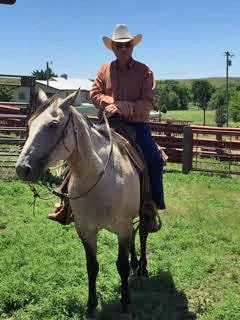
Charles Russel "Chuck" McKinney
RANCHER/CATTLEMAN
Charles Russell “Chuck” McKinney was born January 5, 1941 in Ashland, Kansas to George Wesley and Esther May McKinney. They lived on the Grove Ranch. In 1952, they moved to the ranch homesteaded by Chuck’s grandfather, Charles Wesley McKinney. He graduated from Englewood High School in 1959. He graduated from Fort Hays State University in 1963 with a Bachelor of Science Degree in Agriculture. In September 1962, Chuck married Gloria Ann Thompson. After graduating from college, Chuck and Gloria returned to Englewood where Chuck was involved in ranching. In 1968, he built and operated a feed yard in the Oklahoma Panhandle where he became an innovator in cattle feeding. Chuck and Gloria returned to the Grove Ranch in 1975, and he continued his love of ranching. He was very involved in his community. Chuck
was one of the founders and an active fireman on the Englewood Rural Fire Department, a board member of the Ashland-Englewood School Board, a Clark County Commissioner, the president of the Kansas Legislative Policy Group, and a member of the First Baptist Church of Meade, Kansas. Along with ranching Chuck enjoyed fishing, hunting, spending time with family and grandchildren, and piloting his Cessna 210. Charles Russell “Chuck” McKinney passed away on March 30, 2021, at the age of 80. -
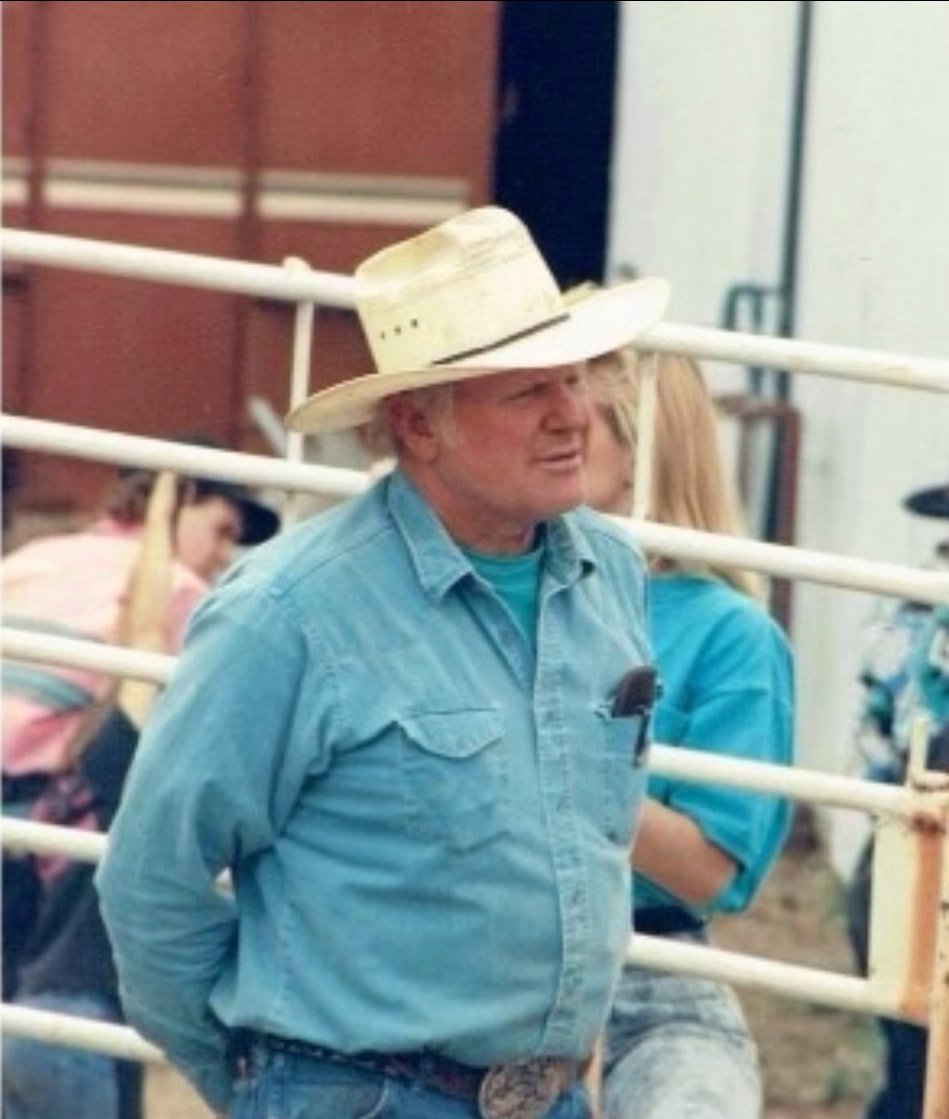
George Steinberger
RODEO COWBOY
“By learning procedures, methods, perfecting practice, and focusing on the present, success can be found in the rodeo arena.”
George Steinberger was born August 27, 1937, in Steele City, Nebraska to Thomas and Christine
Steinberger. At the age of four he moved to the family farm near Louisville, Kansas. After graduating from Wamego High School, he continued his education at Wamego Vocational Technical School. It was in high school that George participated in one of the first Kansas State High School Rodeo Finals in 1954. He continued to ride bulls and clown for the Rodeo Association for several years. In 1965, George settled in DeSoto, Kansas. In September 1973 he married Jane Ann Davenport Leahy in Olathe, Kansas. She preceded him in death on July 16, 1998. George later married Marge Bergen on October 5, 2002. He was an employee of Holiday Sand and Gravel until his retirement in 1999. George was a member of the St. Therese Catholic Church in Richmond, Kansas. He organized the first Parents Without Partners (PWP) group of Lawrence in 1967. In 1974, George started the American Youth Rodeo Association (AYRA) and
the Christian Youth Rodeo Association (CYRA) in 2003. During his youth and continuing until his death George was involved in 4-H while helping area children of Anderson and Franklin County. He enjoyed being a cowboy along with teaching and mentoring many young cowboys and cowgirls at his Homestead Rodeo Schools in both Olathe and Richmond. Due to his teaching and mentoring several of his students went on to become professionals in the rodeo arena with some making it all the way to national finals. He was always proud of his students; he always told them it was not the buckles they won but it was the men and women they had become that made him proud. George passed away February 18, 2017, at the age of 79. His life of being a rodeo cowboy could best be summed up in his rodeo school’s mission statement: “We are committed to teaching skills to be used in the rodeo arena and teaching skills to be used in the arena of life. By learning procedures, methods, perfecting practice, and focusing on the present, success can be found in the rodeo arena. By relying on faith, trust, love, the power or prayer, and focusing on his presence, success can be found in the arena of life. Together students, parents, and instructors can share in victories.” -
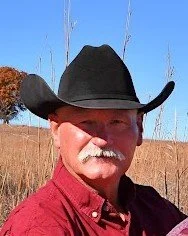
Orban Leon Stephens
WORKING COWBOY
Orban Leon Stephens was born July 7, 1953, in Neodesha, Kansas to Paul Leon Stephens and Irene Uhls Stephens. Due to his father being a ranch hand the family moved from ranch to ranch which resulted in Orban attending 10 different schools. He graduated from Rosalia High School in 1971. After graduation he attended Butler County Community College in El Dorado, Kansas and Ranch Management school in Coffeyville, Kansas. He married Sharon Ann Roths on April 23, 1977. In January of 1979, he began working for the Spring Creek division of the Matador Cattle Company Ranch in Reese, Kans. In 1989, Orban went to Matador, Texas to work on the main ranch. While doctoring some cattle in the pasture there, his horse slipped on some loose hay, fell, and consequently broke his neck. However, in true cowboy form, Orban gathered his horse and rode back to the ranch, blind without his glasses, trusting his horse to take him there. After he recovered from his injury he went to the Diamond R Ranch outside of Fall River, Kansas
where he worked from 1989-1998. In 1998, Orban became a cowboy for several ranchers in the Southeast Kansas area. Over the past 25 years, he has helped countless cattlemen and women with their operations and built hundreds of miles of barbed wire fence and pipe pens. He passes down his knowledge, and horses, and has impacted several generations who look up to him and go to him for guidance. During his lifetime, he also has seen and participated in the birth of the Ranch Rodeo, attending his first one in 1988 in Uniontown, Kans. Orban traveled with many cowboys over the years and joined the Working Ranch Cowboys Association in 2005. He participated in the WRCA Championship Rodeo in 2008 and in 2010 with Beachner Brothers Livestock and Broken H Ranch, claiming the Reserve World Champion title in 2010. Today you can still find him and his wife near Fall River, still helping ranchers in Southeast Kansas, riding
good horses, following his grandkids to all their activities, and working at the Eureka Sale Barn on
Thursday’s.
2022 Inductees
-
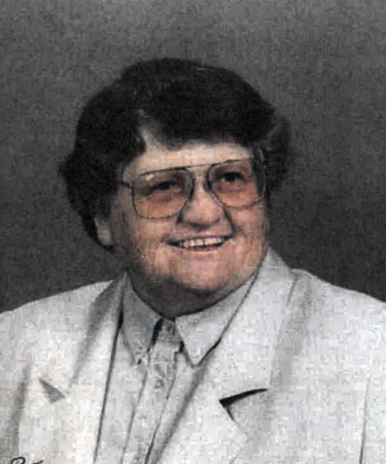
Rosie Clymer
RANCHER/CATTLEWOMAN
“Practice, practice, practice, can make you better…”
Rosie Rezac was born in Emmett, Kansas to Matthew and Bernice Wilson Rezac on February 17, 1935. She was raised on a farm near Onaga. From an early age she did almost any farm chore including milking cows, slopping the hogs, helping pull calves and driving tractors. She developed a fondness for horses and riding skills early in life. By the time she was a teenager, her work riding was in demand by her neighbors. She helped with cattle roundups, assisted in day work, and excelled at roping stray calves and yearlings. As a member of the Pottawatomie County 4-H club, she competed in horseshows – the faster the event, the better. She began competing in other shows in neighboring counties going all the way to the State Fair. Her talent for training and breaking colts became known throughout the neighborhood and beyond. After graduation from Onaga High School in 1952, she worked her way through college at Kansas State University earning a BS in Education in 1958. Though she had no children of her own, children were important in her life, and she was important in the lives of children. Rosie’s first teaching job was in a one-room school in Wabaunsee County. She also taught school Geary County Country School, Junction City Junior High and Council Grove Elementary School. She taught more than 41 years before retiring to ranching full-time. All through her teaching career she was active in ranching and horsemanship. Rosie was instrumental in forming the Eastern Kansas Horseman’s Association and was a charter member. She became best friends with Faye Peck Heath who shared her interest in riding and showing horses. If one was at a horse event, the other was usually there as well. Though they often competed against each other and wanted to win, contests were undertaken in good spirit. Rosie took up farriering, shoeing horses for prominent working ranchers in eastern Kansas. Rosie held memberships numerous saddle and horse organizations. She was a lifetime member of the Morris County 4-H Foundation. For five years Rosie was a High Point EKHA Yearend Rider in the 18 and older division. In May 1966, she received a Master’s in Education from Kansas State Teacher’s College. That same month, on May 5, she married successful farmer and rancher, Earl Clymer, in Kelso, Kansas. The marriage ended with the death of Earl on August 29, 1974. During their time together were a powerful team. She repaired machinery, followed strict stocking rates for native and tame grass pastures, and bred and showed Arabian horses. Toward the end of her life, she was a lay minister, dressing to play the role of 19th century circuit rider. She was president of the Santa Fe Trail Parish Council. On November 4, 2000, Rosie Clymer died at her ranch in rural Morris County.
Kansas Cowboy Hall of Fame connection: Rosie was best friends with, and competed against, KCHF 2020 Rodeo Cowgirl, Faye Peck Heath.
Rosie was instrumental in forming the Eastern Kansas Horseman’s Association and was a charter member. Though she had no children of her own, children were important in her life, and she was important in the lives of children. -
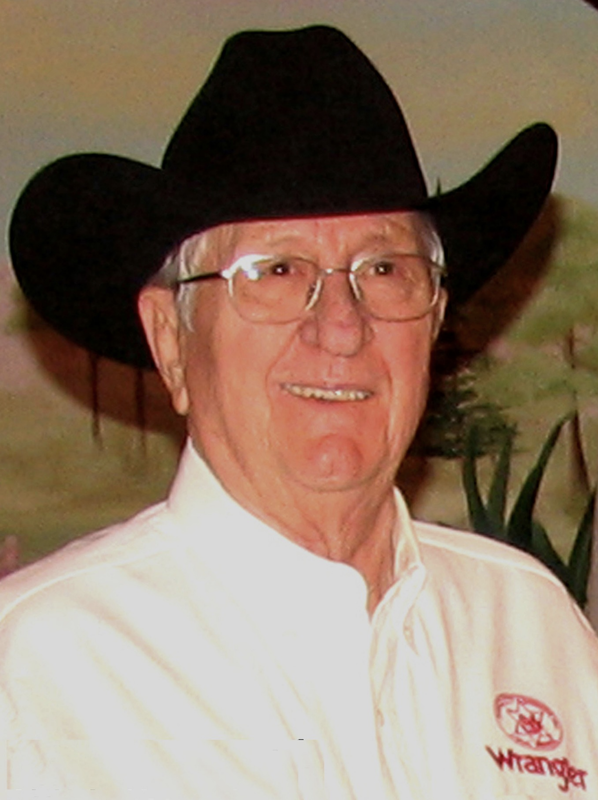
George Henrichs
COWBOY HISTORIAN
“Let George do it.”
What people said when they wanted something done.
Though he was raised in Kansas, George R. Henrichs was born to George R. and Sylvia H. Henrichs in Miller, South Dakota on February 3, 1929. He grew up in Phillipsburg, Kansas graduating from Phillipsburg High School. On August 21, 1949, he married Norva Jeanne Wolfe in Phillipsburg, Kansas. They had three sons, Kent (Marcia), Dr. Kelly (Ronnetta) and Dr. Kirk (Jill). In 1953, he graduated from Kansas State University. As an Army ROTC student, he did his active-duty time from 1954 to 1956. After the Army he was assistant manager of Montgomery Wards in Newton, Kansas. Later he was transferred to the store in Dodge City. It was there his career as a cowboy historian took off. George served as executive director of Boot Hill Museum from 1959 to 1977. During his tenure, he guided the Museum’s growth from a single building to the entire Front Street replica and the addition of other auxiliary buildings. George remained on the Museum’s board of directors from 1979 to 2008, which he presided over part of that time. While he was at the Museum, he was instrumental in the development of its Santa Fe Trail rut site west of Dodge City. He was a lifetime member of the Dodge City Area Chamber of Commerce and served as chairman 1967, 1976 and 1987. George has also chaired the Dodge City Convention and Visitors Bureau. He was chairman of the Dodge City Centennial in 1972. George was a founding member of Dodge City Days Roundup Rodeo, has been parade marshal for the Dodge City Days parade, and has chaired Dodge City Days. On two occasions he was chairman of the Dodge City United Way. George and Norva Jeanne purchased the Silver Spur Lodge, Restaurant and Conference Center in 1977 which they owned until 1998. He became active in the travel and tourism business. George served as president of the Kansas Restaurant and Hospitality and the Kansas Lodging Associations. He was a founder of the Travel Industry Association of Kansas (TIAK). U.S. Senator Pat Roberts appointed Henrichs to the White House Conference on Travel and Tourism. He served the Midwest region of Best Western International as governor. He was a member of the Kansas State Highway Commission from 1974 to 1985 and he has been president of both the National Highway 50 and Highway 56 Associations. George was a member of Dodge City Kiwanis Club rising the office of president. During his time at the Silver Spur, he was an adjunct instructor at Dodge City Community College teaching Kansas History for over 10 years. As an historian he gave many presentations about Dodge City and the “old west.” He also wrote “The Dodge City Story” and penned many articles about western history. Because of George’s love of Boot Hill Museum, he had a vision to bring gaming to Dodge City in the form of slot machines at Boot Hill to produce revenues to help the museum grow. From this desire, he became actively involved in the movement to get gaming on a state level and into Dodge City. Through his involvement with Clark Stewart and Boot hill Gaming, he and others came up with the idea that once gaming had the approval of the state, a fund would be set up with a portion of the gaming profit going directly to Boot Hill Museum and other entities in southwest Kansas to promote tourism. This vision was fulfilled when the Mariah Fund was formed. George was very active in the First United Methodist Church of Dodge City serving on several boards and singing in its choir. He also was a big band style singer and sang at charity events. On May 4, 2008, George R. Henrichs joined Norva Jeanne, who died December 6, 2007, in Dodge City leaving behind his three sons, grandchildren Shannon, Holly Deutsch & husband Ryan, Kevin, Kyle and Kody, and three great granddaughters McKenna, Kaia and Mila Deutsch. -
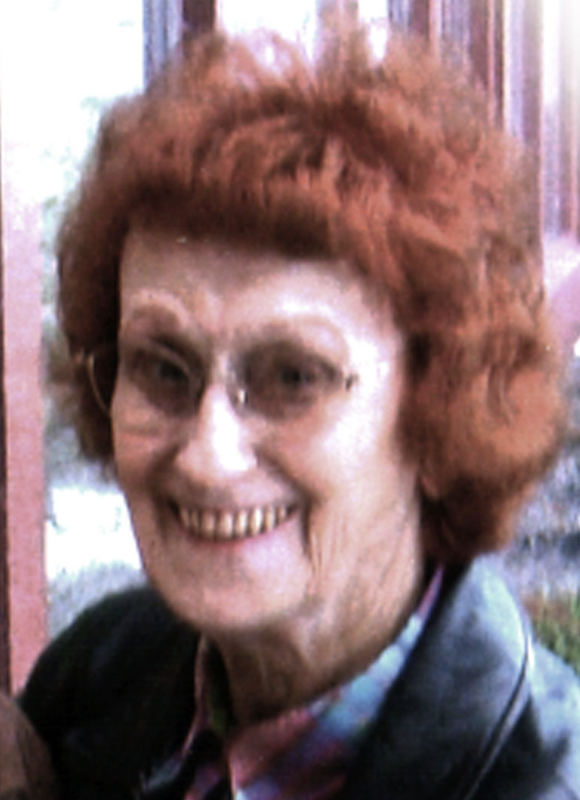
Arlene Lemar
RODEO COWGIRL
“In the movie we did a square on our white horses…Roy [Rogers] called the dance – a thrill of a lifetime!”
Arlene Delores Petrowsky was born, the youngest of 11 children, to William and Margaret (Rodenbeck) Petrowsky near Kingsdown, Kansas on August 18, 1928. She began riding at five years old and dropped out of school during the eighth grade to help on the farm and with chores. If it had four legs, she and her sister, Cretia, was on it. From a young age she attended every rodeo she could and was determined to teach herself trick riding with her horse and a trick saddle she purchased. By her teens, she had mastered the skill and contacted Mr. and Mrs. Joe Stoddard of Nampa, Idaho who she saw in an ad asking for girl riders in “Western Horseman” magazine. She left home for the Stoddard’s small ranch where, a month later, she was joined by Donna Rosium who rode for the White Horse Ranch, Naper, Nebraska. Ernie Kirkpatrick also of White Horse taught them roman riding which involves a rider standing on two or more horses with each foot on a different horse. They trained about three months before going on the road. Their first show was a fair at Jordon Valley, Oregon. They went on the Winnemucca, Nevada where she fell off her horse onto the track after the horse was spooked. That didn’t slow her down. She walked it off and continued riding. In these shows the women rode up to five horses at once; and the horses were not tethered together. At a show in Napa, California she met actor Bill Elliot, who played Will Bill Hickok. She boldly asked if she could ride his horse “Stormy Night” and he let her! With the Stoddard’s, she, Donna and rest of the troupe participated in shows throughout California, before Frank and Lois Hall bought the outfit and renamed it the “Valkyries and Their Flying White Horses.” Arlene and Donna lived in Hall’s house in Palm Springs for two months. The Valkyries then relocated to the Broken Arrow Ranch in North Hollywood for six months. Here they got plenty of television exposure and met Roy Rogers through their trainer Merle Christenson, Rogers’s double. Rogers put them in the motion picture “The Heart of the Rockies,” which was released in 1951. Rogers “called” the square dance as Arlene and Donna did it on their white horses. In 1950, the Valkyries appeared before 102,000 people in the Los Angeles Coliseum doing their square dance, which Roy Rogers again called, and they appeared in the rodeo grand entry. On March 25, 1951, Arlene married Wilbur “Leon” Dixon. Together they had a son, William Floyd. In the early 1960s, she and Leon managed the Cowtown Stables in Wichita. Arlene continued to do trick riding and barrel racing at rodeos for the next few years. After their divorce she and her son moved to Edwardsville, Kansas where she kept three or four horses. In the early 1980s, Arlene changed her last name to LaMar, a name inspired by a TV ad. She spent her later years working for the Love Box Co., Kansas City, Missouri until three years before her passing on Christmas day, 2017 in Kansas City. -
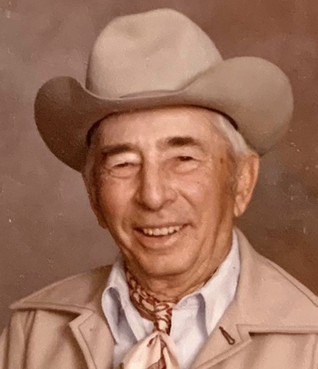
Van E. Haines
WORKING COWBOY
“If anyone could horseback a herd of chickens down the road and keep them between fences, Van Haines could!”
Van E. Haines was born to Herbert A. and Anna Pearl (Hanger) Haines on April 28, 1907, in Pontiac, Kansas. He was raised on a nearby homestead where he learned how to work with horses and cattle while meeting their daily needs. By the time he reached adulthood he knew all the cowboy skills and occasionally participated in small area rodeos as a saddle bronc rider. By the time he married Dottie Helen (Daniel) in 1934 in Rosalia, Kansas, Van had worked for large ranches in the remote regions of the Flint Hills of eastern Butler and western Greenwood Counties. Here, he and Dottie often lived in homes without electricity and running water so he could watch cattle on horseback. Van earned the respect of area ranch managers for his ability to quietly handle all responsibilities of a working cowboy. When sons Gerald and Richard were old enough, they rode with him riding fence, checking cattle, fixing water gaps, gathering and holding herds, and heeling cattle for special work. Two of the highlights of a year were receiving cattle from railroad pens to trail them out to pasture and trailing them back to shipping pens for market. Van married his second wife, Dorothy Marie (Harsh-Hoyt) in 1969 in Oklahoma. Van worked with several ranchers during his life, including Gwynn Leggett, Merle Teter, C.R. Nuttle, Bob Zebold, Jahren, Wiedeman and Satchel Creek Ranches – all in eastern Butler County. His last assignment was as manager of the Gano Ranch near Ordway, Colorado, owned by Nelson Hobart, who also owned the Satchel Creek Ranch. Van had a knack for crafting much of his own equipment used for cowboying. Van E. Haines died in El Dorado, Kansas on July 8, 1993, with Dorothy preceding him. Van left behind his two sons, several grandchildren and 21 great-grandchildren. -
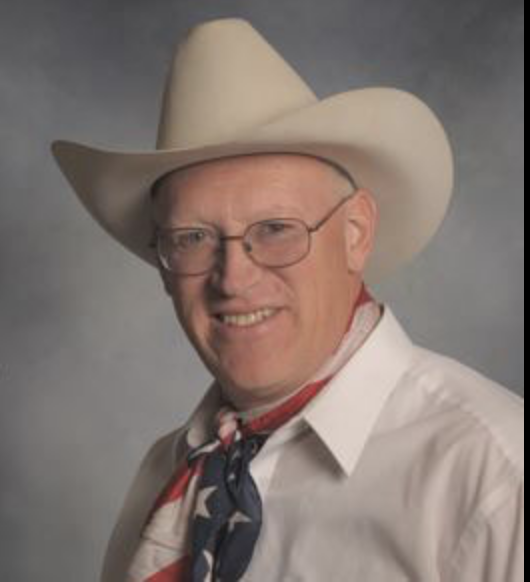
Ron Wilson
COWBOY ENTERTAINER/ARTIST
“Cowboy poetry is a way of looking at those misadventures of life with tongue in cheek and finding humor in it.”
Poet “Lariat” Ron Wilson was born in Manhattan, Kansas on October 18, 1955, to W. John and Glenna Wilson. He grew up on the nearby Lazy T Ranch, where he and his family still work and live today as a past Farm Bureau Family of the Year. The Wilson family grew wheat, corn, milo and hay; and raised cattle, horses, hogs and children there. As a young man, Ron was active in 4-H and Future Farmers of America. He was president of the local 4-H and a member of the state winning 4-H livestock judging team. He served as Manhattan Chapter and Kansas presidents of the FFA, and was national vice president from the central FFA region. Ron earned a BS from Kansas State University in Agricultural Education with a specialty in animal science, as well as a Master’s in Mass Communications from KSU. He was a legislative assistant to U.S. Senator Nancy Kassebaum, and worked for the U.S. Senate Agricultural Committee and the National Council of Farmer Cooperatives. While in Washington, DC, he met Christina Mosher from Illinois who was an aide to Secretary of Agriculture, John Block. They married on August 20, 1983, in Washington. Together they have four children, Joanna, Stephen, James and Elizabeth who have all been active in 4-H and FFA. Ron has served as vice president of Public Affairs for the Farm Credit Bank of Wichita. Since 1990, Ron has been director of the Huck Boyd National Institute for Rural Development at KSU. Ron began writing poetry as a hobby and his performances are consistently rated 5 out of 5 for excellence. Kansas governor Bill Graves has proclaimed him “Poet Lariat”- not “Laureate.” Ron was named an official spokesperson for the National Day of the Cowboy organization. He has been an ambassador for the National Multicultural Western Heritage Museum. He is a founding member of the Bibles and Boots Chapter of Cowboys for Christ. Ron chairs the annual Cowboy Poetry contest. Among his many honors was being featured on the cover of “Country Living” magazine, being a Horizon Award winner from the Heartland Chapter of the Academy of Western Artists, winning first place in a cowboy poetry contest at the Kansas Cowboy Symposium in Dodge City, and being named one of 50 Kansans You Should Know by “Ingrams” magazine. Ron has performed at the American Royal, the National Cowboy Poetry Gathering, National Cowboy Poetry Rodeo, Symphony in the Flint Hills story circle, the 50th anniversary of the TV show “Gunsmoke,” the groundbreaking of the new Boot Hill Museum building and at John Wayne’s birthplace. He was the only cowboy poet to present a cowboy poem at a Kansas governor’s inauguration. His weekly show “Kansas Profile – Now, That’s Rural” is heard on radio stations throughout Kansas and is distributed to newspapers in the region. He appears in many other media outlets on a regular basis. Ron is a member of the Kansas Chapter of the International Western Music Association, International Chisholm Trail Association, American Quarter Horse Association, Kansas Farm Bureau, Manhattan Rotary Club, Kansas Livestock Association, Kansas Horse Council, Kansas Barn Alliance, National Cattlemen’s Beef Association and the Kaw Valley Rodeo Association.
2021 Inductees
-
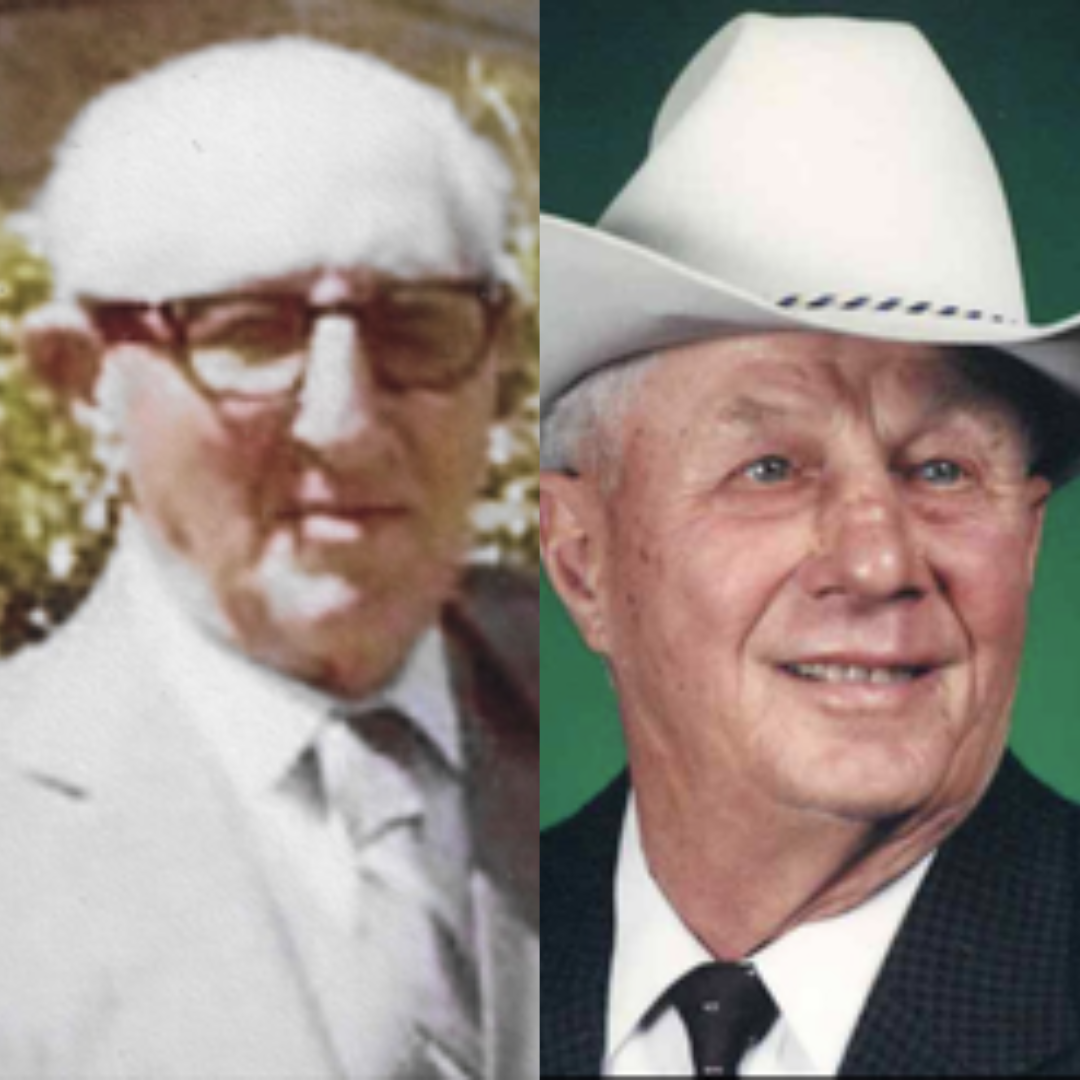
Lawrence and Gilbert Krier
RANCHER/CATTLEWOMAN
On February 24, 1900, Mathias and Elizabeth Krier had Lawrence A. Krier at Atchison, Kansas. On May 11, 1921, he married Josephine Fladung in Olpe, Kansas. During World War II he moved his family to Clark County where they partnered with Arnold Berends to form Krier Ranch. They brought bull calves up from Arizona and New Mexico and fattened them for market. While working for Berends, he cooperated with neighboring ranchers especially while working calves and rounding up for shipping. In those days railroads had stock pens in every western town they serviced. Cattle were driven from ranches to the pens and shipped by rail to Kansas City. The owners got to ride in the caboose for free. Sometimes Krier Ranch received cattle via rail and drove them to the Ranch. If the cattle came into Minneola, they had to drive them through town with dogs chasing after them. Once at the ranch the cattle rested up and were dehorned, castrated and branded. They often had to be doctored for screw worms. In 1948, Lawrence leased the Barth Gabbert Ranch and changed from a yearling to mother cows. At that time, they still fed with horses. Life was not free from its trials. In the early 1950s, tiny Sand Creek, which came through the ranch, flooded and grew half a mile wide. On a lighter note, once a weather balloon hit one of the feeding cows. She became tangled up in it and no matter where or how fast she ran, the balloon followed her. She spooked the rest of the herd which trampled all the feed cakes that had just been put out. In the 1980s, Lawrence began crossbreeding successful Hereford herd to do away with dehorning and prevent cancer eye which was a problem with Herefords. Lawrence Krier, Sr. died on November 13, 1984. He and Josephine leave behind six sons, all but one continued in the cattle business. Son Gilbert born on July 3, 1927, in Olpe continues his legacy. After obtaining his GED, he joined the Merchant Marines for a short time before enlisting in the U.S. Marine Corps receiving an Honorable Discharge in August of 1947. He worked for the Santa Fe Railroad and then attended Kansas State University for a semester where he met his wife, Mary Lael Lincoln who he married on September 8, 1949, in Emporia. In 1952, he moved his family to the Krier Ranch to assist his father, Lawrence, who broke his ankle. After brother Charles returned from Korea, Gilbert worked as a hired hand at the Dunne & Hoffman Ranch south of Ashland and Batman’s south of Meade. Later the family moved to Ashland where Gilbert worked in the oil fields for a couple of years. He then worked in the cattle business with his father and brothers while leasing the LX Ranch in January of 1960. He resides there still today and continues ranching with his two sons. He and father, Lawrence, transitioned from Hereford to black bulls in 1968 and to black cows in 1972. In 1980, they purchased registered Angus bulls from the Gardiner Angus Ranch, which are still used on the Ranch today. During his early ranching career, Gilbert competed in local rodeos in tie down roping where he was a good calf roper and rider. In 2016, Gilbert received the Ashland Chamber’s Legacy Award. He still rode horses until the age of 85. He raised his six children with good solid religious, USMC and cowboy values. In 1998, he lost his wife Mary. -
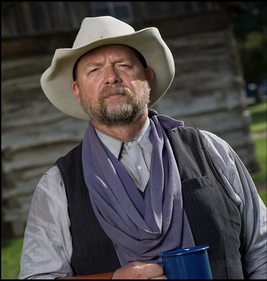
Michael Grauer
COWBOY HISTORIAN
Michael R. Grauer was born at Kansas City, Kansas on March 27, 1961, to Richard L. and Nancy Reed Grauer. When he was a boy, Michael began dreaming of being a cowboy on his grandparent’s farm west of Marysville. A close family friend taught him roping when he was just a toddler. By the time he was three, he was on horseback. His and his brother’s first “horse” was a Shetland pony they named Gunsmoke.
Michael’s father worked for AT&T, so the family moved around a lot in the Kansas City region, but Michael had plenty of opportunity to play sports, to enjoy outdoor activities and help on his grandpa’s farm. Michael graduated in 1979 from Oak Park High School, Kansas City, Missouri. As early as 1977, he knew his future wife, Leslie. Their lives took separate paths, but they reconnected in 2015 and were married on March 7, 2020, in Kansas City, Missouri.
Michael earned his first BA in Fine Arts in painting in 1983 and a second one in Art History in 1989 both at the University of Kansas. During his first four years at KU, he worked summers at the Kansas State Grain Inspection Dept. In 1989, Grauer received a MA in Art History from Southern Methodist University and, in 2018, an MA in History from West Texas A&M University.
In 1984-1985, he interned and worked at the Smithsonian American Art Museum before becoming curator of art and Western heritage and associate director at the Panhandle-Plains Historical Museum in Canyon, Texas from 1987 to 2018. In September 2018, he became McCasland Chair of Cowboy Culture/Curator of Cowboy Collections and Western Art at the National Cowboy and Western Heritage Museum in Oklahoma City.
Grauer has curated over 150 exhibitions and has authored over 65 publications. Grauer has received accolades and honors including being named KU Kress Foundation Department of Art History’s Distinguished Alumnus for 2012. He has served as Adjunct Lecturer in Western American Studies at West Texas A&M. His 2019-2020 exhibition, “Caballeros y Vaqueros: Origins of Western Horse Culture,” received the American Association for State and Local History Award of Excellence for Leadership in History. He serves as president of the Western Cattle Trail Association; vice president of the International Chisholm Trail Association; on the boards of the Kansas Cowboy Hall of Fame, the National Drovers Hall of Fame; is on the research committee for the National Cowgirl Hall of Fame; the Charles M. Russell catalogue raisonne committee and the executive committee for Westerners International. Grauer lectures on art, history, and culture across the American West.
He also performs a living history cowboy presentation called “Cowboy Mike.” His book Making a Hand: The Art of H.D. Bugbee received the Western Heritage Award for Best Western Art Book of 2020. He and wife, Leslie, currently live in Oklahoma City. He has three grown children, Matthew, Hannah and Sarah, and has grandchildren, Otto, Ezra, Red and Eloise Rae. -
Wendell Tranter
RODEO COWBOY
“Fredrick and Bertha Nixon Tranter had Wendell on April 5, 1928, at Eskridge, Kansas where he schooled. During his youth he spent as much time as he could on horseback helping Flint Hills ranchers with diverse cattle operations. Wendell served in the U.S. Army during the Korean War.
On May 30, 1951, he married Marlys Cary in Huntsville, Alabama. They had two children Andie and Tracie. Before moving in Eskridge, they lived in Bisbee, Arizona. In Eskridge, Wendell returned to his cowboy roots where he mended hundreds of miles of barbed wire fence and loading pens and chutes in the Wabaunsee County area. Helping cattle owners throughout the Flint Hills looked after and doctored cattle personally on 5,000 acres yearly. He assisted in counting cattle off the rail cars and rounding up and loading them onto cars.
In 1980, he became ranch manager for the Kansas division of the Pitchfork I and Cattle Company, managing local operations for 30 years. He broke and trained his own horses and trained horses for other ranchers from a large area. Wendell is honored here for the rodeo which he loved. He championed in calf roping, team roping and wild cow milking. He was instrumental in founding the Eskridge Labor Day Rodeo in the early 1950s along with Ed Van Petten and Bob Widau.
With the assistance of Joe and Parker Warren, and Charlie Waugh, Wendell was responsible for the arena’s construction. This Eskridge rodeo continues to this day. He is noted for over 50 of service to the Labor Day rodeo. Wendell Tranter died on July 3, 2013. -
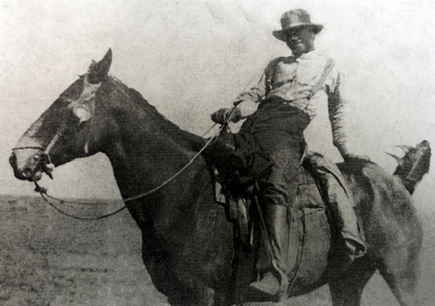
Bill Brewer
WORKING COWBOY
William Martin Brewer, a former slave, arrived in Kansas in 1870 driving horses for a local rancher. Born in Louisville, Kentucky on February 25, 1854, he literally bore the whip scars from his former masters. He settled in Greenwood County where he lived the remainder of his life. His first employment was helping another person search for unbranded cattle for a rancher named Johnson. Once located, they put the Johnson brand on them regardless of the cattle’s ownership. He quit only after a year or two, perhaps because this type of cattle acquisition went against Brewer’s sense of fair play. He went to work for Jackson, a rancher a few miles west of Madison.
After Jackson’s death in the early 1890s, Brewer shined shoes at the Cattleman’s Hotel in Eureka. Here, James Bradfield, a rancher on the Verdigris River discovered him. Figuring Brewer was too good a cowboy to waste his talents shining shoes, Bradfield built a house on his land for Brewer to live in through his old age in return for his labor. This was a great deal for a black man in his 40s with no family. Bradfield preceded Brewer in death, and Bill basically became the foreman of the ranch. This lasted until the Great Depression. In his 70s, Brewer was forced to leave the ranch due to the ranch being foreclosed as Bradfield’s heirs were broke.
One Brewer’s jobs on the ranch was to herd sheep, and he was proud of his sheep dog which could find sheep no matter how well hidden. Brewer was a big man and had an even bigger reputation as a fighter. Though many of his fights were for his own protection, he never started a fight. At the age of 68, Brewer boxed in an exhibition to raise money for the Olpe School.
Brewer was also a great cook with roast turkey, mountain oysters and snapping turtle among his specialties. He was also an excellent poker player which funded him later in life. He could make a team of strong mules behave by talking or yelling at them. He worked with cattle with the best. And he was never seen to be thrown off any bucking horse in the area.
After Brewer’s life at the Bradfield ranch ended, Paul and Jennie Lamoureaux in southern Lyon County employed him. Jennie being a devout Catholic, encouraged him to join the church, which he did. When he became too infirm to work, he moved to the County poor farm in Emporia where he died in 1938 at 84. He is buried in Olpe. Of course, Bill was a true cowboy. He was virtually always the only black cowboy in an all-white world. -
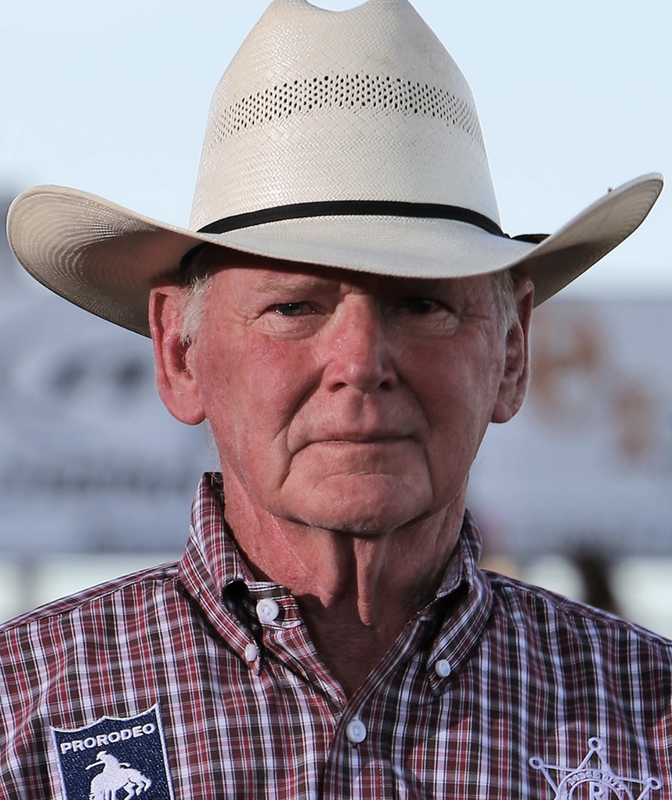
Dr. R.C. Trotter
COWBOY ENTERTAINER/ARTIST
Though Roger C. “R.C.” Trotter was born in Dodge City on October 7, 1947, he did not live in Dodge City as a child. Instead, he grew up in small towns in Kansas. His father was T.C. Trotter. All his early jobs were in agriculture, so he was comfortable with working with dirt and animals.
On August 16, 1969, he married Mary Creswell from Minneola. They have three children, Shannon Hare, Courtney Bauer and Seth Trotter. From 1965 to 1968 Trotter attended Sterling College where he played football and ran track. He graduated with honors in 1971 from the Kansas University School of Pharmacy.
In 1974, Dr. Trotter earned a medical degree from the KU Medical School. He started his practice in Minneola, moving to Dodge City in 1982. Being trained in sports medicine, “Doc” saw the need for a physician at the Dodge City Roundup Rodeo. For four years he purchased his own admission ticket and “hung out” with the EMT’s who he knew from working in the hospital emergency room. Eventually the Rodeo committee constructed a medical building behind the east grandstands. R.C. spent 20 years merely serving as a physician staying out of the workings of the Rodeo.
Having been on both the Chamber of Commerce and School Boards in Dodge City, the Rodeo Committee asked Trotter to run for Vice-President of the committee. He served one year under the late state legislator, Bud Estes. When Estes resigned in 2003, R.C. took the reins as President and has served in this capacity since then. Under Trotter’s leadership, it has since flourished.
It continued to grow in pay and contestant numbers. The Dodge City Roundup Rodeo arena has undergone great improvements and the Rodeo has grown in status. In 2012, the Rodeo was inducted into the ProRodeo Hall of Fame after only being 35 years old. USA Today named the Rodeo “No. 1 Best North American Rodeo” in August 2018. Also in 2018, Trotter won the Kansas Finest Award from the Kansas Tourism Association. Doc Trotter and Mary reside in Dodge City where he still practices medicine.
2020 Inductees
-
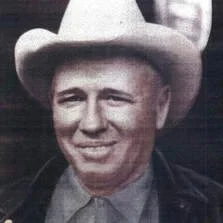
Orson E. "Bud" Alexander
RANCHER/CATTLEMAN
Orson E. "Bud" Alexander was born on December 24, 1890 to A.G. and Albertine Alexander at Council Grove, Kansas. In 1897, his parents purchased a farm about two miles north of Council Grove. Bud married Maude Carr in 1940 in Council Grove. The couple had three sons, Bob, Wayne and Jim, and a daughter Mary Elizabeth who died as an infant. Bud imported cattle from the south to the Flint Hills mostly from three sources, the Webster family, San Angelo, TX; Alfred Drummond, Madill, OK; and Joel Sanner, Port Arthur, LA. This was before cattle trucks, so cattle had to be shipped up by rail. These animals would weigh about 400 pounds in early May on arrival, but by the end of the summer, they doubled their weight to 800 or 900 pounds. When the time came in October to ship them out, they had to be rounded up on horseback. Bud tirelessly looked after these bluestem grass cattle and his own herd daily, leaving his house at 4am and returning at dark. The herd numbered from 5,000 to 6,000. Bud did some farming to harvest winter feed for his own cattle and his horses. Bud was a keen judge of both horses and cattle - he could guess the weight of an animal within 10 pounds. Bud won both rodeo steer and calf roping competitions. He was a member of many organizations including Santa Fe Trail Riders as an officer and distinguished rider, Flint Hills Rodeo Stockholder, Comiskey Rodeo Arena Director, Council Grove Harness Track Volunteer, Lakeside Arena committeeman, Territorial Centennial Event coordinator, Kansas Centennial Wagon Train organizer, and several Morris County extension and leadership positions. Bud was active late in life and he and his homemade trailer could be seen on the streets of Council Grove into the late 1960s. Bud Alexander died at the age of 87 on February 8, 1978 in Council Grove and is buried at Greenwood Cemetery in Council Grove alongside his wife Maude who passed in 1992. Today Bud's remaining son, Jim, grandchildren, great-grandchildren and great-great-grandchildren keep the cowboy tradition alive working on the six-generation ranch. Kansas Cowboy Hall of Fame connection: Bud's sons, the late Bob and Wayne were inducted in 2014 as Rancher/ Cattlemen. Bud is also a distant cousin of Gerald Roberts, 2005 Rodeo Cowboy.
"Being a working cowboy has been my life and a family tradition to carry on for generations on our Flint Hills ranch." -
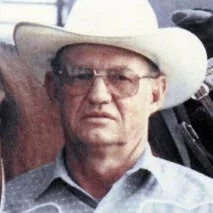
Charles Walter Couch
COWBOY HISTORIAN
Charles Walter Couch, named for his two grandfathers, is mostly known as Walter to his family and the area, and as Chuck to all of his Marine Corps and TWA friends. He was born to Harry and Alice Padgett Couch and raised on a farm south of Kingsdown, Kansas. He completed all 12 grades in Kingsdown schools, graduating in 1956. After high school, he attended Kansas State University where he lettered three years in wrestling and received a Bachelor of Science degree in Agriculture in 1960. Following college, he joined the United States Marine Corps and was trained and served as a fighter pilot for four years. After active duty, he moved to Manhattan Beach, California where he continued to fly for the Marine Corps another 20 years in the Reserves, achieving the rank of Lt. Colonel. He also began his 28 year flying career with TWA as a commercial airline pilot. After living in Manhattan Beach for a couple of years, he bought a grape vineyard in the Napa Valley and moved to St. Helena, California. Always interested in caring for the land, he ambitiously tore out the old vineyard and planted a new one. He also partnered with a veterinary friend and started raising cattle on pastures in Napa Valley. Walter had the "cowboy itch," so he built a roping arena where he could calf and team rope with like minded friends and entered a few rodeos. In 1987, he sold the vineyard and returned to his Kansas roots, buying the Pyle Ranch which joined the family farm. Thus, the Couch Ranch was founded and now consisted of 11,000 acres of crop and grassland. Once again, he built another roping arena and began raising Corriente roping cattle. He continued to fly for TWA both domestically and internationally for the next five years and was named the TWA Pilot of the Year in 1987. He retired from the airline in 1992. Walter has many interests and talents, not the least of which is a love of the land and also the wildlife. Since there are three creeks originating on the ranch that empty into Bluff Creek which flows into the Clark County Lake, he has been mindful of not polluting this valuable resource. Always interested in preserving the past, he moved a two story house that had been abandoned, from a neighboring farm to the Ranch in 2000. The house was built by early pioneers in 1907. He began a complete restoration doing much of the work himself. Upon finishing the project, he married Karla Kirk Luft in this house which became their home on February 14, 2004. In this marriage he gained a stepson, John Luft, and stepdaughter, Lana Luft. His lifelong interest in flying led him to build his own airplane and put a hangar and runways on the Ranch. In his retirement Walter has been involved in many organizations with the purpose of preserving our western history including the Ashland Pioneer-Krier Museum Board, Boot Hill Museum Board of Directors, Kansas Cowboy Hall of Fame committee, Western Cattle Trail Association, Santa Fe Trail Association, and Dodge City Drovers. He has shared his knowledge and love of history with friends, school classes, and various other groups. The life of Charles Walter Couch has always personified the cowboy ideals of integrity and self sufficiency.
"May those who come behind us be good stewards of the land and protectors of the wildlife." -
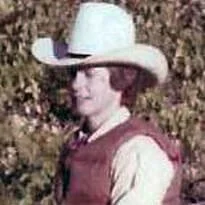
Faye Louise (Peck) Heath
RODEO COWGIRL
Faye Louise (Peck) Heath was born on August 13, 1938 to Henry Nelson and Edna (Schweitzer) Peck on the family farm near Hope, Kansas as the youngest of five children. She rode her first mount, a pony "Peanuts," at four and rode him to school through seventh grade. From a very young age she had rodeo in her blood. At 12 she learned to ride her horse at a gallop standing behind the saddle while gathering milk cows. One day while practicing her trick riding, a dog spooked her horse. She fell off and broke her arm, but this didn't come close to stopping her. Faye's first rodeo experience was competing with her dad's horse, "Paint" in a Herington play day. She didn't place, but that only encouraged her to start practicing. After graduating from Chapman High School in 1956, she worked awhile at Duckwalls then began her day-job profession as a meat cutter, working at Robinson Locker Plant. She later worked for Dillons Grocery Store, for over 25 years until her retirement. It was after high school she began successfully competing in rodeo events on weekends riding Paint. Purchased in 1963, “Ole Yeller” was her first “really good” horse. Over the years she has won numerous ribbons and trophies. Though Faye loved to compete in every category she could, she is best known for her 30-plus year barrel racing career. On July 9, 1965 she married Marshall Heath at Lyona Methodist Church, Junction City. Among her many awards and honors were: for nine years she was High Point Eastern Kansas Horseman's Association Yearend Rider 18 and Over Division, PRCA Buckle Winner in barrel racing, and Money Winner barrel racing Midwest Major Amateur Rodeos. Faye with her lifelong friend, Rosie Clymer and roper Merle Flinn were among those instrumental in forming the EKHA. Faye was an officer in both the Junction City Saddle Club and Herington Riding Club. She held memberships in numerous clubs and associations including Kansas Cowgirl Barrel Racing Assn., Kansas Western Horseman's Assn., American Quarter Horse Assn., and the Hope Saddle Club. Faye was not only a rodeo cowgirl, but she took care of her horses from every angle from birth taming, haltering, leading, tying, doctoring, farrier work and loading them into the trailer - sometimes for other people. Faye Louise (Peck) Heath passed from this life on January 3, 2020, but her kind, gentle and joyful spirit will not be forgotten. Kansas Cowboy Hall of Fame connection: Her brother, Jerry, was inducted in 2015 as the Working Cowboy. One time while competing in an all-girl rodeo steer undecorating event she borrowed 2012 KCHF Rodeo Cowboy Ernie Love's bulldogging horse and won the contest in 1½ seconds.
"There was nothing like riding a good horse over new country." -
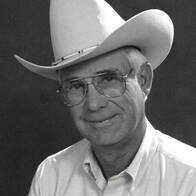
Keith L. Downer
WORKING COWBOY
In 1933, Burl and Alta May Downer traded a 1929 Chevy truck for a farm in Leach, Oklahoma where Keith was born in 1935. Grandpa “Dat'' Downer came in 1936 and moved Burl and his family back to the Garden City area and Keith graduated from Garden City High School in 1953. Keith grew up around horses and cattle. He got his first cowboy job working at the Garden City Sale Barn for Pat Springer when he was 15. He worked all the odd jobs of the sale barn and corrals learning the cattle business every step of the way. Sorting, doctoring, pen riding, selling, and loading. This would be the foundation for his future. Earl Brookover and Jerry Chmelka bought the sale barn in 1957. This would be the beginning of a lifetime bond between these men. Keith became Order buyer for cattle at the GC Sale Barn in 1964. He met every cattleman and knew every sale barn for a 200-mile radius. In 1963 a horse fell on Keith’s left leg and shattered his ankle and leg bones. His bones were reset but he lay in traction, and casts for 15 months. This gave Keith a permanent “Hitch in his giddyup.” Keith’s next job was head cowboy for Brookover Feed Yards where he started in 1965 and worked in that capacity for 25 years. Along the way he also found time to train and ride a huge steer named “Big George”. Keith and Big George appeared in parades, grand openings, fairs, and rodeos around the Midwest promoting Beef and Brookover Feed Yards. His favorite horse was “Katy” who he rode for many years and kept after his retirement in 1990. He continued to work as a cattle buyer, owner, and feeder. He then worked for Elanco Chemical as a liver checker for several years in beef packing plants in Holcomb, Dodge City, and Liberal recording the condition of thousands of livers along the way. Keith took up poetry after his retirement and began to perform with a group of four old Western Kansas Cowboys called the “Partners of the Prairie”. They performed at shows and banquets, schools, and expos across the Midwest while singing old western songs and reading their poetry to dazzle the crowds from near and far. In 2000 they were invited to perform for the U.S. Troops in Illesheim, Germany where they met the troops and had a grand experience. Keith published his own book of poetry in 2017 titled “Cowboy Memories.” He serves on the Board of Directors for the Finney County Historical Society assisting with the many projects, demonstrations, and fundraisers they have. He recently was instrumental in getting access to and completing the purchase of the original guns of “Fleagle Gang” of Finney County. These guns were used in the robbery and killing spree that occurred in Colorado and Kansas back in 1928. Keith is a member of the Community Congregational Church and Choir. He is happily married to “Candy” his lovely wife of 37 years. He will leave behind 5 generations of descendants. Keith is small in stature but large in Compassion, Honesty, and Character. He has a sharp wit with an ever-engaging personality. He has a million friends.
“Rein ‘em up tight boys.” -
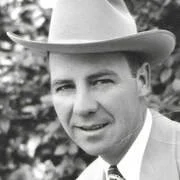
John E. Steinmitz
COWBOY ENTERTAINER/ARTIST
John E. "Cowboy Jack" Steinmitz was born in Hertha, Kansas to John E. and Anna Elizabeth (Torreyson) Steinmitz on October 21, 1920. At the age of 12 he began his career in the cattle industry as a check-in boy after school at the Parsons auction market. In 1945, he moved on to the Kansas City stockyards. A year after going to Kansas City, Jack began traveling the State with Walter Jarbo. Two of the auction markets he found most intriguing were those of Amarillo, Texas and Dodge City. In 1943, he married Virginia Marie Graham in Parsons, Kansas. They had two children John Steinmitz, Los Angeles and Lana Ross, Dodge City. At the age of 27 in 1947, he started as a sales manager of Winter Livestock in Dodge City. Since that day he was known as "Cowboy Jack." Over his 42 years with Winter, he oversaw marketing of over 11½ million cattle which represents $2½ billion in gross sales. However, most people knew Jack from his popular daily 7:30am radio show on KGNO-AM, "Cowboy Jack's Market News and Views." Even after he retired, he wrote "Cowboy Jack Sez" for the regional High Plains Journal agricultural newspaper. Cowboy Jack was a member of the Kansas Livestock Association and, in the 1950s, was a strong advocate in the effort to have the National Cowboy Hall of Fame located in Dodge City. Cowboy Jack was truly an ambassador for Dodge City He served as a member of the "Marshal's Posse" which rode in President John F. Kennedy's inaugural parade in 1961. In the early 1970s Jack was named an Honorary Marshal of Dodge City. Jack was known for his kindness and contributions to the community. Neighborhood kids knew him as Santa Claus and he bought coats and shoes for children in need. John E. Steinmitz died on June 6, 1999 in Dodge City and is buried at Maple Grove Cemetery in Dodge City.
"I remember growing up on a farm, and me and my dad always made a point of listening to Cowboy Jack on the radio." - Friend, Tom Stanley
2019 Inductees
-
Norman Lee Giles
RANCHER/CATTLEMAN
Norman Lee Giles was born on July 8, 1924 in Burdett, Kansas to Norman Albro and Eula Lee Giles. Norman Lee traced his cattleman roots back to his maternal grandfather, George K. Lee. George emigrated to Burdett, Kansas from Galesburg, Illinois in the spring of 1878 to handle cattle on the open range country while retaining a career as a livestock commissioner in Kansas City with the firm of Lee & Curtis. He drove the Kansas-Texas trail from 1880-1884 handling Southern Texas horses and Longhorn cattle. In 1884, he brought into Pawnee County, Kansas one of the first Galloway bulls imported into this country from Scotland and established one of the first registered herds. Norman Lee's father continued in the cattle business in the Spearville, Kansas area where Norman Lee and his older sister Myrna (Fox) graduated from high school. Norman Lee met Dolores Norris from Wright, Kansas while in high school and they married on February 22, 1943 in Wright. They had eight children Trudy Giard, Roger Giles, Jodie Marie (who died in infancy), Audry Gates, Jody Peintner, Lorie Horacek, Kelly Giles and Julie Cox. In 1947, Norman Lee and his father purchased the original Giles Ranch in Clark County. They spent many years building on the property and raising Hereford cattle until the 1980's when the Ranch transitioned to black Angus. Through Norman Lee's legacy and hard work, the Giles family operation stretches over four counties in southwest Kansas. The family name continues as Norman Lee's son Roger and wife Cathy, along with three of their daughters, and a son-in-law, operate the original Giles Ranch raising an Angus cow/calf herd, wheat, corn, alfalfa and a stocker/feeder cattle operation in Clark County. Daughter Lorie, her husband Jon and their son operate HG Land & Cattle Company on the original Giles homestead raising an Angus cow/calf herd, wheat, sorghum, alfalfa and operate a winter back grounding/stocker outfit in Ford, Hodgeman and Edwards counties. Norman Lee was Beef Improvement Federation Commercial Producer of the Year in 1999, Kansas Livestock Association Stockman of the Year, and received the Clark County and Ford County Conservation Grassland awards. He served on numerous boards including the Trustees for Dodge City Community College, the Federal Land Bank, Offerle Cooperative Association and Spearville Schools. He was a Life member of the Kansas Livestock Association and the National Cattlemen's Beef Association, and a charter member of US Premium Beef. The Giles ranch was on Gov. Bill Graves Farm Bureau Ranch Tour, and Norman Lee was a Texas Christian University Ranch Management Program Tour Partner. Confirmed and Baptized as a Catholic at the age of 65, Norman Lee was active in his church and the Knights of Columbus. Norman Lee Giles died on December 20, 2010 at the age of 86. The legacy of Norman Lee got the family through the trials of ranching life and was instrumental in their recovery from the devastating Starbuck fire of the spring of 2017 which completely burned the Ranch.
"You are to leave the land better than you found it." -
David V. (Dave) Williams
COWBOY HISTORIAN
David V. (Dave) Williams was born on Sept. 28, 1924 to Clifford and Addie Williams in a farmhouse 6 1/2 miles west of Caldwell, Kansas. Dave and his siblings attended one-room Bailey School built by their great-grandfather John Bailey. A major influence that shaped Dave's life as a cowboy and western enthusiast was his uncle Kenny Williams, who won many all-around rodeo cowboy championships and traveled the world with the Miller Bros. Wild West Show as a trick rider and roper. After graduating high school in 1942, Dave enlisted in the Navy during World War II. He flew patrols in the Pacific looking for Japanese ships and rescued many Allied sailors and aviators. After his service, Dave returned to Caldwell marrying his high school sweetheart, Marian Prophet on Feb. 23, 1946. Together, they had six children, Terry Williams, Linda "Janie" Williams (who died in infancy), Patti Williams Sprague, LuAnn Williams Jamison, Michelle Williams Schiltz and Danielle Williams Schmidt. They farmed early in their marriage until Dave was offered a job as water well driller. He traveled around the world as a driller for oil and water. Though sometimes the family joined him, most of the places Dave worked were isolated. To pass the time alone, he read stories about Caldwell and the Chisholm Trail. His regular attire of cowboy hat and boots drew much attention in remote villages. Villagers swarmed to meet "Cowboy Dave." He even drew the attention of Roy Rogers, who on a trip to Ethiopia, went out of his way to meet him. Upon the death of his older brother in 1972, Dave returned to Caldwell to operate the Williams Bros. Livestock Auction, which had been in the family since 1901. Upon his retirement in 1983, Dave resumed his love of researching the history of the area. Disheartened by the loss or deterioration of many historic sites in the Caldwell area he turned his attention to preserving the history of Caldwell. Using the historical knowledge he had gained over the years, he mapped historical sites in Caldwell and on the Chisholm Trail. His endeavors included research for the historical markers lining Caldwell's Main Street. Dave was sought out as a local historian and re-enactor. He was a source for authors who have written about Caldwell. Dave had memberships in the Caldwell Historical Society and Sumner County Historical Society, and the Cowboy Storyteller Assoc. of the Western Plains. He helped re-establish the Caldwell Saddle Club and was host for the National Leukemia Society's annual trail ride for several years. He served as chairman of the Border Queen Museum, was a member of the Cherokee Strip Centennial Celebration Committee and helped in the restoration of the Caldwell Opera House. David V. Williams died on Jan. 17, 1998 at the age of 73. He is interred in Caldwell City Cemetery.
"I reckon I was just born 50 years too late." -
Will Lowe
RODEO COWBOY
Will Lowe, pro rodeo Cowboy, was born on Christmas Eve 1982, the middle of three children, in Gardner, Kansas to Alex and Susan Lowe. Will's love of rodeo started at a very young age as his family had season tickets to the American Royal Rodeo in Kansas City since before he was born. At the age of seven he began bronc riding. His parents wouldn't allow him to ride bulls (steers) and they didn't make bronc saddles for seven year olds, so Will rode bareback. Will rodeoed at Spring Hill High School and was a three time bareback champion and an all around champion in Kansas High School rodeo. Will earned his Associate in Science degree at Vernon (Texas) College. In 2001 he joined the Professional Rodeo Cowboy Association. He got off to a running start winning the 2002 Resistol Overall and Bareback Rookie of the Year while finishing third in the world. That same year, Will married professional barrel racer, Tiffani, in Las Vegas, Nevada and they have two sons, Garrett William born 2009 and Levi born 2012. Will won the World Championships belt buckle in 2003 and set a record for winning the most bareback riding money in a year. In 2004, he was the World Champion runner-up and he retook the World Champions in 2005 and 2006. He placed second in the World standings in 2012. He has qualified for the Wrangler National Finals Rodeo for every year since 2002 except for 2016 and 2017. In 2019 he was champion or co-champion in six rodeos including the Dodge City Days Roundup Rodeo. Will Lowe currently resides in Canyon City, Texas.
"I just try to conduct my life properly and leave the rest to the Lord." -
Jim Arnold
WORKING COWBOY
Jim Arnold was born in Attica, Kansas on December 17, 1927 to Clyde and Elizabeth Arnold. As a child he purchased an Arabian stallion with a prize pig and money he had earned at 10 cents a day. In his teenage years he rode and trained horses for Harry and Hazel Shepler of Shepler's Western Wear. He also showed Charlie Rank's stallion "Yellow Dog" at horse shows. He was not interested in working at his father's bakery, instead he hung out at the Wichita Stockyards until they finally hired him. He rode bulls until he married Vesta Velda Goodrich of Wichita on August 25, 1946. However, Jim's rodeo career continued with bareback bronc riding, and calf and team roping. Jim has received numerous rodeo awards. He began his ranching in Dillon, Montana at the famous Matador Ranch owned by Wichita's Koch brothers. After a time, he returned to Kansas and began ranching for Les Cooper and Don Young of the Young & Cooper Cattle Company at Ashland as a foreman and cowboy. On these 15,300 acres he raised their children, Janice Lynne Ritter, James Perry Arnold, Terry Wayne Arnold, Beth Ann DeMont and Jimmie Lou Hinkle, teaching them horsemanship, cattle ranching and rodeo. Jim stepped in and saved a condemned horse which was later sold to Clark McEntire, the father of Reba. This horse was instrumental in Clark getting consecutive World Steer Roping championships. Jim moved on to a Young and Cooper ranch near Kendall, Kansas and later partnered with Tony Beaty forming the "Rawhide Cattle Company." On this 15,000 acre spread they raised Santa Gertrudis and Simmental cattle. After Tate Ranch annexed the Beaty Ranch, Jim was foreman of 41,000 acres spreading across Kearny and Hamilton Counties. As Jim moved from ranch to ranch, he continued his team roping career. In 1988, Jim and Vesta moved back to the Ashland area where he finished his final leg of ranching with Young and Cooper. Jim is a member of the Cowboys Turtle Association, was in the PRCA from 1946 to 1949, belonged to the United States Team Roping Champions Association, the American Quarter Horse Association and is a 4-H leader in horse and cattle. Jim has an exhaustive knowledge of horse lineage which has led to a successful rodeo and ranch horse breeding program. Jim Arnold is a well respected friend and mentor to many people. He has passed on the cowboy way of life to his children, grandchildren and now his great grandchildren.KCHF Connection: Jim is pictured with Wayne Dunafon at Wichita Rodeo, Dunafon was the 2009 Rodeo inductee.
"The old cowboy ways are dying with the men who created them." -
Brent Harris
COWBOY ENTERTAINER/ARTIST
Brent Harris was born to David and Roma Harris on July 27, 1951 in Dodge City. Brent graduated from Dodge City High School in 1969. After graduation, he earned a Bachelor of Business Administration from Saint Mary of the Plains in Dodge City, Kansas. On Nov. 30, 1987 he married Patricia Harris in Dodge City. This union produced two daughters Jamie Harris Rajewski and Katie Harris. He spent two years with a Blackfoot Indian Gentler treating troubled horses, training young horses and caring for cattle. For two years Brent worked on a 1,000 acre ranch caring for 400 cattle, 50 horses, 12 Angus bulls, two draft horses and six dogs. He handled calving, fixed fences, hauled hay and dunged out stalls. In performance of his duties he regularly drove five different horse drawn vehicles. Brent also had a pilot's license. Brent worked as Director of Marketing for Humana Hospital and Director of Personnel for JAG Construction, both of Dodge City before going to work as Facilities Coordinator for Boot Hill Museum in 2000. Brent is proud of the construction and carpentry he had done for the Museum, but he is most noted as "Marshal Brent Harris the Face of Dodge City" and for his role as Chalkley Beeson in the Long Branch Saloon Variety Show. He has traveled throughout Kansas and beyond to showcase Dodge City and to entertain the many travelers to the region. At Boot Hill Museum he was the resident "storyteller" often dropping what he was doing to impart to guests the rest of the story. As the face of Dodge City, Brent's rugged countenance has appeared on numerous visitor's guides, magazines, postcards, brochures, television ads, websites and billboards. He even once graced the tail of an airplane. For a time he ran the Boot Hill Stage Line and was a Boot Hill Museum gunfighter. Representing Dodge City and Boot Hill Museum, he has done the honors at event openings and ribbon cuttings. He has earned numerous awards and honors including the 2010 Dodge City Daily Globe Readers Choice #1 Businessman, an Honorary Drover and Kansas Finest Award in 2012. In 2013 he was named the Marshal of Dodge City and Boot Hill Honorary Marshal. That same year he was Dodge City Days Parade Marshal. Brent was placed on the Wild West Walk of Fame in 2014, and received the 2018 Bronco Buster Award. Brent Harris has retired from Boot Hill Museum, but continues to step in and lend a hand when needed. Brent currently participated in the Dodge City Citizens Police Academy.
He said, "I figured I should learn what 'real lawmen' face." "There's more to being a cowboy than just knowing about cattle and horses."
2018 Inductees
-
Loren Doll
RANCHER/CATTLEMAN
Loren Doll was born in Dodge City to Fred and Dora Doll on July 9, 1929. Growing up in Wright, Kansas, he attended school in Dodge City. Loren still holds the Kansas high school record for most hits in a single baseball game (six) with Dodge City High School where he graduated in 1947. Additionally, he had a season batting average of .524, which is a school record that stands over 70 years later. In 2014, Loren was inducted into Dodge City High School's "Ring of Honor." After high school, Loren played for the Brooklyn Dodgers organization for four years. While playing in Greenwood, Mississippi, for the Dodgers’ minor league team, he married Veleeta Anders on April 26, 1951. He and Veleeta returned to Kansas rather than relocate to Quebec, Canada for the Dodgers. He continued his pro-ball career for another year as first baseman with the Hutchinson, Kansas farm club affiliate of the Pittsburgh Pirates. In 1961, Loren took a risk when he, his father and three Irsik brothers started Ingalls Feedyard. This feed yard is one of seven feed yards now operated by Irsik and Doll Company. The feed yards have grown from the original 2,500 head capacity at Ingalls Feedyard to a total capacity of 280,000 head. The company expanded under Loren's leadership. In addition to feed yards, Irsik and Doll also operates a number of grain elevators and several integrated joint agricultural ventures that complement the operations of Irsik and Doll. In 1983, Loren and his family formed Loren Doll, Inc., which is involved in beef and grain production. Loren retired from Irsik and Doll in April 1989, though he continued to serve in a leadership capacity as a member of the board of directors until 2004. With his guidance, second generation family members now serve as Irsik and Doll board members. Loren participated in numerous civic activities in his lifetime. He has served as Mayor of Ingalls and served as a member of the Ingalls school board. He was a member of the Kansas Wheat Commission. He continues to stay engaged in cattle feeding and other agricultural pursuits. In 2015, Loren Doll was inducted into the National Cattle Feeders Hall of Fame. Loren and Veleeta live in Dodge City and enjoy spending time with their children and spouses, Jan (Mike) McNiece, Kathy (Dan) Miller, Steve (Deb) Doll, Mike Doll, John (Janet) Doll and Lori (John) Oldham, along with their grandchildren and great grandchildren.
"Finding people smarter than you are in certain areas is key." -
Charlie Meade
COWBOY HISTORIAN
On January 10, 1935, Dodge City pioneer and lawman, Hamilton B. "Ham" Bell delivered Charlie Meade in the back of his ambulance in rural Ford County Kansas. Charlie sees it as fitting that he became a Dodge City lawman himself. Charlie's parents were Logan A. and Pearl L. Meade. At the time the Meades lived on a ranch owned by Charlie's grandfather, William M. Meade. The family can trace its lineage back to General George G. Meade who commanded the Union forces at Gettysburg, Pennsylvania. In 1939, the family moved to a ranch 37 miles northwest of Dodge City in Hodgeman County and Charlie attended a rural school until fourth grade. The family again moved into Jetmore where Charlie was schooled through his sophomore year at Jetmore High School. Charlie finished his secondary education graduating from Hanston High School in 1953, after which he went a year to Garden City Junior College. He moved to Dodge City in 1955, taking a job as a clerk at May Sporting Goods. Charlie served his country enlisting in the Army for two years starting in 1960. He then joined the Kansas National Guard for four years. On November 1, 1965, Marshal Ramon K. House swore Charlie in as a Dodge City Marshal, which was what policemen were called in those days. In the 1960's, Charlie opened a gun shop in Dodge City. He is still extremely knowledgeable about typical cowboy and western firearms. He was a member of the Dodge City Posse, but was unable to participate in the 1961 inauguration of U.S. President John F. Kennedy due to his wife, Vicki's, illness. In 1966, Charlie participated in the Y/O Ranch's cattle drive riding over 600 miles from Mountain Home, Texas to Dodge City. Charlie settled on a ranch south of Dodge City which is fittingly on the famous Western Cattle Trail with his back pasture being a likely holding area for its herds headed north to the railway. When the Dodge City Trail of Fame was incorporated in 2005, Charlie joined the group taking visitors on walking tours around the Dodge City downtown historic district. His tours stimulate visitors', as well as locals', interest in southwest Kansas heritage leaving them with a strong desire to learn about our history. Preserving history in this way is what defines Charlie as a historian. Charlie has also traveled across the Nation promoting Kansas history in places as far-flung as Pendleton, Oregon; Crestview, Florida; and California. In 2006, he was sworn in as a Special Deputy U.S. Marshal, a title he proudly holds. In 2018, Charlie was the Dodge City Days Parade Marshal. Charlie Meade lives with his wife, Vicki, on their ranch south of Dodge City.
"I figured since I was brought into this world by a marshal, I ought to be one." -
Roland Hein
RODEO COWBOY
Roland Hein was born to Ruben and Elisabeth Hein in Gate, Oklahoma on August 27, 1930. Raised during the Great Depression and the dust bowl, Roland had a deep appreciation for hard work, integrity, sacrifice and thrift. He initially honed his skills working on the family ranch in the short-grass country of Oklahoma and later as a ranch hand on the Bar-B Ranch. Early in life his dream was to be a cowboy and he spent his life living that dream. Roland had high expectations for himself, everyone and everything around him. He had a drive to win, regardless if it was poker, pitch or rodeo. When he pulled his rig onto the fairgrounds, everyone knew he was there to make them laugh, share some wisdom and win. Roland gained the respect of his competitors as a top rodeo athlete, which is not an easy thing to do. It takes more than sheer ability, which Roland put on display every time the chute gate opened. He pulled off this rare feat with the combination of magnetic personality, integrity, sharp wit, dry humor and a command of the English language. "You could love him or hate him for his accomplishments in the arena, but you had to respect him for being a stand-up guy with an unmatched will to win," Todd Domer. On June 1, 1958, he married Anita Smith and the couple had one daughter, Cathy in 1959. Their marriage lasted 51 years until Anita's death. In the early years, Roland rode saddle broncs, then switched to calf roping, but an injury to his leg cut his calf roping career short and left him with a life-long limp. To stay in the saddle, he took up team roping where he found his passion as a heeler. He continued to rodeo as a successful team roping heeler for over 40 years. On rural properties he maintained, he built arenas and kept steers and horses as he rodeoed every weekend, mentoring many of today's ropers. He was the United Rodeo Association Team Roping Champion in 1971, 1973 and 1975. In 1987, he won the Kan-Rope Association Open Champion Heeler and he secured the Pro Rodeo Hall of Fame Team Roping Championship in 1991. He was the United States Team Roper Champion at the age of 71. He was a family man, partner and friend. "Be of good cheer," was his parting remark to everyone. He'd make everybody laugh and make them mad. He could be trusted with a secret or one's wallet and, when the chips were down, he'd get the job done. Many who knew him as a roper, knew nothing about his full-time jobs outside the arena. They assumed he was a full-time cowboy. This defines Roland Hein - 100% cowboy.
"To me, he was goodness and decency with skin on,” - Norman W. Hein, nephew. -
Barry Elliot
WORKING COWBOY
Barry Elliott was born on June 27, 1947 in Wamego, Kansas to O.N. and Gladys Elliott. At the early age of 10, Barry began working with his father on the Sells Ranch in Pexico, Kansas. After graduating from High School, he worked for the Dewey Ranch in Manhattan, Kansas and did day work on various other ranches in the area. Then for 10 years he served as ranch manager at Booth Creek Ranch in Olsburg, Kansas. It was during this time he began competing in rodeo. He won the 1966 Stockyards Championship Rodeo Association Bareback World Championship; the 1967 Salina, Kansas Bull Riding Championship; and the 1968 Broncos Riding Championship. He held memberships in the Southwestern Rodeo Association, United Rodeo Association, United States Team Roping Championships and Rodeo Cowboy Association. Barry met his wife, Martha, at St. George, Kansas where she was training horses and giving lessons at her Powder Puff Downs boarding stables. Here the two trained horses together from 1977 to 1984. In 1984, the couple and their two daughters moved to Jetmore, Kansas where Barry worked as head cowboy at Harms Cattle Company. In 1986, Barry began working as a pen rider for the Ford County FeedYard, which moved the family to Wright, Kansas. That same year he was involved in an accident while team roping and was life-watched in Wichita. After being in a coma for 37 days, doctors informed him he would never ride a horse again. However, after months of grueling physical therapy and encouragement from Martha, he resumed being a pen rider, horse trainer, team roper and farrier for the next 30 years. In 1999, he won top heeler at the Winter Feed Yard Team Roping. Barry worked at many local feed yards until partial retirement in 2016, when he worked for Winter Livestock taking cattle out of the sale ring on horseback to load out. Barry retired completely in 2017, but still assists his son-in-law and his neighbors when a cow or calf needs doctoring or cattle need to be gathered. Barry is a past member of the Dodge City Days Roundup Association. The Elliotts live in Wright and have four grown children, Megan (Shawn) Kaufman, Shana (Slade) Tilley, Mitch Elliott and Russ Elliott. They have five grandchildren Macy Elliott, Myah Elliott, Harlee Tilley, Logan Kaufman and Kyle Elliott. Kansas Cowboy Hall of Fame connections: Early in his career, Barry spent several days working with 2014 KCHF Working Cowboy Dusty Anderson. He also worked for Richard Ingland (2003 Working Cowboy) and day worked for Jerry Peck (2015 Working Cowboy).
"Ya know, a cowboy is only as good as his best horse." -
Virginia Robinson
COWBOY ENTERTAINER/ARTIST
Virginia Robinson was born to Ernest and Maude Robison on November 25, 1925 in Midway, Kansas. As a young adult, Virginia saw that trick riding was a lifestyle she wanted to pursue after watching trick riding in southeast Kansas rodeos. When she was still in high school, her father bought her a trick riding horse and a saddle, which she still has today, from Clark Schultz. In 1944, she began her career in amateur rodeos. She joined the Rodeo Cowboy Association the next year and continued trick riding for the next 15 years. With the help of her mother she designed and sewed many of her riding costumes, while her father did his part by helping train her horse and assisting with practice. Virginia traveled the country performing at rodeos including The Johnny Lee Wills Rodeo in Tulsa, Oklahoma; and at Rodeos in Nebraska, Charlotte, North Carolina; Cedar Rapids, Iowa; Nashville, Tennessee; Fort Smith, Arkansas; Bismarck, North Dakota and Salinas, California. She performed in prison rodeos in Huntsville, Texas and McAlester, Oklahoma. She also appeared with the Jimmie Murphy Crew, jumping her horse over a car. She had the distinction of working with the Billy Veach Rodeo, Walt Plugge Rodeo, Homer Todd, Ken Roberts and Burr Andrews. She also did square dancing on horseback with the Clyde Miller Rodeo. She had a chance to perform internationally, but did not want to risk harming her horse by traveling outside the United States. Virginia mainly used a palomino, Silver, for trick riding, but she had another horse, Chalk, who was trained to do tricks such as putting his head between his front legs as in prayer, dancing on his hind legs and picking up Moore's hat from the ground and handing it to her. Virginia was a great ambassador for the State of Kansas. When other cowgirls and cowboys came to visit, she made sure they received a proper introduction to the State. During World War II she worked at the Parsons Ammunition Plant when she wasn't rodeoing. Later she worked at the Anshires Coat Factory in Pittsburg. By the time of her retirement in 1984, when the factory closed, she was a supervisor. On May, 28 1960 she married Richard W. Moore. He died on April 12, 1988. Virginia has two grown children Graig and Kevin Moore. She also has two grandchildren, Miranda and Matthew Moore.
"I watched them ride [at rodeos], and I always wanted to be a trick rider."
2017 Inductees
-
Andrew Olson
RANCHER/CATTLEMAN
Andrew "Andy" Olson was born near White City, Kansas on April 28, 1912 to Ole and Katharine Amthauer Olson. Helen Ebbutt Olson was born on January 19, 1914 to William and Margaret Ebbutt on the family farm north of Dwight, Kansas. Helen attended school at Ebbutt Grade School and graduated from Halfacre School after her parents purchased a ranch north of Skiddy. In 1932, she graduated from Xavier High School in Junction City. Helen had two sisters, Edith and Bessie with whom she helped her parents farm and ranch. Her and sister Bessie were especially adept at riding and handling horses. Helen married Andrew Olson, who grew up east of Skiddy on February 15, 1933. They rented a farm four miles north of Helen's parents while Andy worked for the Geary County Extension-Farm Bureau office in Junction City. Andy was more of a farmer than a rancher, but excelled in ranching after learning the ropes from Helen and his father-in-law, William Ebbutt. In May 1935, their daughter Lois "Elaine” was born. In 1938, they bought their ranch on Four-Mile Creek about seven miles southwest of Council Grove. Their nationally recognized herd originated from a highly bred Angus heifer which Helen won by guessing closest to her weight at Geary County Better Live-Stock Days. The Olson's were instrumental in starting the 4-H program along Four-Mile Creek in 1945, which every eligible child joined. Their 4-H activities gave them national attention when an article in the November 30, 1946 Saturday Evening Post about 4-H in the U.S. featured Andy Olson. As the herd grew, the Olson's purchased both farm and pasture which extended into Chase County. The Olson Ranch grew further when Elaine and husband, Norval Deschner, with twin daughters, Kim and Sue, returned from Japan in 1958 after the Korean Conflict. The Deschner's bought 400 acres up the Creek, which made the ranch over 2,000 acres, most of it being pasture. A short bout of cancer took Helen's life on August 10, 1962, when she was only 48. Andy died on March 23, 2004. Both are buried at Four Mile Cemetery near Council Grove. Kansas Cowboy Hall of Fame connection: Helen's father William F. Ebbutt was inducted into the 2012 Hall of Fame as Rancher/Cattleman.
"You know, there aren't exactly classes in the country..." Andy in an interview with the Saturday Evening Post -
Merritt and Elizabeth Irene Beeson
COWBOY HISTORIAN COUPLE
Merritt Beeson was born in Dodge City to Chalkley and Ida Beeson on December 29, 1878. Elizabeth Irene Beeson was born in Appleton, Wisconsin on January 17, 1892 to Phillip V. and Appolonia Bloedel Schaetzel. On March 13, 1913 the two were united in marriage. Mr. and Mrs. Merritt Beeson began operating the Beeson Museum in 1932 in the basement of their home on the southwest corner of Beeson Road and Sunnyside Avenue. They had had assistance from Merritt's brother, Otero. This institution arose from the collection started in the 1870's by Merritt's father, Chalkley. By the time Chalkley died in 1912, the family had many souvenirs and relics from the late 19th century. Included in this assortment were items used by Chalkley's Cowboy Band. Prominent were a pair of golden eagles and musical instruments. Many heirlooms from both his and from his wife's family graced this assembly of artifacts. Documents and photographs also made up an integral part of this large collection. Later, the Museum expanded and moved east to the "Corral" on South Second. The Beeson Museum was a repository for scholars studying the history of the area, and it was a Mecca for tourists. Numerous letters to and from the Beeson's in the Boot Hill Museum archives attest to the fact Merritt himself was a "go to" source for early Dodge City history. Both Mr. and Mrs. Beeson corresponded with prominent Dodge City old timers and family members of early Dodge founders. Josephine Earp, Wyatt's last wife, was one of these, as were members of the Masterson family and Samuel Crumbine, who had become nationally famous in the area of public health. After Merritt died on Jan. 28, 1956, Elizabeth managed the Museum until it closed in 1964. She died on October 15, 1984 at the age of 92. The legacy of Beeson Museum lives on at Boot Hill Museum which acquired most of its collection when Beeson Museum closed. Many of these artifacts are displayed in the "Beeson Gallery," with others housed elsewhere throughout the complex. Merritt and Elizabeth had two children; a boy who died in infancy and Irene Cross. Irene died in 2016, and had three children; Jan Shaw, Mark Cross, and Wade Cross. Wade passed away in 2016. Merritt had one child, Ida Elizabeth "Betty" Beeson Miller by his first wife, Marie Mary Douthitt Beeson. Betty had two children who have passed away; Michael Beeson Miller and Vee Ann Miller.
"My own life, of sixty years, have been spent among these characters and surroundings; I have faithfully tried to record in this labor." In a 1938 letter from Merritt to Brown Shoenheit -
W.E. Tucker and Lillian Tucker
RODEO COWBOY COUPLE
W.E. "Pete" Tucker was born in Wilburton, Kansas on March 18, 1917 to Charles and Tracey Tucker. Lillian "Elease" or "Boots'' Tucker was born to William F. Hicks and Edna May Johnson Hicks in Sparta, Tennessee on April 1, 1918. Due to some dispute as to what to name her, she wasn't named until she was six months and her father simply called her "Boots'' a name which stuck well into adulthood. When she was two years old, her family homesteaded four miles west of Elkhart, Kansas. Though she had to work the fields with her father daily, she was an active horse rider who rode everyday just to enjoy life. Boots, who was very active in team sports, graduated from Elkhart High School where she met Pete Tucker during her junior year. They married in 1938. Pete's parents had died so the couple moved to McCune in Crawford County Kansas to care for Pete's siblings. They then lived for four years in Mulberry, also in Crawford County on the Missouri border. Here Pete hauled coal and Boots operated a small gas station. Afterwards they returned to Elkhart to assist Boot's parents with the family farm. Boot's rodeo career began in 1947 when the local Lions Club sponsored a rodeo. On a borrowed palomino she entered the Western Pleasure class, which she won. At that same event Boots was crowned runner-up for Frontier Blonde Rodeo Queen. In 1949, the Tuckers started showing horses and doing amateur rodeo. Soon the couple advanced to professional status. Pete became World Champion calf roper. After Boot's father died in 1959, they continued to work the farm. Though his full-time farming limited his rodeo performances to a five State area, in one season in the late 1950's, Pete placed in 27 rodeos. In his career he set an RCA world record in calf roping of 9.3 seconds in Rocky Ford, Colorado. In 1957, Boots set a record in a barrel race in Memphis of 15.5 seconds. In 1961, Boots won the World Champion Barrel Racing title on her favorite horse "Brownie." She was in the top 25 in women's rodeo events for 25 years. Her contests included Goat Tying, Barrel Racing and Bronc Riding. She won a belt buckle in 1962 at the National Finals Rodeo in Santa Maria, California. Pete died on February 15, 1963. Boots continued to rodeo for a couple more years, but without Pete her heart was not in it. On April 13, 2019, she passed away at Morton County Senior Living Community in Elkhart at 100 years old.
"Are you going to wait until she is grown up and can name herself?" Boots' grandfather Hicks when her father didn't want to name her "Lillian Elease." -
Larry and Phyllis Scherich
WORKING COWBOY COUPLE
Larry Scherich was born on December 9, 1939 to Virgil and Mildred Scherich in Alva, Oklahoma and grew up on the Davis Ranch in Barber County and Merrill Ranch in Comanche County where his father worked. In the mid-1940's his father became manager of the Merrill Ranch, a position he held for 30 years. Dee graduated from Wilmore High School. Phyllis Scherich was born in Preston, Kansas on July 11, 1941 to Ervin and Ena Lucille Uhrig. Phyllis grew up in McPherson where she graduated high school. Dee received a football and track scholarship from Ottawa University in Ottawa, Kansas. Here, he met Phyllis and they married in McPherson in 1961. Dee has a BA in biology from Ottawa and an MS in biology from Ball State University in Muncie, Indiana. Phyllis received a BS from McPherson College. They then both taught school around Kansas for a few years. In 1976, the Scherich's stopped full-time teaching and moved to the Merrill Ranch when Dee's father retired from the Ranch. Phyllis continued as a substitute teacher in the Coldwater schools. Dee was the "cowboy" who managed the Ranch, but Phyllis, who cooked meals, performed administrative chores and did repairs and maintenance, played an integral role in making sure the Ranch ran smoothly. From 1995-2003 the Scherich's hosted an annual Benefit Trail Ride for the Comanche County Medical Foundation on the ranch which averaged over 200 riders each year. Funds from the Ride built a Dental and Health Clinic in Coldwater. Phyllis has done extensive research on the history of the Comanche Pool – especially as it relates to Evansville (the site of the Merrill headquarters), and of the construction of US 100 from Medicine Lodge to Coldwater. The Scherich's have traveled extensively and have visited Mexico, Australia, Alaska and Europe. They take great pleasure in locating and identifying wildflowers, and are on the board of the Kansas Native Plant Society. The Scherich's have three married sons, Kevin (Carol), Doug (Barbara) and Steve (Sandy). They have five grandchildren, Kyle, Ryan, Kieva, Kathryn and Sarah, three step-grandchildren, Ned and Cole Godsey and Chelsea Demmitt, and two step-great-granddaughters, Skyler and Paisley Demmitt. The Scherich's retired from the Merrill Ranch in 2016 after devoting 40 years to the Harold and Catherin Merrill Trust. They currently live in McPherson and are active in the Countryside Covenant Church.
"We have retained a few cows of our own and currently have them in a pasture in Barber County - just because!" -
Lemuel M. and Blanche McKenney Hunter
COWBOY ENTERTAINERS/ARTISTS
Lemuel M. "Lem" Hunter was born to Lemuel M., Sr. and Elizabeth Hunter 1873 in Illinois. An early achievement of Lem was his ride in a cattle drive across the State of Kansas. Blanche McKenney Hunter was born in Illinois in 1863 to Mr. and Mrs. A.C. McKenney, Sr. When she was an infant her family moved to Haddam, Kansas. Soon, she was in the saddle and it was nothing for her to ride 100 miles on the plains of Kansas and Nebraska. In 1896, Blanche McKenney gained fame when she won the gold medal in Pittsburgh, PA. Here, she rode the 20 mile relay race changing horses 19 times and leading her nearest opponent by one-quarter mile with a time of 38 minutes 52 seconds. This set a record which stood for many years. Blanche, Annie Oakley, and two others were the only four women who had acts in Buffalo Bill Cody's Wild West in 1898. While employed by Cody, she met Lem who was part of Cody's "Rough Bunch" of 16 men who rode broncos who were pitted against any other 16 men picked by the "world." Lem and Blanche both used "high school" horses for Col. Cody. High school is a style of balance and jumping most commonly performed by Lipizzaner and Andalusian horses. In 1899, Lem and Blanche married and formed their own company the "The Blanche McKenney-Hunter Racing Combination." Blanche performed "chariot races" against an opponent, usually Frank Asher, at fairs for the Hunter's company. In these races the riders stood on the back of two or three horses. Lem's professional riding career had ended when he was injured while riding in Cody's show. Lem died in 1929, but Blanche continued performing until 1939. She died in 1958. Lem and Blanche McKenney Hunter are buried in Haddam Cemetery.
"...Mr. Asher nearly cries every time I win." [Said by Blanche when asked if her races with Frank Asher are fixed.]
2016 Inductees
-
Jane Koger
RANCHER/CATTLEWOMAN
Jane Koger was born into a ranching family in Emporia, Kansas on June 14, 1953, the daughter of Betty (Beedle) and Evan Koger. Raised in Cottonwood Falls, she is a fourth generation rancher on her mother's side in Chase County. Today all five Koger siblings have ranching interests in Kansas. She grew up wanting to be a cowboy and Stoney Burke was her hero. At age six she wanted a black horse with a white blaze named Lightning. She got the horse, but his name was Billy. While in high school, her interest in ranching faded, and in the 1970's she moved to Idaho. Her father urged her to read "Atlas Shrugged." Knowing that running a ranch rather than owning a railroad was within reach, she was inspired to return to her father's ranch in Kiowa County. She worked as a cowhand there before returning to Chase County in the late 1970's. She and her youngest sister, Kay Lauer, bought land in Chase County near Matfield Green that they discovered had been originally homesteaded by their great-grandparents. Since 1983, Jane has operated the Homestead Ranch named in honor of this family history. Jane has been a cow calf producer her working life. Jane also offered a program called Prairie Woman Adventures Retreat that allowed women to participate in hands-on ranching including calving, branding and weaning. This program also gave her the chance to connect with the consumer and educate them about ranching and beef. Some of her management practices changed as she learned more about their issues of animal welfare and food safety. Over the years she has learned the key to successful ranching is good range management, and her focus shifted from cattle to grass. In 2004 she started the Homestead Ranch Renewal Initiative which involved experimenting with patch burn grazing. Several universities conduct research on her ranch in her never-ending quest to try new things and "think outside the cow." Jane has been awarded the Society for Range Management's Excellence in Grazing Management Award, Chase County Conservation District's Grassland Award, and Water and Energy Project’s Model of Innovation Award. She was designated a "Friend of Flint Hills" by the Flint Hills Discovery Center in Manhattan. In 1994, she hosted on her ranch an all-women's orchestra, Symphony on the Prairie. Today she lives off the grid in a hay bale house. She believes the Code of the West is as relevant today as it was when it was written.
"Think outside the cow." -
Joyce Thierer
COWBOY HISTORIAN
The fifth generation on a diversified Flint Hills family farm, Joyce Thierer grew up on stories of her family coming to Kansas in a covered wagon. Her parents, Lowell and Myrtle Gustafson Thierer, lived near Volland when she was born on September 3, 1949. Her grandparents grew up on adjoining ranches and her mother was a true cowgirl. As Joyce and her grandfather Thierer checked cattle from a buggy, he told her stories about her great-great grandmother Mary Fix, who came to Kansas in 1856. In the 1960's her parents created a museum and started Molasses Days, a living history festival. Joyce entered Kansas State University intending to study animal science, but history’s stories lured her to American History instead. She earned her BS in 1972. Joyce went on to earn her MA in Library Science from Emporia State University in 1980, MA in American History from Emporia State in 1986, and PhD in American History from K-State in 1994. Throughout her years as a librarian and historian Joyce has lived in the country with horses. Her historic tack collection was central to her founding Ride into History, a historic performance touring troupe. In the early years all of the performances were done on horseback. Joyce is best known as Calamity Jane. She used her grandfather’s 1900 stock saddle. Now she also performs as her great-grandmother Mary Fix. All of her seven first person narratives take place before 1920 and involve horses. “Cattle Tales,” the story of composite cattle drover Georgiana Jackson, includes classic cowhand trail experiences. Not only does she do solo oral biographies, but she takes questions in character and as the scholar. Her long list of distinguished awards includes, We Kan! Award, Mary Headrick Award, You Make a Difference Award, Kansas Arts Commission Fellowship in Performance Art, Santa Fe Trail Association Education Award, Ruth Schillinger Faculty Award, and the Liberal Arts and Sciences Teaching Award. She has been on the Kansas, Nebraska and Oklahoma Humanities Councils Speaker's Bureaus and the Kansas Arts Commission and Mid-America Arts Alliance rosters. Joyce and her spouse and partner in Ride into History, Ann Birney, conduct history workshops for people of all ages. Joyce serves in various professional organizations, including recently the President of the Kansas Association of Historians. Joyce is the author of Telling History: A Manual for Performers and Presenters of First Person Narratives. Joyce and Ann received an NRCS/USDA EQIP grant to bring back the Tallgrass prairie on land Joyce inherited and they now own together. After restoring the prairie by removing non-native vegetation, Joyce and Ann received a Grassland Award from the Wabaunsee County Conservation Program. Their son Chris Wisneski lives in Albuquerque, NM and plans to return to Wabaunsee County in the near future, so another generation can live in and appreciate the Flint Hills of Kansas. Joyce’s Emporia State University students in such classes as Kansas History and Women of the West, as well as her audiences across the country, appreciate her authentic cowgirl qualities.
"When I die the best thing people can say is that I was a hard working woman."
-
Marjorie Roberts
RODEO COWGIRL
Marjorie "Margie" Roberts was born into the famous Roberts rodeo family which started
the Flint Hills Rodeo in Strong City, on July 3, 1916, near Council Grove, Kansas. Her
parents were Emmett C. and Clara M. She first rode on horseback when she was only a few
months old. She spent her formative years at Strong City where she helped her father and
brothers, Ken and Gerald, train and break horses. She and her brothers rode unbroken
horses three miles to their country school. The sale of broken horses helped get the family
through the Great Depression. She began her rodeo career at 13 trouping as a bareback
bronc rider. During the summers while she was in high school, she rode for the Clyde Miller
Wild West Show. After graduating from high school, she performed at many circuses and
rodeos. On July 21, 1934, she married Edwin J. Boysen, bronc rider and steer rider with the
Miller show. After the Boysen's left the Wild West Show, they contracted for Marge to trick
ride and Edwin to trick rope at numerous rodeos in the mid-west where they were huge
attractions. At 19, Margie originated the "dive" as a trick rider. In this trick the rider leans
forward over the horse’s head. In 1939 at Springfield, Missouri, she rode saddle broncs, bare
backs and bulls in a Clyde Miller all-girl rodeo section. Margie rode in Madison Square
Garden in New York, and in Cheyenne, Wyoming where she won the Ladies Bronc Riding
championship in 1940. After Edwin and Marge divorced, she married George "Kid" Roberts
in 1940. After her and Kid's divorce, she renewed a relationship with Edwin Boysen. In 1957,
Edwin Boysen was murdered in a dispute with a neighbor. She married Albert W. Hart in
1961. She spent her last years with him at a small ranch at Strong City. In addition to her
career in the rodeo arena, Margie trained and owned racehorses in Arizona and operated a
dude ranch at Lake of the Ozarks State Park in Missouri. Her love and care for animals was
deep-seated and apparent. Margie was a gifted painter as well as being a talented rodeo
cowgirl. Marge was the admirable older sister to siblings Ken, Gerald, Howard, Clifford and
Gloria. On April 23, 1982, Margie Roberts died at 65 and is buried in Strong City. Margie
Roberts is a 1987 inductee into the National Cowgirl Hall of Fame.
Kansas Cowboy Hall of Fame connection: Margie was the sister of 2005 KCHF Rodeo
Cowboy inductee, Gerald Roberts. -
Vicki Johnson
WORKING COWGIRL
Vicki Johnson, the oldest of five girls, was born July 15, 1950 to LeRoy and Ruby Lohman in Lakin, Kansas. She was raised on a farm near Kendall, Kansas in Kearny County where she spent her entire childhood and early adult life helping her family farm 5000 acres and raise shorthorn cattle as she assisted her mother with household duties and cared for her younger sisters. Her caretaking extended to when she had to separate calves from their mothers, feed them when the cow was incapable, and keep them warm during the harsh winters. Vicki was heavily involved in the local 4-H Club and was a member of the Peppy Workers 4-H Club until she graduated from Kendall High School. She participated in livestock showing and judging as well as the domestic arts. One of Vicki's first loves was horses. While in high school, she was honored as Rodeo Queen of Kearny County. Vicki attended Garden City Community College with the goal of pursuing a career in journalism. With the birth of her son, Marcus, after a divorce, she became a single mother; the hardships of which helped her develop into the self-sufficient, strong and independent woman she is today. In 1975, Vicki returned to her love of agriculture and livestock when she started working for A.I.D. Feed Yard in Syracuse, Kansas. In 1979, she met and married Steve Johnson who was a teacher, coach and administrator. In 1981, they had a daughter, Marci, and soon moved to their current home in Holcomb. The owner of A.I.D., R.D. Lowrance offered her a job with Lobo Cattle Company in Garden City in 1982. In 1994, Lobo became Irsik and Doll Feedyard where she continues to work today. In the past 41 years, Vicki has been through the highs and lows of the cattle market and seen numerous changes. The industry has gone from no computers to everyone carrying a mini-computer - their cell phones. Vicki has been a mentor for women in the cattle feeding business as well as to students as a sports coach and cheerleading sponsor. She has been awarded Beef Cattle Quality Assurance and Non-Ambulatory Cattle Care Management certificates. Vicki has an excellent working relationship to those she works with and with her employers. She has worked tirelessly putting in extra hours and days in a highly organized and dedicated manner, while exhibiting the utmost in honesty and integrity. Her son, Marcus, is a successful military officer and he and his wife, Sara, have blessed the Johnsons with three grandchildren, Emmalee, Gunnison and Lizzy. Her daughter, Marci, is a nurse practitioner and will be getting married in the summer of 2017.
-
Martina McBride
COWBOY ENTERTAINER/ARTIST
Martina Mariea Schiff was born on July 29, 1966 in Sharon, Kansas to Daryl and Jeanne Schiff. Her father, a farmer and cabinetry shop owner, introduced Martina to country music at a young age. After school she listened to, and sang along with, recordings of popular women country artists. Her father fronted a band, "The Schiffters," and at the age of eight or nine, Martina began singing with them. Over the next few years her role with the band increased as she played keyboard. She joined a Wichita rock band, the Penetrators, and in 1987, she formed a band, Lotus, which rented space from a studio engineer, John McBride who she married in 1988. In 1989, the couple moved to Nashville, Tennessee to launch their country music careers. The two worked for Garth Brooks who was impressed by Martina's enthusiasm and made her his opening act. She obtained a recording contract from RCA Nashville Records in 1991. Her debut album, The Time Has Come, was released later that year. Over her career she has had 13 studio albums and several concert and compilation albums. In early 1996, she had her first number one hit "Wild Angels" which was the title song from her third album. Her second number one song was "A Broken Wing" from her album Evolution. She won her first Female Vocalist of the Year from CMA in 1999. This was followed by three more in 2002, 2003 and 2004 tying her with Reba McEntire for the most wins. Her 17 nominations for this award also tied with those of McEntire. Her number one hits continued in 1999 with "I Love You," from the album Emotion. The number three country song "This One's for the Girls," off her 2003 album Martina, was a number one song on the Adult Contemporary charts. In 2010, Martina's run with RCA ended when she signed with Republic Nashville. Her 2016 album Reckless released through Nash Icon Records, debuted at number two on the Billboard Top Country Albums chart. Over the years, she has played a larger part in writing her songs on her albums. Martina has been very active in charitable causes, working as spokeswoman for the National Domestic Violence Hotline, the National Network to End Domestic Violence and Tulsa Domestic Violence and Intervention Services. Every year since 1995, she has hosted Middle Tennessee's YWCA's celebrity auction. Martina was awarded the Minnie Pearl Humanitarian Award in 2003. Martina and husband John have three daughters, Delaney born in 1994, Emma born in 1998 and Ava born in 2005.
"They don't recognize that [domestic violence] until it is too late. So it's an ongoing education that you have to give young girls."
2015 Inductees
-
Olis Glenn Goodnight
RANCHER/CATTLEMAN
Olis (Oley) Glenn Goodnight was born at Ashland, Kansas to Olis Glenn Goodnight, Sr. and Iona Grace McKinney Goodnight on October 29, 1929. Oley was raised in Englewood, Kansas. Oley and Shirley Franks were united in marriage on October 5, 1952 at San Diego, CA where Oley was stationed. In April 1954, while stationed in Kodiak, Alaska, their first child, Sherre was born. After retiring from the U.S. Navy in 1954, he, his wife and their daughter returned to Englewood. Oley worked for the Theis Ranch from 1954 to 1959. During this time they welcomed the birth of their daughter, Dana, in March of 1955 and daughter Gayle in August 1959. Oley left the Theis Ranch in 1959 and began leasing a small farm acreage as well as working the Goodnight parcels of land; some of these parcels have been in the Goodnight family for more than 100 years. This was the beginning of what is now the Goodnight Ranch. In December 1961, their son, Greg, was born. They started with a Hereford cow/calf herd and later expanded to a stocker feeder operation with large acreages of wheat and alfalfa. Later the Goodnights added a substantial neighboring ranch to theirs when they purchased part of the Claremont Ranch, which was established in the 1880's by Englewood's founder C.D. Perry, from Mrs. Locke Theis. Oley has always had a love for quarter horses. He and four of his cowboy-turned-seamen shipmates would anxiously await the newest Quarter Horse Journal magazine aboard the U.S.S. Pine Island AU-12 in the Pacific Ocean during the Korean War. The five mates were featured in the August 1952 issue in a picture that read, “We five boys, all good buddies, really like our Quarter Horses. ... Since we can’t be at home and work with our own horses, The Journal kind of helps to take the place of our horses.” Oley stocks a number of AQHA quarter horses for ranch work, and breeds and trains and races thoroughbred horses. In 1995, the family bought a longhorn steer and named him Smoky. Smoky graced Dodge City with his presence for years residing in the Longhorn Park east of town. Oley was elected Trustee of the Sand Creek Township in Meade County in 2000 and continues to serve on that board. Oley served on the Agricultural Stabilization and Conservation Service boards in Clark and Meade Counties. He also served on the USD 220 School Board from 1966 to 1976. Oley and Shirley are active in the Methodist Church in Ashland. Their second daughter, Dana, died in 2007. Son, Greg has taken over the Ranch. Oley and Shirley have 11 grandchildren and 13 great-grandchildren which keeps them active. Kansas Cowboy Hall of Fame connection: Olis is the younger brother of 2002 Historian Don Goodnight.
"We're Burning Daylight!" -
Gary and Margaret Kraisinger
COWBOY HISTORIANS
Both Gary and Margaret Kraisinger are descendants of Kansas homesteaders. Gary was born on November 6, 1939 in Hays, Kansas, to Alfred and Christina Kraisinger. Margaret, his wife, was born on July 14, 1941 in Garden City, Kansas to Archie and Livona Beller. The couple met in 1960 at Fort Hays State University and were married in 1963. Gary received a BS at FHSU in 1963, and Margaret a BA from FHSU in 1964. As a partial requirement for his MS degree at Emporia State University, Gary wrote his thesis on "The Garden City Nickel Plate Railroad - C.J. Jones' Dirt Railroad." His 1966 degree was in Geography and Cartography. In 1967, Margaret got a Master's in Business Education at ESU. Both taught for a short time in the Dighton school system. It was during this time they became interested in the cattle trails across western Kansas. In 1968, the couple moved to Wichita where Gary worked in the cement, sand, and aggregate industry for more than 40 years. Margaret continued to teach in Wichita and Halstead until her retirement in 1997. Soon after, she began writing history and purchased an old hardware store in Halstead. The couple has been enthusiastic about cattle trail history since early in their marriage. Together the Kraisingers have written two books on the Western Cattle Trail. The first one, "The Western, The Greatest Texas Cattle Trail 1874-1886," was published in 2004 and the second, "The Western Cattle Trail 1874-1897 Its Rise, Collapse and Revival," was published in 2015. A third book, "The Fort Arbuckle Trail, 1867 - 1871," is scheduled for release in early 2016. The Fort Arbuckle Trail located in Indian Territory (Oklahoma) funneled longhorns into Abilene, Kansas. Gary is a board member of the national Great Western Cattle Trail Association and of the Kansas Chapter. He is a member of the Kansas Cattle Towns Association, International Chisholm Trail Association and of its Dodge City/Fort Dodge/Cimarron Chapter of the Santa Fe Trail Association. Gary and Margaret ardently write and educate the public about cattle trails. The Kraisingers have three children, Kurt, Eric and Kristi Stewart, and they have eight grandchildren. Margaret and Gary live in Halstead, Kansas where Margaret operates the Old Hardware Store, a business in a historic 1879 stone building.
"If no one had written about it [the Western Trail], it would have been lost to time." -
Harley Dean Gilbert
RODEO COWBOY
Harley Dean Gilbert was born on June 7, 1934 in Busby, Kansas to Harley "Ermine" and Kathryn "Iris" Gilbert. He was the younger of two children, his sister Mary being born two years before. His parents ran a Hereford calf-cow operation and farmed hay and grains. Harley attended grade school in Busby. When he was 10 he began breaking horses, starting with one he had raised from its birth. Throughout his youth he broke many more horses and a few Brahma bulls. He graduated from nearby Longton High School in 1952. Though his parents wanted him to stay on the ranch, his dream was to ride bulls. A compromise was reached when he agreed to stay on the ranch during planting and harvest. He became friends with many rodeo greats while commuting to and from rodeos. In 1959, he started riding bulls for the RCA (now PRCA) competing in 13 States. He placed first at Nixa, MO; Ponca City, OK; Strong City, KS; Copan, OK; Burwell, NE; Kankakee, IL; Miami, OK; Huntington, WV; Davenport, IA; Burden, KS and Wichita, KS. He was listed as one of the top 15 bull riders in 1963. For several years, he worked with 2010 Kansas Cowboy Hall of Fame inductee, Sonny Worrell for Harry Knight, owner of the Flying A, as a pickup man. In addition to bull riding, Harley did some steer wrestling and roping. He placed first in steer wrestling in Great Bend, KS and Burden, KS. On November 15, 1966, he married Patty Jo Morris and they raised three children, Gerald "Jerry" Gilbert, Clinton "Clint" Gilbert and Tamberly "Tammy" Baker, in Busby. They have 10 grandchildren. In 1969, when his father died, Harley took over the ranch, but continued to rodeo professionally until 1974. After that, he competed in "old timers" events and reunions, and judged amateur and PRCA events. Harley is a PRCA Gold Card holder and has memberships in the American Quarter Horse Association, Kansas Thoroughbred Association and Kansas Quarter Horse Association. He is a licensed trainer for both Kansas and Oklahoma, and has been in the winners' circle numerous times in horse races in both States. Though not currently licensed in Nebraska, he has won several races in that State. In 2009, the Kansas Thoroughbred Association awarded him Aged Horse of the Year for "Grand On Affair." Harley is currently semi-retired working as an oil and gas consultant and lives near Fredonia, Kansas. Harley continues to ride horses to this day.
Kansas Cowboy Hall of Fame connection: Harley Gilbert worked with Sonny Worrell, 2010 Rodeo Cowboy, as a pickup man.
"The [aptitude] test told me I could be anything I wanted, so I became a cowboy!" -
Gerald Peck
WORKING COWBOY
Gerald "Jerry" Peck was born in rural Wakefield, Kansas on August 4, 1928 to Henry Nelson and Edna Schweitzer Peck. He grew up with cattle and horses and began breaking and riding horses as a young man. In 1946 around the age of 18, he started working for the late Bud McLinden of rural Marion, Kansas as a ranch hand and, in his early 20's, began a lifetime journey as a foreman of the Big-4 pasture located on Highway 77 six miles south of Junction City. Jerry served his country as a member of the Kansas National Guard. Before his marriage, he worked as a pickup man in local rodeos. In the 1950's he helped drive Texas cattle from railroad cars in Cassody, Kansas to local pastures. In 1954, he married Lucile Macoubrie. In 1955, they moved north of Skiddy, Kansas renting the 980 acre Ebbutt Ranch from the widow of 2012 Kansas Cowboy Hall of Fame inductee, Bill Ebbutt. Here, Jerry began building up a cowherd and, throughout his lifetime, had a close connection with his cattle. He didn't need an ear tag to identify his cows and calves. He knew which calf belonged to which cow. In addition to the 980 acre Ebbutt Ranch, he rented and managed another 1,600 acres of pasture. At Skiddy, Jerry was a friend of, and rounded up cattle with, 2014 KCHF inductee Dusty Anderson. In 1976, Jerry bought his own ranch and rented some of the same pastures. During this time he worked in the stockyard on sale day and was a cattle field representative for the Herington Livestock Commission Company until he died on April 1, 2002. In the late 1990's until his death, he managed for Fred Berns the same four section pasture he managed and worked on for Bud McLinden. Jerry was a traditional cowboy. He checked his cattle as well as others' closely, roped and doctored as needed, castrated calves, dehorned cattle, maintained pasture fences, and rid the beautiful prairie of noxious weeds. Jerry loved the Flint Hills prairie and some of his fondest memories were the times he traveled to help roundup cattle in Chase, Morris and Wabaunsee Counties. Jerry was an accomplished cattleman and rancher, and was very well known and respected. He was a kind and gentle man who was very generous when it came time to help a neighbor, friend or family member. He was a man of integrity, whose word was honest and genuine. Jerry and Lucile have two daughters, Gayle Ann Fielder and Linda Lucile Moffenbier. Lucille joined him in death on March 15, 2020.
Kansas Cowboy Hall of Fame connection: His sister the late Faye Louise (Peck) Heath was inducted into the 2020 Kansas Cowboy Hall of Fame as Rodeo Cowboy. Jerry rented ground from 2012 Cattleman/Rancher Bill Ebbutt. And he was friends with KCHF Working Cowboy Dusty Anderson.
"My dad was not a horse whisperer, but he was gentle with animals and knew how to earn their respect," daughter Gayle Ann (Peck) Fielder. -
Orin Friesen
COWBOY ENTERTAINER/ARTIST
Orin Friesen was born in York, Nebraska on September 1, 1946. Orin is a cowboy of many talents as a radio broadcaster, musician, author, actor, lecturer and business manager. He grew up learning how to cowboy, working with cattle and horses. As a youth in York, NE, he was 4-H King and a member of the York Trail Riders Saddle Club. He built a radio transmitter in the early 1960's and received a ham radio license in 1963. In 1964, Orin graduated from Henderson High School in Nebraska. He has been in broadcasting for over 50 years, beginning his career at the Bethel College and Kearney College radio stations. He transferred to Wichita State University where he earned a BA in Speech/Radio & Television. Since graduation, he has been employed at a number of radio and television stations; the vast majority of them in Kansas. His voice has been heard on KFDI in Wichita since 1977, doing his "Cowboy Hour" radio show for many years. In 1994, Orin started his first cowboy band, the Home Rangers and, in 1999, he started the Prairie Rose Wranglers. He has recorded 17 albums of cowboy music with the Home Rangers, Prairie Rose Wranglers, Diamond W Wranglers and Prairie Rose Rangers. He has performed with Michael Martin Murphey, Roy Rogers Jr., Rex Allen Jr. and fellow KCHF inductee, Barry Ward. Orin produced the Great American Cowboy at Carnegie Hall concerts in 2003 and 2004, and concerts in China in 2006. He also produced the nationally released radio show special "Music of the Wild West." He was curator of the Hopalong Cassidy Cowboy Museum from 2003 to 2007. He is on the board of directors of Lone Chimney Films, which won the Western Heritage Award for Best Documentary from the National Cowboy Museum & Hall of Fame for "Road to Valhalla." Orin has received many honors and accolades. In 1990, he was named the first Broadcaster of the Year for the International Bluegrass Music Association. The Academy of Western Artists made him Disc Jockey of the Year for 2002. In 2007, the Elliott School of Broadcasting at WSU honored him as Alumnus of the Year. Orin received a Distinguished Service Award from the IBMA in 2012. He is also a member of the America's Old-Time Country Hall of Fame. In 2015, Orin received the Authentic Cowboy of the Year from the Medicine Lodge Peace Treaty Reenactment & Pow Wow Association. In 2014, Friesen authored the book, "Goat Glands to Ranch Hands: The KFDI Story." Currently, he is the operations manager of the Prairie Rose Ranch and Chuckwagon, curates their Silver Screen Cowboy Museum and is the leader of their house band, the Prairie Rose Rangers. Annually, Orin produces the Western Days Festival at the Prairie Rose. He raises and trains his own horses on his Rocking Banjo Ranch in Butler County, and has worked numerous roundups and cattle drives over the years. He hosts the KFDI Radio show "Bluegrass from the Rocking Banjo Ranch." This show was one of the first big bluegrass radio shows in the U.S. and at one time syndicated on 35 radio stations nationally. Orin is musical director for the upcoming documentary about the song "Home on the Range." In his spare time Orin has lectured on various cowboy history topics. On November 6, 1982 he married Bekki Gardner. Orin has two sons and a daughter and a granddaughter.
"I never wanted to be anything but a cowboy."
2014 Inductees
-
Wayne and Bob Alexander
RANCHER/CATTLEMEN
The Alexander brothers were both born at the Alexander Ranch, Council Grove Kansas to O.E. "Bud" and Maude Alexander; Bob on September 17, 1920 and Wayne on September 1, 1923. Almost before they could walk, they and younger brother Jim were taught how to sit on a horse. As they grew up, Bob and Wayne helped their father, who was in the grazing business, drive cattle from Kamisky to the Missouri Pacific yards or to the Flint Hills pastures. They grew up in the ranching business, working on horseback often from before sunup to sundown keeping the cattle in line and doctoring them when needed. This work evolved into an interest in ranch rodeo where the brothers made a name for themselves as participants, pickup men and judges. During World War II, Bob served in the National Guard and Wayne in the Army Air Corps. When their father retired after the War, Bob took over his ranch. Wayne and his wife helped run a dairy farm south of Council Grove where they birthed and raised many calves and milked cows. In the early 1950's, Wayne became a steel worker, but helped Bob at the ranch when he wasn't competing in rodeos. Upon retirement in the late 1970's, Wayne returned to the Council Grove area to work with Bob as a roper and he began raising Angus cattle. For decades Wayne's Black Angus beef was very popular in the Council Grove and Topeka area. Bob competed in old timer events and rode horses until well into his 80's. Bob was a charter member of the Council Grover Future Farmers of America Chapter and was active in Morris County 4-H and Fair. Both were members of the American Quarter Horse Association and numerous rodeo associations. Wayne died on Nov. 25, 2014. He had four children, Connie Alexander, Nancy Sharp, Sandy Cameron and Rick Alexander. Bob had been married to his wife, Georgina for 73 years at the time of his induction to the Kansas Cowboy Hall of Fame. On June 1, 2015 Bob passed away leaving four children, Barbara Lerner, Tom Alexander, Vicky Martin and Jeff Alexander. Bob's grandson, Jimmy Lerner and great-grandsons have taken over his custom grazing pastures. There were times throughout their ranching career when Bob Alexander worked with his friend and fellow 2014 Kansas Cowboy Hall of Fame Working Cowboy, Dusty Anderson.
"It's been a lot of fun, truly a great life," — Wayne Alexander
"We were lucky that Dad was a cowboy and gave us the opportunity to follow in his line of work," - Bob Alexander -
Fredric R. Young
COWBOY HISTORIAN
Fredric R. Young born in 1931 in Dodge City, is a fourth generation Dodge Citian, with his grandfather arriving in the area in 1879. Fred majored in accounting at Kansas University. He was not interested in history until the 1950's when Boot Hill Museum, George Henrichs, raised his curiosity. Henrichs granted him access to Museum records from early Dodge City. In 1965, Fred married Alberta Marie Timm in Kansas City, Missouri. In 1971, Henrichs asked Fred to write an historical book for Dodge City's 1972 Centennial. He hurriedly put together his records and used photographs graciously provided by Boot Hill Museum and the Kansas Historical Society to write Dodge City: Up Through a Century in Story and Pictures. This book still considered the "bible" for Museum employees and those interested in early Dodge City history. He has spent over 50 years researching Dodge City history pouring over court records, deeds, early newspapers and letters from Boot Hill Museum, the Kansas Heritage Center in Dodge City and other sources. In 2009, he completed another book The Delectable Burg: An Irreverent History of Dodge City - 1872 to 1886, which presents early Dodge City from a unique viewpoint. Fredric R. Young refers to himself as an "amateur historian." Fred and Alberta live in Dodge City and have two grown children who live out of the area, Robert Young and Elizabeth Tybinkowski. His only grandchild is Elizabeth's son, Alex.
"The truth about its early days is far more violent, exciting, and 'romantic' than the fiction," - From the preface of Young's Dodge City, Up Through a Century in Story and Pictures. -
C.L. "Bud" Sankey
RODEO COWBOY
C.L. "Bud" Sankey was born on December 27, 1935 in Delta, Colorado to Doc and Fern Sankey. He spent his youth in Grand Junction, Colorado. Breaking and training horses from an early age, he always had a talent for selecting great horses. In the 1960's, a Kansas horseman recognized Bud's talent and hired him to train horses. After moving his young family to Kansas, he soon began training his own horses. On his way to owning his own arena and barn in Rose Hill, Kansas, Bud worked for Bill Ross, owner of Ross Western Wear near Wichita. Bud went on to win several State Cutting Horse Championships. He rode in the American Quarter Horse Association and Appaloosa Horse Club contests. He won the National Champion Appaloosa Cutting Horse in 1972 on Hoddy Doc, a horse he bought and trained as a two-year old. In 1975, Bud got involved in the rodeo stock business by providing bucking stock for Sankey Rodeo Schools, run by his sons, Ike and Lyle. He moved on to producing bull ridings at his indoor arena. For 30 years he hosted these Saturday night bull ridings with bucking bulls he bought and developed. During this time, he purchased and sold horses in addition to bucking bulls. Many of the bulls that started out at his Rose Hill arena ended up in pro rodeos, including the National Finals. Bud also had a hand at helping cowboys get started on the road to pro rodeo. He enjoyed seeing young cowboys come to his jackpots and schools to go on to compete on the national stage. Milburn and Mike Ouither, Spud Whitman, Doug Shipe, John Luthi and Buds sons, Ike and Lyle, are a few of those who rode at Sankey's, and went on to a pro rodeo career. Bud is famous for his "Trading Post" which is filled with custom saddles, tack and historical western gear. Bud created a line of Sankey saddles, sold throughout the world. One of his most notable achievements is his invention of The Sankey Twister, an electronic bucking machine. Bud's two sons are both rodeo champions having competed in the National Finals Rodeo. They both qualified for the NFR in multiple events. Bud's grandkids have all competed in rodeo, and are currently involved in the business end of pro rodeo.
"I can make a damn sight more money with my head than with my hands." -
Dustin Anderson
WORKING COWBOY
Dustin "Dusty" Anderson was born in Skiddy, Kansas on March 1, 1922 to Harry and Mabel (Stilwell) Anderson. His mother died during his birth and he was raised by his grandparents. He was herding cattle and competing in rodeos as early as the age of 13. While at White City High School, Dusty was on the football team. At the same time, he worked with horses often riding five miles from Skiddy to White City to attend school or tend cattle. At 15, he quit school to work for the famous Clyde Miller Rodeo Company. Dusty lived all his life at Skiddy except his stint with Miller and when, at 17, he enlisted in the Army. He served during World War II in the 6th Ranger Battalion, receiving a Bronze Star for the Asiatic-Pacific Campaign. After the War he resumed his life in Skiddy. He successfully competed in rodeo after the War, but his true calling was working cattle, which he did for many of the ranchers in the Flint Hills area, providing them with head counts, health and condition, doctoring and pasturing. Additionally he raised, broke and trained many fine horses as he worked with cattle. Dusty raised a colt that became a World Champion, which put Skiddy on the map. As one who worked primarily on horseback, he did not own a motorized vehicle until his early 30's. Dusty received a Gold Card from the Rodeo Cowboys Association in 1951. He was a member of the Appaloosa Horse Club and held lifetime memberships in the American Quarter Horse and American Paint Horse Associations. He managed buffalo for the Cavalry at Fort Riley, Kansas for nine years and assisted in training 100 troops in a special guerilla force. For these acts he was named an Honorary Trooper by the Fort. He supported youth by donating horses to the Rock Springs 4-H Camp. As a result, he was named an Honorary Member Kansas 4-H Foundation and an Honorary Wrangler at Rock Springs 4-H Camp. In 1969 he married Dolly who won two Quarter Horse world championships in jumping. Together they raised stepson Michael Moore and stepdaughter Kelly Moore. Dusty Anderson died May 17, 2008. He was a friend of and, at times, worked with fellow 2014 Kansas Cowboy Hall of Fame Rancher/Cattleman Bob Alexander.
"All I ever wanted to do in my life was to be a cowboy, and I became one early." -
Barry Ward
COWBOY ENTERTAINER/ARTIST
Barry Ward was born in Dodge City, Kansas on September 26, 1953 to Leonard and Joan Ward. Raised on the family farm near Copeland, he grew up in ranching and farming. He attended Dodge City Community College and Northwestern Oklahoma State University. After college he returned to Copeland as a fourth generation farmer. In 1982, he married Dodge City resident, Victoria Schlegel and together they raised their two sons, B.J. and Hunter, and daughter, Sierra, in the house Barry grew up in. Barry served as a role model for youth when he coached both football and basketball at South Gray Junior High School in Copeland, Kansas. As a child, Barry dreamed of playing the guitar and when he was 35 years old he took his first guitar lesson from Ron Rolland in Dodge City. He began writing songs and soon sang at churches and western events. He became known as "The Landsman" due to his ties with farming and the land he cultivated being reflected in his music. Over the years he has been a regular performer at the Fidelity State Bank Dodge City Days Breakfast. He sang at the "Home on the Range" production by the Kansas Chapter of the Western Music Association celebrating the Kansas 150th anniversary in Wichita. He has entertained at the Kansas State Fair. In 2007, Barry was commissioned by the City of Greensburg to write "Up From the Debris" for the grand re-opening of the City after a devastating tornado. In 2008, Barry decided to pursue a full-time career as a musical entertainer, and moved with his wife, Victoria, to a ranch in Elbert, Colorado where he set up his production company Flying W Productions. He has performed in 22 states and two foreign countries, including at the 2002 Olympics in Utah and, in 2003, at Carnegie Hall in New York City. Barry was 2008 Male Vocalist in the Western Division of the Gospel Music Association. He was the first western entertainer to perform in Cameroon, Africa in 2010. Barry was named the 2013 Western Music Association Male Performer of the Year. His recording of "Eli Crow" written by the late Paul Hendel garnered him the Will Rogers Award as 2012 Song of the Year from the Academy of Western Artists. Several of his songs were included in the 2014 Kansas Cowboy CD released by the Kansas Chapter of the Western Music Association. In 2014 the closing credits of the documentary The Great American Wheat Harvest featured his song "Harvest in the Fall." His CD Lonesome County Road received the CD of the Year Award from Rural Roots Music Commission.
"But the best part of a farm is a family"
- From "Farm Family" on his Christmas CD.
2013 Inductees
-
Raymond E. Adams
RANCHER/CATTLEMAN
Raymond E. Adams, Jr. was born in Maple Hill, Kansas, on April 10, 1931, to Raymond E. Adams, Sr. and Jessie Stewart Adams. He graduated from Kansas State University in 1954 with a Bachelor's of Science degree in Animal Science and Industry. He then received a commission in the U.S. Air Force in 1954 and was honorably discharged in May 1956. He later partnered with his father, operating the Adams Cattle Company, headquartered at Maple Hill, Kansas. The operation included a feedlot, an extensive farming operation, a back grounding program of calves raised and purchased, and a grazing program in the Flint Hills. He also owned and operated the XIT Ranch in Southwest Kansas and the Oklahoma Panhandle, where the company's cow/calf program was maintained. Raymond took great pride in his involvement with the creation of U.S. Premium Beef. He was a founding member and served on the founding board. He also served on the board of directors of the Livestock and Meat Industry Council, National Cowboy Hall of Fame, and Stormmont-Vail Hospital, Topeka. In 2004, he received a Kansas Livestock Association award for 50 years of membership. That same year, he was named Commercial Breeder of the Year by the Kansas Hereford Association. He was Livestock and Meat Industry Council Stockman of the Year in 2005. In 2006, Raymond received the outstanding Stockman Award for K-State's Block and Bridle Club. Raymond E. Adams, Jr. dedicated his life to the production of quality cattle and horses. Adams passed away at the age of 78 on September 3, 2009, at his home in Maple Hill. He left behind his six children: Raymond E. Adams III, Marie Adams-Dolembo, Sally Bitar, John C. Adams, Clay S. Adams and Charles A. Adams, as well as eight grandchildren and three great-grandchildren. Raymond Adams was a fourth generation cattleman. Three of his sons, Eddie, John and Clay, carry on the business as the fifth generation.
“I'd like to do something in my lifetime to help the people in the cattle industry.” -
Jim Sherer
COWBOY HISTORIAN
Jim Sherer was born on April 15, 1942 in Canton, Ohio to John H. and Frances G. Hendrichs Sherer. His family later moved to Kansas. Jim graduated from Kismet High School in 1960 and received an Associate's Degree at Dodge City Community College in 1962. He went on to Pittsburg State University earning a BS in Education in 1964. While at DCCC he met Nancy White marrying her on June 9, 1963. This union resulted in four children, Kristen Miller, Dr. Ryan Sherer, Tyler Sherer and Kerri Kannady. From 1966 to 1979 he was in administration at DCCC. In 1979, he became Executive Director of Boot Hill Museum, a position he held until 1991, when he was deputized as a Boot Hill Honorary Marshal, at Boot Hill. He was one of just a handful of Dodge Citians to receive this cowboy accolade. He returned to DCCC administration in 1992 spending eight years. He then moved to the Kansas Heritage Center as Director until his retirement in 2007. In 2004 he was elected as a Dodge City Commissioner and served as Mayor in 2006 and 2007. Sherer's greatest passion was Dodge City history, particularly that of the cattle trails and the Santa Fe Trail. Jim was a founding member of the Dodge City/Fort Dodge/Cimarron Chapter of the Santa Fe Trail Association and of the Kansas Chapter of the Western Cattle Trail Association. He served as President of both these chapters. He has also served as an officer of the Ford County Historical Society. In 2011, he was coordinator of the SFTA Symposium held in Dodge City. That same year Jim was inducted into the Dodge City Community College Hall of Fame for Outstanding Service. Jim Sherer died on May 21, 2013 in Dodge City.
“He was an exceptional community servant. He always had an upbeat and positive attitude about the community, and it was contagious.” - John Deardoff, former Dodge City Manager -
Bobby Berger
RODEO COWBOY
Bobby Berger was born June 22, 1945 in Halstead, KS to Marlin and Loreva Berger. In 1962, at the age of 16 he won his first National Little Britches Rodeo. He was awarded rodeo scholarships by both Lamar Junior College of Lamar, CO, where he received an Associate's Degree, and Cal Polytechnic University at San Luis Obispo, CA, where he earned a Bachelor of Science Degree in Animal Science. Bobby qualified 13 times for the National Finals Rodeo. In 1967 he was the NIRA Champion bull rider. Bobby was the NFR bull riding winner in 1969 and 1971. In 1971, he suffered injuries at the NFR and during a winning ride at a rodeo Cloverdale, BC Canada. But after 1973, he began placing again in the PRCA standings. He was the Prairie Circuit bull riding champion in 1976 and 1977, the PRCA saddle bronc champion in 1977, and in 1979, the PRCA World Champion saddle bronc rider. Bobby was inducted into the PRCA Hall of Fame in August 1990 in Colorado Springs. In February 2013, he was inducted into Halstead High School Athletic Hall of Fame. Bobby Berger has a positive outlook on life and is very knowledgeable about livestock. He has enjoyed great success in training horses and loves the rodeo. He married Serena Riggs on May 22, 1987 and together they have a daughter, Tyler. Bobby has three other children from a previous marriage, Jennings, Brienna and Catanna and two grandchildren. Bobby is currently employed by Basic Energy Services in Pearsall, Texas.
“I'm just trying to keep myself together.” - As he continued competing in the National Finals Rodeo after being injured four times during the 1971 NFR. -
Kenneth and Marshall Hoy
WORKING COWBOYS
Kenneth and Marshall Hoy were born to Frank and Glory Hoy in Cassoday, KS; Kenneth on March 16, 1904 and Marshall on March 18, 1907. The brothers worked closely together and were often mistaken for each other. They were cut from the same cloth that exemplifies the Kansas cowboy. As cowboys their reputations extended well beyond the Cassoday area, and their help was often sought by those shipping or moving cattle in the central Flint Hills. As boys they broke horses for their neighbors, earning $5 for each one tamed. In their late teens and early twenties they began riding in rodeos, where they entered saddle bronc riding, bulldogging, relay races and wild cow milking contests. Marshall also roped calves, something he continued to do successfully well past his youth. In his mid-sixties, Marshall was the first roper of the day at a rodeo in Latham; he tied his calf in 14 seconds. In the fall of 1923, at the age of 19, Kenneth was one of the last to drive cattle overland when he helped trail 1,400 steers from Canadian, Texas to Englewood, Kansas. Later on each brother maintained a mid-sized cowherd, while at the same time looking after pasture cattle for other cattle owners. Throughout his life Kenneth remained on the land his grandparents settled in the 1870's, a ranch that remains in the family. In 1945, Marshall moved to Towanda to become foreman of Harry Wilson's Quarter Horse ranch. Five years later he moved northwest of El Dorado to be a pasture man on Don Wilson's ranch and also purchased land where he had his own Angus cowherd. In 1978, when they were in their seventies, the brothers began riding as outriders for the Flint Hills Overland Wagon Train, where they told stories of their younger cowboy days in the lush pastures of the Flint Hills. Marshall was married to Berdine Guggisberg. The couple had two daughters Judy Hoy Remsberg and Ann Hoy Graham. Marshall was 81 when he died in 1988. Kenneth was married to Marteil (Marty) Rice. They had a son and daughter, Jim Hoy and Rita Hoy Todd. Kenneth died on Nov. 14, 1996 at the age of 92. Both men are buried next to their wives at the Cassoday Cemetery.
“Marshall's the best damn cowboy in Kansas.” - Wilber Countryman, a Flint Hills cowboy. -
Stan Herd
COWBOY ENTERTAINER/ARTIST
Stan Herd was born in Protection, KS in 1950. From an early age he was interested in drawing and portraying life in rural America. He attended Wichita State University on an Art scholarship. After college, Herd returned to his agricultural roots by pioneering an art form called Crop Art. His work involves manipulation of plants, soil and rock to create masterpieces on such a grand scale that they must be viewed by airplane, hilltop or another high vantage point. Herd's Crop Art, or Earthworks, have been created around the world including England, Cuba, Australia and the United States. He has been featured in Rolling Stone, Esquire, Interview and Art Forum magazines. One of his most famous Earthworks, "Countryside," was installed in 1994 in New York on property owned by Donald Trump. In 1994, Herd produced a book featuring his crop art. An award winning film, "Earthwork," was released in 2010, holding its Kansas premiere in Lawrence. Along with the attention Herd has received for his Crop Art, he has been recognized for his mural works throughout the United States. Here in Dodge City he has murals on the Bank of America and National Beef buildings. Herd currently resides in Lawrence where he plans his works of art as well as his commercial commissions of Crop Art which have included Neiman Marcus, Papa John's Pizza, TNT's TV series "Dallas," Absolut Vodka, Garth Brooks and U.S. News and World Report.
“Always, my pictures involved the land-fields of wheat and alfalfa, crossed by country roads leading nowhere and everywhere.”
2012 Inductees
-
William F. Ebbutt
RANCHER/CATTLEMAN
William F. "Bill" Ebbutt was born Feb. 25, 1892 in Geary County, to John and Maria Ebbutt. He went to school at the Ebbutt School on land which his father donated. Though he did not graduate from the eighth grade, Bill could read, write and do math. Bill began riding as a young boy even if he had to sneak off to do so. Later he would ride 30 mile round trips to Dry Creek to court his future bride Margaret Black whom he married on April 10, 1913. The couple's main income was from Bill being a pasture man in Chase, Geary, Wabaunsee and Morris Counties running between 3000 and 5000 head of cattle from April to October. His income was good enough that in 1928 they could rent 910 acres of farm land north of Skiddy, purchase 640 acres in 1932, and buy 320 more acres in 1938. Bill excelled at vaccinating, castrating and dehorning calves. This was before the invention of cattle chutes, so calves had to roped at both the head and heels. His love and knowledge of horses helped him much in this and other endeavors. Because he was a good judge of stock, he was often asked to pick replacement calves in the fall. Bill had the patience to show people how to do things and tried to make work a pleasurable experience. Bill assisted in many rodeo events including working as a pick-up man, furnishing stock and was sometimes featured in events. Had he been born later when rodeos were more prevalent, he probably would have been a professional rider and roper. He promoted the ranching industry in the Flint Hills by working to improve cattle quality and breeding stock, and he exemplified the cowboy way of life. He has three daughters, Helen Ebbutt Olson, Edith Ebbutt Underwood and Bessie Ebbutt Wildman who gave him eight grandchildren. He died at the age of 51 on August 30, 1943 at the Ebbutt Ranch near Skiddy ironically from a riding accident.
“My girls can do anything boys can do." -
John Franklin Vallentine
COWBOY HISTORIAN
On August 1, 1931, John Franklin "Frank" Valentine was born in the Lexington Community of Clark County to John Fillmore and Venna Eletha Irene Vallentine. He was raised on a stock farm at this locality. While attending Ashland High School, he met future wife, Bonnie Blanche Clawson. They were married on August 10, 1950. They both attended Kansas State University. He served in the U.S. Air Force. Continuing his education, he received an M.S. degree from Utah State University and a Ph.D. degree at Texas A & M. He held faculty positions at Utah State University and the University of Nebraska before settling at Brigham Young University in 1968, where he was a professor of range management until his retirement. John is a professional genealogist and local historian, and has authored several books on ranch management and family history. He considers Lexington history a specialty. Notably, in 1998, he penned Cattle Ranching South of Dodge City - The Early Years 1870-1920. It is a thoroughly researched and well-written account of the early ranches and cowboys in the area. Bonnie Blanche passed away in 2004. John lives in Springville, Utah near his three children, John, Dixie Lee Davis and Cindy Richins, and his six grandchildren.
“It was the cattleman rather than the cowboy that was the central character on the ranching frontier." -
Ernie Love
RODEO COWBOY
Ernie Love was born June 3, 1934, in Hutchinson to Raleigh and Mary Love and was raised at El Dorado. Love always wanted to be a cowboy and milked cows by hand at nine-years-old to pay for his first horse. He quit school in his teens and got started in rodeo when he worked for rancher Wilbur Countryman of Cassoday. He learned to ride broncs one summer at the Emmett Robert’s Rodeo Ranch near Strong City. After joining the Rodeo Cowboys Association, Love competed nationwide consistently winning bareback bronc, saddle bronc, bull riding, calf roping, steer wrestling, steer roping and team roping competition. He competed in the first National Finals Rodeo in 1958 at Dallas. Love was busy in 1973 when he placed in 64 out of the 69 rodeos in which he competed. He also participated in registered quarter horse shows showing rope horses. Ernie Love has won numerous titles in a variety of events spanning more than 60 years. During maturity, he took part in Old Timers Rodeos riding bulls, placing second in the nation one year. He won his last bull riding at age 61 and placed in a roping competition well into his 70's. Ernie was an honorary lifetime member of the Professional Rodeo Cowboys Association and judged rodeos throughout the Midwest. On Dec. 10, 1996 Ernie married Kathy at Westmoreland, Kansas. Late in his life, they lived on a 20-acre tract near Manhattan. Ernie had three sons, Dale, Ernie and Neil, two step-daughters Wendy Murphy and Marilyn Ortega, two grandsons, four step-granddaughters and three great grandchildren. Ernie Love died at the age of 78 on July 22, 2012 at his ranch near Manhattan just one day after being informed of his induction into the Kansas Cowboy Hall of Fame.
“I lived, breathed, ate and slept to be a cowboy and to rodeo." -
Willis Negus
WORKING COWBOY
On Feb. 26, 1946, Willis "Ray" Negus was born to Willis R. and Annie Ola Negus in Fort Pierce, FL. From childhood, Ray always wanted to be a cowboy. In 1968, after graduating from the University of Florida, he worked for a year on his father's ranch, then took his first full-time job as a cowboy for Arizona Land & Cattle Co., Plant City, FL. In 1973, he worked for Latt Maxcey Corp., Frostproof, FL where he became herdsman for a registered Hereford division. He began working for Gulf & Western Ranch, Fellsmere, FL in 1976 where he was in charge of 2,000 commercial cows, 200 Santa Gertrudis cows and 50,000 acres. In 1978, he came to Kansas to work at the internationally known CK Ranch, near Brookville. He worked there until 1984 when he accepted a position as a research associate at Kansas State Experimental Station, Hays. In 1986, he returned to Fellsmere, FL to work the same land, but this time for Sun Ag, Inc. instead of the Gulf & Western Ranch. In 1995, he returned to the CK as ranch manager where he is still employed. He met his wife, Mary, at the Brookville Post Office where she worked. Ray has three sons, Slade, Ryan and Wesley, two step-children, Becky Heimer and Kyle Neywick; and seven grandchildren. Ray belonged to many organizations including Fellsmere Riding Club (President), Brookville Rodeo Club, Indian River Co. Cattlemen's Assn. (President), Florida Cattlemen's Assn. (Secretary/Treasurer and Chair, Marketing and Food Policy), Kansas Red Angus Assn. (Board of Directors), and American Red Angus Assn. where he helped plan a national Convention. He has twice been nominated for the Commercial Producer of the Year by the Beef Cattle Improvement Federation.
“I give all the credit for my career to my parents, friends, horses, dogs, my wife Mary and the Good Lord." -
Geffrey Bert Dawson
COWBOY ENTERTAINER/ARTIST
Geffrey Bert "Geff" Dawson was born Feb. 8, 1961 in Abilene, Kansas to Glen and Joan Dawson. He was raised on the rural outskirts of that famous cattle town of Abilene. In 1979, he graduated from Abilene High School. His high school activities included playing in a stage band and drumming in the school chorus. He also competed in wrestling and in the Kansas High School Rodeo Association. He continued rodeo competition at the college level while attending Kansas State University where he studied Animal Science and Agricultural Education. Shortly after college, he married Dawn Heideman at Abilene in 1985. They have two children, Justin Lee Dawson and Carmen Nicole Matzke; and a granddaughter, Haddie Elizabeth Matzke. Geff holds memberships in the Western Music Association, the Kansas Chapter of the Western Music Association and Academy of Western Artists Association, and is a founding member of Cowboypoetry.com. In 2005, he was chosen as the performer from Kansas to appear on "Best of America by Horseback." In 2006, he won both the People's Choice Award and the Champion Cowboy Poet at the Colorado State Fair, and was the National Champion Poet in Utah. He was the featured performer for the "Salute to the Great American Cowboy" at Branson, MO in 2008, 2009 and 2012. He has performed for the returning troops at Fort Riley, was the featured cowboy on the belt buckle at the Wild Bill Hickok Rodeo, Abilene, and won the Best of the West National Champion Cowboy Poet. In 2010, Geff's CD, A Tougher Horse, hit #1 on the playlist for cowboy poetry CD's. In 2010, 2011 and 2012, Geff performed at the Symphony in Flint Hills. In 2012, for the fifth year in a row, he was chosen by both Purina Mills and Olathe Boot Co. to represent their cowboy image. Geff currently owns and manages the historic 2 bar D ranch near Alma, Kansas and manages the historic Illinois Creek Ranch in Wabaunsee County.
"No matter what brand you ride for, give 'em 110 percent."
2011 Inductees
-
George Herrmann
RANCHER/CATTLEMAN
George Herrmann was born on April 18, 1924, in Hodgeman County, to John Henry and Mary Elizabeth (Lobmeyer) Herrmann. George grew up on the family farm near Kinsley, Kansas. On October 7, 1948, he married Rita Pauline Vogel at Wright, KS. They lived in Hodgeman County, where he farmed, ranched and built a small feed yard. In 1963, they moved to Dodge City and in 1972 to Ford, where along with Sam Davis, Tom Shirley, Ray Kimsey and Art Ebner, George built Ford County Feed Yard, Inc. He was the general manager of the feed yard until his retirement and served as chairman of the board until his death. George was an avid farmer and rancher and owned ranches in Kansas and New Mexico. George and Pauline built and owned the Blue Hereford Restaurant and Convenience Store in Ford. George was a proud member of the Kansas Livestock Association, National Cattlemen’s Beef Association and the Meat Export Federation. He served on the First National Bank board in Dodge City and the Production Credit Association Board. He was an ardent sponsor of Dodge City Roundup and the local 4-H Clubs. George’s last accomplishment was writing the book “Little Did I Know,” memoir of a Kansas cattleman. George was a member of the Cathedral of Our Lady of Guadalupe of Dodge City. He was a fourth degree member of the Knights of Columbus of Dodge City. He had six sons, Ronnie, Tom, John, David, Danny and Mark, who preceded him in death, and a daughter, Mary Michelle, He died at the age of 86 on March 23, 2011, in Bucklin. He left 19 grandchildren and 10 great-grandchildren.
“Little did I know." -
Joseph Geiting McCoy
COWBOY HISTORIAN
On December 21, 1837, Joseph Geiting McCoy was born on a farm in Sangamon County, Illinois to David and Mary (Kirkpatrick) McCoy. He schooled in the local area and spent one year at Knox College in Galesburg, Illinois. In 1861, he married Sarah Epler and began raising mules and cattle. McCoy is the founder of the Great Western Stockyards at Abilene, Kansas. Through his efforts the Chisholm Trail became the primary route for cowboys driving their herds of Texas longhorn cattle from Texas to Abilene. Joseph McCoy transformed the cattle business into a national industry. He was able to overcome the obstacle of a tick borne disease, Texas fever. Longhorns were immune to it, but they passed it onto other types of cattle to which it was fatal. McCoy joined the interests of the railroads, which wanted to expand freighting in the west, with that of the Texans wanting to sell their cattle back east. He advertised in Texas to lure the herders to the market in Abilene, and in 1867 the first herds arrived. Rival cow towns emerged and McCoy moved on to these new venues. According to accounts, McCoy bragged he would bring 200,000 heads up in 10 years, when in truth, two million heads passed through in only four years. Some argue the phrase "It's the real McCoy" was inspired by McCoy. Drawing on his understanding of the cattle industry from rancher to packer, McCoy wrote Historic Sketches of the Cattle Trade of the West and Southwest. Published in 1874, this work established McCoy as the first cowboy historian and it is a primary source for our understanding of the era of the big cattle drive and the inner workings of cattle marketing during its formative years.
“Among the earliest vocations spoken of by the sacred historian is that of the producers of livestock...." -
Gail Leon McComb
RODEO COWBOY
Gail Leon McComb was born in Stockton, KS on Nov. 12, 1928 to Leon and Florence McComb. He built a rodeo arena at the age of 19 where rodeos were held in 1949-50. He began competing in 1948, but became ineligible for ranch rodeos when he joined the RCA in 1949. McComb & Sons stock contractors consisting of Gail, his father and brother Keith began producing amateur rodeos in 1951. Gail won the ACA saddle bronc championship in 1951 despite an injured knee. In May 1952, he married Donna Miller. They have three daughters, Kathy Rees, Michele Kee and Melanie Hoch. In August of 1952, he was kicked in the ribs by a bareback horse. Though he qualified for champion saddle bronc rider and all-around cowboy of the ACA, he was unable to compete in the finals and retired from competition due to his injuries. He continued producing rodeos with McComb & Sons for the next 21 years. They produced rodeos in 48 towns, 30 which were in Kansas. They turned out bucking horses of the year 1964-66 (Western States Rodeo Association) and 1969-70 (Nebraska State Rodeo Association), as well as bareback horses in 1970 (NSRA). Gail held memberships in the RCA, ACA, KACA, WSRA and NSRA. Many of those who participated with McComb & Sons became well known. In 1972, Gail sold his business interest to his brother Keith when he was elected Rooks County Sheriff. After serving two years, he was on the Stockton Police Dept. from 1975 to 1977. Gail was a Stockton City Commissioner 1993-98. He sold real estate and was a scales/weight man for area sale barns for many years. In 1995, he sold his Hereford cow herd and retired. Since then he has written articles for Kansas Cowboy, Stockton Sentinel newspaper and Solomon Valley Anthology.
“Get back on the horse and ride." -
Harold Riley Grinstead
WORKING COWBOY
On April 6, 1915, Harold Riley Grinstead was born to William and Elsa Grinstead in Deerfield, KS. In 1921, the family moved to Colorado. At 14, he entered his first rodeo. He married Hazel Heckart on June 1, 1936. They had seven children, Harold Richard, Billy Joe, Dorothy Marie, Arthur Earl, Nancy Irene, Terry Lee and Dianna Sue. In 1936, he began working with cattle west of Pueblo, CO. In 1944, Harold and Hazel moved to Syracuse, KS to run cattle for Hugh Ford and to work the sale barn on Saturdays. In 1963, the family moved briefly to Paradise, KS before going back to southwest Kansas where Harold and son, Bill, started a custom hay and grain hauling business. In 1974, Harold began doing what really made him happy - riding a horse through pens for Aid Feed yard in Syracuse. For the next 10 years, he worked for feed yards in Hamilton and Stanton Counties as a cowboy or boss. During this time, he became involved in The International Feedlot Cowboy Association. For 24 out of 25 years, he and his wife traveled to Nevada for the IFCA finals. From 1984 to his retirement in 1996 he worked at the Hamilton County Landfill. He remained active until suffering a heart attack during celebrity roping at the PRCA rodeo in Dodge City 1999. He was a charter member of the Syracuse Saddle Club, belonged to the IFCA and was a United States Team Roping Championship Gold Card Member. He won the IFCA Top Hand Award in 1988 and 1998, was the Bob Majors Open Roping champion in 1989, roped in Garden and Dodge City Pro Rodeo Celebrity roping and was awarded numerous prizes at the USTRC and local team ropings. His proudest moments were while roping in these contests. Harold passed away on April 5, 2009, one day before his 94th birthday.
“I've been roping since I've been big enough to throw a rope." -
Charlie Norton
COWBOY ENTERTAINER/ARTIST
Charlie Norton was born Nov. 25, 1942 in Scott City, KS to Walter and Francis Norton. He spent his early years in Leoti and Wallace County, KS. He went to work for Asher Crowley in the late 1950's and early 1960's. In 1964, he joined the Army. After the military, he married Patricia J. Schulz, of Lakin, KS. They first lived in Ft. Morgan, CO where Pat taught school. In the spring of 1967, they moved to Leoti, KS where Charlie worked at the Hi-Plains Feedlot for John Carr and Asher Crowley. In late 1968, Charlie and family went to Sturgis, SD where he attended the Golden Leaf Farriers College. In 1969, he began shoeing horses in western Kansas and eastern Colorado, including those in 15 feedlots. His interests are painting, sculpting, silversmithing, saddle, chap, holster and spur making. In 1973 he cast his first bronze. Charlie phased from full time farrier to full time artist. He has been commissioned by the U.S. Forest Service and has made many bronze awards for various organizations. Unveiled in 2004, the "Birthplace of a Legend," his sculpture of Buffalo Bill at Oakley, was chosen as one of the 8 Wonders of Kansas. He has sculpted many other large bronze statues in western Kansas. He is a charter member of the Sharps Collectors Assn and belongs to the NRA. Charlie and Pat have three children, Tonya, Tanner and Carson, and six grandchildren.
"[Horseshoeing] keeps me grounded to the past."
2010 Inductees
-
Fred Germann
RANCHER/CATTLEMAN
Fred Germann was born to G.F. and Blanch Germann, March 3, 1921 at Blue River Valley north of Manhattan, KS. Though he was active as a young man in church, 4-H and high school sports, he never thought of doing anything other than carrying on the family tradition of farming and ranching. In 1939 he entered Kansas State College of Agriculture and received a draft deferment as a farmer during World War II. However, his graduation was delayed by several years due to a horseback riding injury. In 1948, while in college, he excelled as a livestock judge. In the 1950’s Fred was active in the unsuccessful fight against putting a dam in Blue River Valley. When the dam was built in 1957, the Germann’s relocated to Humboldt Valley southeast of Junction City. Here they eventually acquired 3500 acres. Fred married Helen Van Buskirk in Howard, Kansas in 1959. The couple has two daughters, Debra Taylor and Lisa Williams, and three grandchildren. Though known mainly as a cattle grower, Fred raised hogs using a new technology, specific-pathogen-free pork, which kept hogs in conditions that minimized disease and improved herd health. He sold these special hogs across America and Internationally. Fred is the only person to have served as President of both the Kansas Livestock Association, of which he is the longest living individual member, and the Kansas Pork Producers Council. Germann was honored as Stockman of the year in 1989. In 2003 he wrote a book, Recollections…My Life Story. Fred is the recipient of many honors and awards, but he is most proud of helping young people get started in agriculture. Fred passed away September 17, 2010.
“If someone hands you a lemon, squeeze it and start a lemonade stand." -
David Dary
COWBOY HISTORIAN
David Dary was born on August 21, 1934 in Manhattan, KS to Russell and Ruth Dary near where his great-grandfather, Carl Engel, settled in 1865. David graduated from Kansas State in 1956 and received a graduate degree from the University of Kansas. He began his journalism career in Topeka where he worked in radio and TV. He worked in Texas before joining CBS News in Washington, DC, where he transferred to NBC News. In the late 1960’s he returned to Topeka to help build an NBC station, and began teaching journalism at the University of Kansas. Twenty years later he became chair of the School of Journalism at the University of Oklahoma in Norman. He retired in 2000 and is now an emeritus professor at Oklahoma. Dary is the author of 20 books; three deal with journalism, the rest are about the West. Titles include Cowboy Culture, The Santa Fe Trail and True Tales of Old-Time Kansas. One title, The Buffalo Book was a “Book-of-the-Month” Club selection and a Pulitzer Prize nominee. In 2008 he wrote Frontier Medicine which won him the Dr. Walter Alvarez Award from the American Medical Writers Association. He has received two Wrangler Awards from the Cowboy Hall of Fame, two Western Writers of America Spur Awards and the Westerners International Best Nonfiction Book Award. In 2002 he was honored with an Owen Wister Award from the W.W.A. for lifetime achievement. In 2008 the Oklahoma Center for the Book gave him an Arrell Gibson Award, also for lifetime achievement. Dary has chaired numerous historical organizations. He resided in Norman, Oklahoma with his wife, Sue until his death on March 15, 2018. They have four daughters and seven grandchildren.
“It would be impossible to understand the culture of the cowboy without considering his history.” -
Sonny Worrell
RODEO COWBOY
Sonny Worrell was born in Neodesha, Kansas to Carl and Helen Worrell on August 24, 1936. He lived with his family on the Pratt Ranch southwest of New Albany, Kansas until he was nine when the family moved into town. Sonny’s rodeo career began at the age of 11 when he won third place in calf roping at a rodeo in Erie, Kansas riding a horse he raised. When he was 15 he won calf roping at Mound City. He began his professional career while attending Oklahoma State University. Here he met the daughter of legendary steer roper Everett Shaw, Mary Sue Shaw of Stonewall, OK, and in 1957 the couple was married in Stillwater. He competed in calf roping and bulldogging, and later in steer roping, and was on his NIRA card until he got his PRCA card in 1960 when he was runner-up for Rookie of the Year. He was the first Kansan to qualify for the National Finals. In 1970, a leg injury at the Houston Astrodome ended his calf roping and bulldogging, but he continued in steer roping. Sonny won money 23 times out the 28 times he entered the Cheyenne Frontier Days Rodeo. He placed or won in numerous rodeos throughout America. Worrell won money in Kansas at rodeos in Dodge City, Phillipsburg, Coffeyville, Hayes and Strong City. His career spanned well over 20 years and he competed in 16 National Finals Rodeos. Worrell was inducted in the Cheyenne Frontier Days Hall of Fame Class of 2006 and has been a member of the National Cowboy Hall of Fame since 1994. The Worrell’s had three children, Neil, Beverly and Kelly and two grandchildren who are rodeo contestants, Cacee Sue and Colby. Sonny passed away on Jan. 28, 2013 at his home in Stonewall, OK.
“Rodeo is like any other sport – when you’re young you need a lot of practice.” -
Mervin Wilson
WORKING COWBOY
Mervin Wilson was born to Elmer and Mary Wilson in Ainsworth, Nebraska on March 27 1913. When he was young the family moved north of Dodge City. Breaking horses and mules while riding them to school was a way of life for Merv. He, along with his father, hauled horses and mules to Illinois and brought back corn when he was in his 20’s. When he was in his 30’s, Merv and his father purchased palomino horses from Colorado that had never been haltered, ridden or handled, and “green broke” them in 30 days. They brought cattle from a ranch in Gray and Hodgeman Counties to the railroad in Dodge City and rode with them on the train to Kansas City where they sold them. Merv married Velma Tuttle in 1933 and they had five children, Bonnie, Bill, Don, Dean and Leon. In the 1950’s and 1960’s Merv drove cattle on horseback 15 to 20 miles to Dodge City to sell at livestock auctions. As a young cattleman he rounded up, moved and doctored neighbors’ cattle. During his many years working in Dodge City feedlots, he is credited with saving the lives of many cattle because he was quick to spot and treat ill animals in the herd. He worked part-time at feedlot riding pens into his seventies. Merv rode in numerous parades and trail drives in the region. As a member of the Dodge City Marshal’s Posse, he rode in President Kennedy’s 1961 inaugural parade. In 1990 he was a marshal of the Dodge City Days parade. He was a charter member of the Dodge City Roundup Rodeo and was President of the Boothill Saddle Club. He was inducted into the Dodge City Roundup Rodeo Hall of Fame in 2005. Merv died on October 1, 1994. For 75 of his 81 years Merv was on his horse almost daily. He was married to Velma, who passed on April 15, 2008, for 61 years.
“His horse was his work, his business, his hobby and his pleasure. -
Earl Kuhn
COWBOY ENTERTAINER/ARTIST
Earl Kuhn was born to Emil and Zita Kuhn on October 5, 1947 in Victoria, Kansas. As a child he lived in Plainville, where worked from the age of five through high school at a family run grocery store. While at Fort Hays State College, Earl developed his talent as a western artist by painting and drawing for friends, and by painting rodeo signs around the region. While at FHSC he met Kaye Lukens, a rodeo cowgirl from Medicine Lodge, Kansas. In 1970 they married and lived in St. John for a year before moving to Medicine Lodge where Earl taught high school Art. He opened his Sagebrush Gallery of Western Art in Medicine Lodge in 1979. The Kuhn’s hosted the Indian Summer Days Professional Western Art Show each fall during the 1980’s in Medicine Lodge. This event brought in artists from throughout the U.S. In addition to many venues in the U.S., Earl’s paintings regularly show in Amarillo; Tucson; Houston; Denver and Oklahoma City. His watercolors won “Best of Show '' at the World Championship Ranch Rodeos “Best of the West” Western Art Show in 2001. He has won gold, silver and bronze medals at the National Western Artists’ and Texas Cowboy Artists’ Annual Shows. In 1986 he received the Mercedes Boot Award for Best of Show in painting at the Texas Cowboy Artists’. exhibit. Kuhn was the 1989 Artist of the Year at the American Royal Western Art Show. He had Best of Show in Albuquerque at the Chuckwagon Art Show in 1995. Earl’s work has been selected for many event programs, prints and posters, and has graced numerous magazine covers. The Kuhn’s have three sons, Kelly (Michelle), Kory (Stephanie) and Kerry (Misti). Grandchildren are Megan, Garrett, Amy, Kauy, Kolt, Kendall and Kody. Shown here is a reproduction of Earl’s painting “Preschool” featuring his grandson Kauy, son of Kerry.
2009 Inductees
-
Duane Walker
RANCHER/CATTLEMAN
Duane Walker was born December 18, 1935 in Brookville, Ellsworth County to Ray and Evelyn Walker. He graduated at the top of his class from Brookville High School in 1953 and attended Fort Hays State University. At Lyons on April 10, 1954 he married Jo Jamssen who has worked with him in the industry. Together they have four children, Tim, Kathy (Prieb), Cindy (Monts) and Dennis, all who have a love of horses. The couple also has five grandchildren. From 1958 through 1998 he was in the grain, feed and fertilizer business as manager and president of the Canton Elevator. In 1964 he started the Tee Jay Quarter Horse Ranch in Canton, which is named after the first letters in his oldest son’s and wife’s names. As an American Quarter Horse breeder he has registered nearly 1,700 horses during a 50-year period and was the owner of the famous Quarter Horse “Jackie Bee,” foaled in 1962 and died in 1990. Walker has been inducted into both the Kansas (2000) and American (2008) Quarter Horse Halls of Fame; in 1991 he received the Excellence in Grazing Management award; was honored as KSU Stockman of the Year in 1999 by the Livestock and Meat Industry Council; in 2003 Duane received the McPherson County Pasture Management Award; and he was a Kansas State University Little American Royal 2004 Dedicatee. He has been president of the Kansas Quarter Horse Association twice and was on its board for over 39 years. Currently, he resides in Canton and continues to ranch with his wife, children, grandchildren and great grandchildren.
“Breeding Quarter Horses is a long-term deal.” -
Harold Dawley
COWBOY HISTORIAN
Harold Dawley was born to Lloyd and Nettie Dawley on their family farm north of Spearville in rural Ford County on February 19, 1923. After his family moved to Ford, he worked for many area farmers, graduating from Ford High School in 1942. Harold served his country in World War II in the Armored Infantry and was seriously wounded in northern France. After a medical discharge he returned to Ford County where he married Alice Williams on November 6, 1948. Both were actively involved in the Boot Hill Saddle Club for many years and always had horses. Alice passed away in August of 1972. Their son John lives in Pratt and has one son, Scott. In the 1950’s Harold started collecting horse bits and bridles. For decades he attended every farm sale in the area looking for items to add to his collection. Over the years his assortment has grown to one of the finest and largest collections of bits and bridles. To house these items, Harold built an addition to his residence which was known as the Bits and Bridle Museum. Harold’s research and vast knowledge are a major source of information for the Encyclopedia of Bits and Bridles. As a member of the National Bit, Spur and Saddle Collectors Association, he has been honored with a LifeTime Achievement Award. Harold is friendly and very likeable, and interested in all things western. Harold has been a real cowboy all his life, but made a living from the Kansas Highway Maintenance Department, retiring from them in 1988. He currently lives in the Wichita, Kansas area.
“This building is my life now.” -
Wayne Dunafon
RODEO COWBOY
Wayne Dunafon was born in Yuma, Colorado to Jessie and Clarence Dunafon on June 15, 1919. Soon after, the family moved to the Nebraska Sand Hills. When Wayne was five, the family moved to Russell, Kansas by horse-drawn wagon. Before his senior year in High School the family moved back to Colorado. Wayne’s father was an avid horse trainer and urged his son to do the same. Active in rodeo, Wayne participated in five events professionally by the age of 18. In 1940 he moved to Westmoreland, Kansas. Ten years into his rodeo career, Wayne was ranked top ten for All-Around. He hung onto the toughest bucking horses and was a great steer wrestler. In 1956 he was runner up to the World Champion Bull-Dogger. He has two Champion All-Around Cowboy saddles and holds numerous buckles in steer wrestling. His rodeo career spanned over 27 years. Lee Jeans Company made him a worldwide American cowboy image and he was one of the famous “Marlboro Men.” He modeled for television and magazines from 1940 to 1978. On July 10, 1958 he married Lorraine (Lori) Ferguson in Missouri. They had two children, Wendy and Doug, and have five grandchildren. In 1976 Wayne served as Vice President of the newly founded Kaw Valley Rodeo Association. Wayne was a proud member of the Cowboy Turtle Association and the Rodeo Cowboy Association, and was a Gold-Life Member of the Pro Rodeo Association; all for over 60 years. He also held memberships in the Wesby Saddle Club, the Kansas Livestock Association and the Screen Actors Guild. He made his home with Lori in Westmoreland until his death on July 8, 2001. He was posthumously inducted into the National Cowboy Hall of Fame in Oklahoma City in 2005.
“If you don’t want to walk, break in a horse!” - to Wayne from his father. -
Bill Barnes
WORKING COWBOY
On November 21, 1949 Bill Barnes was born to Joe and Helen Barnes in Morton County. He rode alongside his father, a range rider, on 108,000 acres of government land in Morton County. In 1968, Bill followed in his father’s footsteps when he was hired as a range rider for the Morton County Grazing Association. In the 1970’s he was promoted to Association Manager. In this capacity, he takes care of not only the land but around 5,200 head of cattle each season. For his hard work, Barnes has received a 75th Anniversary Chief Award for outstanding service to the Cimarron National Grasslands. He married Myrna Caffee at her home in Elkhart on June 24, 1985, adding two stepsons, Brian and Todd Elsen, to his family. Bill has two children from an earlier marriage, Troy and Madonna. As a faithful family man, he is adored by three grandchildren and six step grandchildren. Dedicated to the welfare of youngsters, Barnes has been honored by St. Jude’s Children’s Hospital with a Volunteer Award. This is for his time spent cooking for the Eighty-one Corrals Camp Out held preceding the St. Jude’s Trail Ride. Bill enjoys demonstrating his Dutch oven cooking programs at the Morton County Museum and cooks for the Trail Ride held in conjunction with the annual Pioneer Days celebration. He is often seen driving people to special occasions in his horse-drawn buggy. Bill is indeed a true Southwestern Kansas Cowboy as he continues to work on the ranch with his unmistakable smile, gentle demeanor and generous spirit.
“I know every cow trail that is out here.” -
Russell Moss
COWBOY ENTERTAINER/ARTIST
Russell Moss was born on December 4, 1911 to Joseph Thomas and Susan Jane Moss on a ranch near Mount Moriah, Missouri where his father was a foreman. Russell worked with saddles since the age of eight. As a young man, Russell learned the art of saddle making from the legendary Monroe Veach of Trenton, Missouri. In 1930, he married Sylvia Mae McCollum. Making their home in Trenton, Missouri, they had one child, Juanita (Robson). He was a charter member of the Wyandotte County Mounted Sheriff’s Posse, and a rider and trainer with Ray Knapp and his Roughriders. During his time with them he established a riding group, Russell’s Juvenile Riders, in Raytown, Missouri. In 1945 he opened Moss Saddle Shop in Kansas City. Later he moved his shop to Chanute where Sylvia drew designs and hand tooled leather. In 1950 former actor, Reb Russell, helped him move his shop to Coffeyville. In 1961, he moved the saddle shop back to Kansas City. Russell did trick riding as well as saddle making and was good enough to be offered work out in California, which he turned down. He has been featured in the Kansas City Star, Kansas City Kansan, Coffeyville Journal and other newspapers, and is cited in Jim Hoy’s book Cowboys and Kansas: Stories from the Tallgrass Prairie. He crafted a saddle for Kansas Governor John Anderson and repaired saddles for Buck Jones, Hoot Gibson, Tex Ritter and Clint Walker. Clint Eastwood was among his friends. Russell and Sylvia had six grandchildren and 13 great grandchildren. After Sylvia passed away in 1963, Russell married his second wife, Genevieve, in the early 1970’s. She died a couple of years before Russell who passed on November 19, 2007.
“I could put any kind of trick on a horse.”
2008 Inductees
-
Alfred Barby
RANCHER/CATTLEMAN
Alfred Barby was born September 3, 1915 to Louis and Edith Barby near Knowles, Oklahoma. He graduated high school in Laverne, Oklahoma and attended Dodge City Commercial Business College. After graduation he worked for Robbins Ranch Company of Belvidere, Kansas as a foreman and bookkeeper for 15 years. He made a home along the Cimarron River north of Knowles joining the family ranching operations. Alfred’s first wife, Dorothy Allen, passed away. In 1958 he married Gwenda Lea Wheeler. This union lasted 43 years. Alfred purchased the VV Long Ranch south of Meade, Kansas where he lived most of the rest of his life. In 1971 he bought part of the Harper Ranch near Ashland, Kansas. His total holdings exceeded 30,000 acres and he ran as many as 2,000 cattle. Alfred had two sons who still live in the area, Bill and Allen; and a daughter, Jean O’Brien who resides in Leawood, Missouri. He was a leader in all that he did and was a member of many organizations including the Kansas Livestock Association, the Texas Southwest Cattle Raisers Association, the National Cattlemen’s Beef Association, the Oklahoma Cattlemen’s Association, The Meade County Fair Board, and both the American and Kansas Hereford Associations. Alfred served on the Kansas Livestock Association board of directors. He received the Meade County Western Heritage Award in 1999 and The KLA Cattleman of the Century Award. Gwenda died on December 4, 2001 in Meade. Alfred passed away in Laverne, Oklahoma on October 2, 2005 at the age of 90 leaving behind a legacy that will be remembered by many.
“He was a leader in all that he did,” - son Bill Barby. -
Don Rowlinson
COWBOY HISTORIAN
Don Rowlison is a Sheridan county resident and native, being born in Hoxie, Kansas on March 18, 1950 to Johnny and Elda (Barr) Rowlison. Don is a fourth generation cowboy in Kansas and he grew up with cowboys while his father operated a feed store. After attending school in Hoxie he went to Colby Community College and later to Western State College of Colorado in Gunnison. He transferred to Kansas State University where in 1972 he obtained a B.S. in Anthropology with an emphasis on Archeology. In 1973 he went to work for the Kansas State Historical Society as an archeologist. After a stint of managing a ranch in the Flint Hills, he returned to doing archeological work for the KSHS. In 1976 he received a Master’s in Education from Kansas State and became a project archeologist for the KSHS until 1980 when he became the first State Public Archeologist for Kansas. In May of 1985 he married Pratt, Kansas native Mellanie Nossaman who also studied archeology at Kansas State. They have a son Ian who was born in October 1993. He has been at the Cottonwood Ranch State Historic Site in Sheridan County since 1985 and is currently Site Curator. Don has spent many hours in the saddle as a working cowboy at the Historic Site and in the Flint Hills. He was first a cowboy and later developed an interest in cowboy history during his University studies. He is a member of the Friends of Cottonwood Ranch and the Morland Community Foundation. He coordinates the Annual Sheep Dog Trials, the Barbeque Contest, Christmas at Cottonwood and the Cottonwood Ranch Trail Ride
-
John McBeth
RODEO COWBOY
John McBeth was born on October 2, 1940 to Harold and Lorene (Padgett) in Kingman, Kansas where he was raised and educated. He attended Hutchinson Junior College and went on to McNeese State University in Lake Charles, Louisiana on a rodeo scholarship. From 1956 to 1963 he pursued an amateur rodeo career, but went to two rodeos in 1963 as a professional, placing in both. Starting in 1965 he began riding in the National Finals Rodeo returning nine more consecutive times and again in 1978. In 1974 he won the Champion Saddle Bronc Rider World Title. John also had two appearances at the NFR as elected judge and 1976 and 1979, and was color commentator at the event several times. He performed in pro rodeo until 1988 when he retired by scoring 81 points on his last bronc ride at Yukon, Oklahoma. He married Francie Brewer in El Dorado, Kansas in 1962. They have two sons, Bart born in 1963, and Blake born in 1972. John and Francie have five grandchildren. John has a Bronc Riding School held mostly in Oneida, South Dakota. Many notables have come out of his school including Derek Clark, Tom C. Miller, Marty Jasndreau, Monte Melvin, his oldest son Bart, Gibson Nez, Larry Jordan, and Matt and Joe Reed. As many as eight of his graduates have qualified for the NFR. Three of his students Robert and Billy Etbauer, and Tom Reeves have eight world titles among them. John is a member of the Professional Rodeo Cowboys Association, the Senior Pro Rodeo and the Rodeo Historical Society
-
Asher Crowley
WORKING COWBOY
Asher Crowley was born on the Chromo Ranch near Pagosa Springs, Colorado to Pet C. and Sara Russell Crowley on July 17, 1904. Getting an early start at a long career during a long productive lifetime, he first rode on horseback at the age of two. At nine he got his first rope and at 16 he competed in his first rodeo. He participated in his first team roping competition when he was 18. During his long life he won many competitions in team roping as a “heeler.” He lived on the family homestead until 1935, marrying Myrtle in Durango, Colorado on Sept. 6, 1927. Their marriage lasted 80 years until his death. From this union came a son Willis and a daughter Doris. In 1952 the couple moved to Wichita County in northwest Kansas where he spent the rest of his life. Many of Asher’s accomplishments came after what most people would consider retirement age. In 1966, when over 60 years old, he went to work for Hi Plains Feedlot (later Caprock Industries) in Leoti, Kansas. He worked there until retiring in 1997 at 92. Asher won many awards during his life; later ones include the IFCA World Championship Team Roping in 1984, The Whimp Hughes Memorial “The Top Hand Award” in 1988, and in 1995 he had the fastest time of 47 teams in the Celebrity Team Roping at the Beef Empire Days in Garden City. He held memberships in Leoti Rodeo & Horse Show Club, Leoti Rough Riders, Wichita County Roping Club, Wichita County Rodeo Club, Wichita County Fair Board & Parade Committee, International Feedlot Cowboys Association, and many civic and church organizations. Asher passed away on May 22, 2007 at the age of 102 years and nine months.
“There is no use to quitting as long as you can still do it.” -
Marion McLain
COWBOY ENTERTAINER/ARTIST
Marion “Mac” McLain was born in Nebraska on May 13, 1889 to Frank and Marietta (Marnie) McLain. In 1908 the family moved to the Hostetter Ranch near Sun City, Kansas from Toronto, Kansas. He worked as a farmer and stockman during his young adulthood. Mac is best known for being the owner of “McLain’s Roundup” which was the world’s largest independently owned rodeo. It ran from 1922 to 1939 at Sun City. Open to any contestant who could pay the entry fee, the rodeo drew world champions including Bob Crosby, Irby Mundy, Everett Shaw, Dick Truitt, Ike Rude and Bud Hampton as well as locals. Mac provided top quality stock, did marketing, and attracted contestants, specialty acts and bands for this annual event. Along with this rodeo were carnival rides. In the later years of the McLain Rodeo Mac started off the rodeo with a “Grand Entrée” with his two sons, Max and Mark, from his marriage on November 2, 1912 to Ruth Lillian Massey who hailed from near Sun City. The couple also had a daughter, Marjorie. Mac was involved in founding the Cowboy Turtle Association. Created in response to unfair treatment of rodeo contestants, they called themselves the “turtles” because though they were slow to organize they eventually stuck their necks out. The CTA later became the Rodeo Cowboys Association, which is predecessor of the PRCA. He was a life member of the CTA, RCA and the National Cowboy Hall of Fame in Oklahoma City. Frank died in Greensburg, Kansas August 21, 1972 at the age of 83. Though all his children are deceased, his memory lives on in his grandchildren who next to his McLain’s Roundup were the crown of his life.
“Rarin’ to Go!"
2007 Inductees
-
Dan D. Casement
RANCHER/CATTLEMAN
Dan D. Casement was born in 1868. In his early years he grew up in Ohio moving away to attend Princeton and Columbia Universities. He later resided in Colorado where he ran a ranch and helped his father build a railroad. When he was 21 his father gave him his Kansas land, but Casement did not become resident operator of Juniata Farms at Manhattan until 1915. With the outbreak of World War I he went overseas in 1917. Though he was 49, he insisted on serving his country. Dan was a founder of the American Quarter Horse Association and was one of the first two Kansans to be inducted into the National Cowboy Hall of Fame. For more than three decades he won carload entries at stock shows. He and his wife Olivia raised three children, Mary, Francis and Jack. Dan died in 1953; Olivia had died earlier in 1942. His children are gone and his descendants have scattered across the country, but his legacy lives on in his writings. He wrote extensively for the American Hereford Association of which he was an honorary lifetime member. He served as an expert for the National Cattlemen and the Kansas Livestock Association. Dan loved the land and the livestock that dwelled on it. He was known for being outspokenly honest and had a great rapport with other livestock men in his travels.
“It goes without saying that a good cowman is likewise a good horseman.” -
Bill Kurtis
COWBOY HISTORIAN
Bill Kurtis was born on Sept. 21, 1940 to Wilma M. and William A. Kurtis in Pensacola, FL where his father was a Marine Corps general. After his father’s service the family settled in Independence, KS. Bill first broadcast at KIND-AM radio at Independence Junior College. He graduated from the University of Kansas in 1962 with a B.S. in Journalism. He obtained a Juris Doctor in 1966 at Washburn University School of Law. Bill began his TV career anchoring at WIBW-TV in Topeka. In 1966 he gained prominence when a tornado hit the capital city. After warning his viewers, he stayed on the air for 24 hours covering the devastation. He soon headed for Chicago to work at WBBM-TV News where he moved into the anchor position. In 1982 he joined network TV as anchor on the CBS Morning News. Three years later he returned to Chicago to produce documentaries for the Peabody Award winning series The New Explorers and to serve as anchorman for WBBM-TV until 1996. In 1990 he started Kurtis Productions, which produces shows for the A&E network. Bill frequently hosts and narrates on A&E for Cold Case Files and American Justice. During his career Bill has received numerous honors and awards, including over 20 Emmys, the Cable Ace Award, a Wrangler Award from the National Cowboy Hall of Fame, the Thurgood Marshall Award, a Lifetime Achievement Award from the Chicago International TV Awards, the Illinois Broadcasters Association Hall of Fame in 1998 and the Kansas Association of Broadcasters 2003 Hall of Fame Award. Since the early 2000’s Kurtis has been active in the promotion and raising of grass-fed beef. He owns the 10,000 acre Red Buffalo Ranch in southeast Kansas and founded the Tallgrass Beef Company.
“For God’s sake, take cover!” (warning viewers of the 1966 Topeka tornado) -
Melvin Fields
RODEO COWBOY
Melvin Fields was born to Merle and Edith Fields at their family farm near Wayside, KS in Montgomery County on August 2, 1938. Melvin began riding horses when he was four years old as he worked on the farm. By the time he was nine, he knew rodeo was his passion. At the age of 15 he experimented with bareback and bull riding. His first rodeo was at Altamont, KS where he won the bull riding competition in 1954. In 1956 he won the All-Around at the Kansas High School Rodeo Finals and came in second at the Nationals in Reno, Nevada. Melvin competed in five events during his two-year amateur rodeo career – bull riding, bareback and saddle bronc riding, calf roping and bulldogging. He began his clown career in 1958 working with famous clowns John Lindsey, Bobby and Gene Clark, Jerry Olsen, Kajun Kidd, Junior Meek, Buck LeGrand and Wiley McCray. From 1961 through 1963 Melvin competed only in weekend rodeos while stationed at the Redstone Arsenal at Huntsville, Alabama as he served his country in the U.S. Army. From 1964 until his retirement in 1971 he won numerous riding events and placed 11 times in bull riding at the Cheyenne Frontier Days Rodeo. After retiring, he became a rodeo judge and coached at Coffeyville Community College from 1982-4. Melvin has raised and trained quarter horses and paint horses, and for several years was manager of country singer Roy Clark’s Horse Farm. For 20 years he has served as a consultant for the mechanical and construction firm Logan And Company and has been a liaison between them and the Coffeyville Resources Refinery. Melvin continues to work with young people in the rodeo field and attends numerous rodeos and rodeo reunions across the country.
-
William Ronald Mead
WORKING COWBOY
William Ronald ‘Buck’ Mead was born October 20, 1914 to William Robert and Eunice Mae Mead north of Mullinville, Kansas. On March 14, 1937 he married Ruth Hopkins in Greensburg, Kansas. They had a son, Ronnie, and two daughters, Marjorie and Karen. Buck was a cowboy who worked many ranches in Kiowa County, including the Robbins, Greenleaf, Parkin and Pyle. He also ranched in Clark, Comanche and Ford Counties. Buck had worked for the late George Broadie. Though Buck was primarily a working cowboy, he did participate in some rodeos in team tying and calf roping. He moved to Kiowa County in 1981 and was a member of the Kiowa County Saddle Club. In 1987 Buck was named “Outstanding Cowboy” at the Clark County Fair Parade. Buck was so highly regarded that in March 1988 The Cowboy Supply Store in Greensburg named him their first “Cowboy of the Year” and celebrated “Buck Mead Days.” On October 14, 1995 Buck Mead died just a few days before his 81st birthday.
“…I rode broncos on all the ranches and rode all day instead of eight seconds!” -
Lance Brittan
COWBOY ENTERTAINER/ARTIST
Lance Brittan is a native of western Kansas. He was born in April 1974 and grew up near Scott City around horses and cattle. He attended Garden City Community College for a year on a baseball scholarship. His rodeo career got off to a rocky start when he began riding bulls at the age of 19. He spent more money than he got and he got hurt most of the time. His career took off when it dawned on him to switch from bull riding to bullfighting when he saw bullfighters getting checks every weekend for something he grew up doing. By December of 1995 he attained professional status. In 1997 he became eligible for the Wrangler Bullfight Tour. The very next year he qualified for the finals becoming one of the top six bullfighters in the world. In 1999, in only his fourth year as a professional, he competed against four former champions in the toughest Wrangler Bullfight Tour Finals in history to win the championship. Lance still bullfights and protects cowboys in top rodeos around the country including Denver National Western, Rodeo Austin, Greeley Stampede, the Casper Wyoming Snake River Stampede and the Dodge City Days Round-Up Rodeo. He currently resides in Colorado with his wife, Cami and their two daughters, Madison and Morgan, who travel with him to a majority of his rodeos.
“It truly is a family affair. I wouldn’t trade it for the world!”
2006 Inductees
-
Jim Gilliland
RANCHER/CATTLEMAN
Jim Gilliland was born to Claude and Josephine Gilliland, August 3, 1925 at Casper, Wyoming. The family moved to Butler County, Kansas when Jim was six months old, where the family founded the Gilliland Ranch. He attended school in Leon until his sophomore year, finishing high school in 1943 at the New Mexico Military Institute in Roswell. In September of that year he joined the U.S. Army Air Corps. He flew 26 missions over Germany and Austria as a tail gunner in a B-24 bomber. After the War, he attended both Kansas University and Kansas State University. In 1948 Jim began his ranching career starting the Meldrum Ranch in Cowley County with his uncles, Mike and Brady Meldrum. Jim and Brady had a profit sharing plan with the Hash Knife Ranch shipping cattle from New Mexico to Kansas for the grazing season. These two uncles gave Jim a working knowledge of the ranching business. At the age of 35 Jim started managing both the Meldrum Ranch and the Gilliland Ranch. On November 17, 1984 Jim married his wife Paula. Jim has received awards for grassland conservation in Cowley County in 1992 and Butler County in 2003. He is a long time member of the Kansas Livestock Association and served as chairman of the Cow-Calf Stocker Council in 1989. Jim was on the Kansas Beef Council Executive Committee from 1988 to 1995. He was a member of the Board of Directors of the National Livestock and Meat Board from 1992 to 1995. He lives with his wife near Leon. He has four sons, Joe Gilliland (deceased); Mark Gilliland, Houston, Texas; Scott Tracy, Dexter; and Shane Tracy, Leon. Scott and Shane both carry on the family ranching tradition.
“You never saw Jim work cattle in a suit!” -
Harry E. Chrisman
COWBOY HISTORIAN
Harry E. Chrisman was born on his father’s ranch near Lillian in Custer County, Nebraska on February 7, 1906. He attended school in Broken Bow and graduated from Scottsbluff, Nebraska High School in 1921. On October 20, 1942 he married Catherine Bell in Scottsbluff. Later that year he joined the U.S. Army and served in the Pacific Theater, being discharged in 1945. After the war, he studied at the Rochester (New York) Institute of Technology, where he later received an Alumni Achievement Award, and he attended the University of Denver. In 1947 he worked briefly as a salesman for the Delta County Independent of Colorado. In 1948 he began selling ads for the Southwest Daily Times in Liberal. Chrisman wrote his first book Lost Trails of the Cimarron in 1961, which topped The Western Writers of America Rating Sheet. He retired in 1965 from the newspaper business and moved to Lakewood, Colorado to write full-time. His specialty was non-fiction westerns; writing, or collaborating on, eleven books. Another book to be rated first by the WWA was The Ladder of Rivers, The Story of I.P. (Print) Olive in 1962. Two other of his notable books were The 1001 Most-Asked Questions About the American West, 1982; and Tales of the Western Heartland, 1984. On December 17, 1993 Harry E. Chrisman died at the age of 87. His life was colorful, as he had many occupations. Among them were horse-wrangling, working as a cowhand, employment as a telephone lineman, working shipping clerk and being salesman.
-
Carvel Hebb
RODEO COWBOY
Carvel “Kurly” Hebb was born on January 16, 1934 to Manley and Letha Hebb in Howard, Kansas and raised on the family ranch in nearby Fall River. He learned to ride horses at the age of four and rode his Shetland pony “Tody” two miles each way to a one-room schoolhouse. Kurly recalls, “Tody and I went a lot of miles together; and we got there by and by.” In 1956 Kurly joined the RCA rodeo circuit in Strong City, Kansas. There he won the bronco riding, bull riding and all around. In 1972 he again won the saddle bronc riding at Strong City, a place Kurly has special feelings about. “Strong City has always been my favorite rodeo…it was always like coming back home.” Qualifying five times for the National Finals Rodeo in the 1960’s, he won saddle bronc riding titles at many venues including Phillipsburg, Kansas; Sikeston, Missouri; Montgomery, Alabama; and Toronto, Canada. About the time he qualified for his last Nationals he married his wife Nita Ann and started his family. Kurly is not only a rodeo cowboy, but a cattleman. He purchased his own ranch near Fall River in 1961 and one in Texas in 1968. He was an innovative force in the cattle industry, importing the first Chianina heifer from Italy into the United States in 1974. This heifer went on to produce the first full-blooded Chianina calf in the United States. Kurly is currently a Gold Card member of the PRCA. He divides his time between his two ranches with his wife, daughter Kanzi and son Wade. He runs several thoroughbred race horses and enjoys deer hunting in the Flint Hills.
“I never wanted to be anything but a Cowboy and live the Cowboy way of life.” -
Thomas Clinton Finney
WORKING COWBOY
Thomas Clinton Finney was born December 20, 1913 at Paxico, the second child of Thomas and Bertha Finney. Shortly after he graduated from Paxico High School in 1931, his father passed away. While his mother and the rest of the family moved to Topeka, he went to work for his uncle, Karl Miller of Miller Herefords, in Belleville where he looked after the registered herd. In 1934 Tom went to work for the Brian Mitchell family on their sprawling ranch near Marfa, Texas. After about a year he returned to Wabaunsee County and went to work for R.E. Adams, Sr. of Maple Hill. In 1938 Mr. Adams sent him to his ranch in Meade County, Kansas and Beaver County, Oklahoma. After Mr. Adams death he continued to work for R.E. Adams, Jr. This was the beginning of a wonderful relationship that lasted until Tom’s death. In 1940 he married a girl from a neighboring ranch, Mary Ancshutz, granddaughter of “Doc” Anschutz. Though their children are deceased, he has two granddaughters, Sarah Befort of Hays and Amy Marrs of Pittsburg, who were his pride and joy. In 1968, the couple moved to the XIT Ranch headquartered south of Plains, where they lived in the house built by X.I. Robert in 1892. Tom was always a fair and understanding boss. Over the years, so many of his employees have returned for events and stay in contact with his widow. Riding a good horse on an early morning round-up on the XIT Ranch was always a thrill for him. Both Oklahoma State University and Kansas State University sent people from other countries to the XIT to experience first-hand a working ranch. Tom Finney passed away January 2, 1996.
“All in all it was a wonderful life.” -
Milburn Stone
COWBOY ENTERTAINER/ARTIST
Milburn Stone was born on July 5, 1904 in Burrton, Kansas, where he spent most of his childhood. After graduating high school, he received an appointment to the U.S. Naval Academy. Choosing a career in acting, he declined the appointment. Stone started out in vaudeville. He traveled with his first wife, Nellie Morrison, whom he married in Delphos, Kansas in 1925. They had a daughter Shirley, who resides in California. Milburn was related to well known Broadway comedian, Fred Stone. Though the family called him “Uncle Fred,” Fred was actually a cousin. He helped Milburn get his start on Broadway in the play “The Jayhawkers.” In 1935 Milburn began a career in movies. Soon after, in 1938, Nellie died. In 1942 he married another Kansan, Jane Garrison in Hollywood. Milly, as he was nicknamed, appeared in over 150 films, but is best known for his 20 year role as “Doc Adams” in the TV show “Gunsmoke.” He was one of only two actors who stayed during the entire run of the series. In 1968 he was awarded an Emmy for his role as Doc. When the show ended in 1975, Stone retired. On June 12, 1980 Milburn Stone died of a heart attack in La Jolla, California. He posthumously received an honorary doctorate from St. Mary of the Plains College in Dodge City. He was inducted into the Hall of Great Western Performers of the National Cowboy and Western Heritage Museum in Oklahoma City in 1981. Stone also has a star on the Hollywood Walk of Fame. His wife, Jane, passed away on October 20, 2002 in Rancho Santa Fe, California.
“I was bred to play the part of Doctor G. Adams”
2005 Inductees
-
John J. Vanier
RANCHER/CATTLEMAN
John J. Vanier, former owner of the CK Ranch located near Brookville, Kansas was born in 1897, on a farm settled by his grandfather in Pawnee County, Nebraska. His parents, Jacob C. and Julia A. Vanier, moved their family to Kansas City, Missouri. Vanier attended school before he left and sought employment with the E.D. Fisher Commission Company in the Board of Trade Building. While there, he learned about grain trade and the milling industry. Later, John became a salesman for the Abilene Flour Mill in Abilene, Kansas. Following his service in the Marine Corps during World War I, John worked in the Flour Mill in Abilene. On May 13, 1922, Vanier married Lesta. The couple had three children, sons Jack and Jerry and daughter Joyce. In 1925, John secured controlling interest in the Western Star Milling Company, located in Salina, Kansas. Vanier took the Western Star Milling Company from flounder status to an efficient, profitable firm; allowing John to assume guidance over other grain and milling firms in Kansas, Oklahoma and Nebraska. He was able to found the Central Kansas Hereford Ranch, later the CK Ranch, near Brookville, Kansas. Vanier expanded his holdings, adding farm and ranch property in Hunter, Dorrance, Herrington, Manhattan and Salina. He established commercial cattle ranches in Wyoming, Colorado and Oklahoma; and grew his business empire to include: milling plants, elevators, soybean plants, food processing plants, livestock feed mixing plants, dehydrating plants and pelleting plants. In 1935, John Vanier began the CK Ranch’s register Hereford Herd. By the 1950s, the CK Ranch’s registered cattle were 2,000 head with annual registrations totaling over 1,500 a year. In 1946, Vanier served on the Board of Directors for the American Hereford Association and was elected the organization's President in 1952. John also belonged to the Kansas Livestock Association and the National Millers’ Federation. In 1978, John Vanier was one of the first thirty-eight members inducted into the Honor Gallery of the Hereford Heritage Hall. In 2005, the Kansas Business Hall of Fame, Emporia, inducted John as the Historical Heritage Award Recipient. Described as a self-made, generous businessman, he supported various schools and colleges, including the Kansas State University Animal Husbandry Department, with money, land, cattle and by activities held on the CK Ranch. In 1970, Vanier sold a major portion of his vast food manufacturing and marketing facilities, retaining the farming or ranching operations. John Vanier passed away on February 20, 1980 at the age of eighty-three. His children, thirteen grandchildren and several great-grandchildren still carry on the ranching legacy started by John J. Vanier.
“John Vanier was a self-made businessman, who ran his business right from under his hat.” - A description of John J. "J.J." Vanier -
C. Robert Haywood
COWBOY HISTORIAN
C. Robert Haywood, a third generation Kansas resident, was born August 27, 1921. Robert grew up on his parent’s, C.O. and Elsie Haywood’s, farm in Ford County. He attended classes in a one-room schoolhouse, located a little over a mile from the family’s farm near Fowler, Kansas. In 1939, he graduated from Fowler High School. After graduation, Haywood moved to Wichita, Kansas and California; but soon returned home. In 1943, Robert married his wife Marie. While living on the farm, Robert attended Dodge City Junior College, where he earned his Associates Degree before entering the United States Navy. Enlisted as a Navy Medical Corpsman, Haywood served in the U.S.S. Auburn, primarily in the South Pacific and Iwo Jima. After finishing his tour of duty, Robert studied at Kansas University receiving his Bachelor of Arts in 1947 and Masters Degree in 1948. That same year, he began teaching at Southwestern College in Winfield, Kansas, while pursuing his Doctorate Degree from the University of North Carolina. Haywood wrote his thesis on “Colonial Mercantilism''. Robert continued to work at Southwestern College, eventually becoming Dean, until 1956 when he moved with his family to Decatur, Illinois to become Dean of the College of Arts and Sciences at Millikin University. In 1969, he relocated to Topeka working for Washburn University, as Vice President of Academic Affairs and Dean. A teacher first, Haywood returned to the classroom at Washburn, as a professor of history, for several years before his retirement in 1988. During his academic career, Haywood published nine books and over a hundred articles dealing with: the history of Dodge City, Victorian customs and society, Kansas history, humanities and economy, and a work of western fiction. The Kansas Authors’ Club awarded Haywood’s work of fiction, The Preacher’s Son, their annual Coffin Award in 1987. Three years later, his book The Victorian West won the Western History Association’s Best Non-Fiction Book Award. Dodge City Community College honored Haywood as an Outstanding Alumni recipient. A touring speaker for the Kansas Humanities Council, Robert gave over 125 presentations about Kansas history. On May 23, 2003; Haywood donated his personal history collection, consisting of over 400 volumes, to the Ford County Historical Society. This collection is currently held at the Kansas Heritage Center for public use.
“He has lifted his discussion far beyond the level of local history and has made an important contribution not only to our knowledge of Victorian life and culture, but to American social history as well." - Michael B. Husband describing C. Robert Haywood. -
Gerald Roberts
RODEO COWBOY
Gerald Roberts was born on October 5, 1919, in Council Grove, Kansas. Gerald became a legendary bronco and bull rider in rodeos all over the United States. His parents, E.C. and Clara Roberts encouraged their six children to pursue the “cowboy lifestyle”. At the age of five Gerald knew he wanted to be a rodeo cowboy. By the age of 13 he rode the truck-loads of colts his father bought. When he turned 17, Roberts followed in the footsteps of his brother, Ken, and sister, Marge, by joining the professional rodeo circuit. As Gerald traveled and competed, his family started the Flint Hills Rodeo, the longest-running rodeo in the state of Kansas. Held in 1938 as the First Annual Chase County Rodeo, it was renamed the following year. In 1942, at 22, Gerald earned his first All-Around World Champion title. Six years later he earned his second; making him the only cowboy to earn world titles under two different rodeo associations – the Cowboy Turtle Association and the Rodeo Cowboy Association. During his career, Gerald became close friends with another famous bronc rider, Casey Tibbs. The two men traveled together and were the first cowboys to fly on airplanes when competing on the circuit. They also crossed over into the Hollywood entertainment industry together. Roberts served as a stunt double. Turning down a role in the TV series “Rawhide”, Roberts introduced Europe to American rodeos. Gerald’s rodeo career spanned three decades and won him sixty-seven championship belt buckles. He also won all-Around titles at rodeos like Cheyenne Frontier Days, the San Francisco Cow Palace, Reno and Madison Square Gardens. In 1948 Gerald became the first cowboy to wear and promote Wrangler jeans when he modeled for the Blue Bell Company. The Kansas Sports Hall of Fame nominated Gerald as a charter, and the only rodeo inductee, in 1961. In 1964, Gerald moved to Abilene, Kansas, where he established the Chap-parel Manufacturing Company. Two years later, Roberts married Pat Hershberger, who helped operate the company. He invented a nine-plait bull rope, which soon replaced the traditional five-plaited rope previously used by most bull riders. The company also made custom-made chaps, gear bags and rope bags used by rodeo contestants. As his rodeo career wound down and his business progressed, Gerald and Pat enjoyed life around Abilene with their children – Jim, Lala, Geri, Kasey, Claudette, Joye and Jaye [deceased]. In 1990, the Professional Rodeo Cowboy Association inducted Gerald into their Hall of Fame in Colorado Springs. He is also featured in the National Cowboy Hall of Fame in Oklahoma City. A lifetime member of the PRCA and the Western and English Sales Association, Sports Illustrated named Roberts one of the Top Fifty Kansas Athletes of the Century. In 1994, the Flint Hills Rodeo honored the Roberts family with a mural. On December 31, 2004, Gerald Roberts passed away at the age of eighty-five; leaving behind a legacy steeped in rodeo and cowboy traditions. Ted Hayes, of the Kansas Sports Hall of Fame recalled, “When you think of rodeo in Kansas as a sport, the first name that comes up is Roberts, not just Gerald, but the entire family.”
“He was a real pioneer, not only for his sport, but for all sports in Kansas." - Ted Hays, Secretary of the Kansas Sports Hall of Fame, describing Gerald Roberts. -
Don Fisher
WORKING COWBOY
Don Fisher, born July 1, 1929 in Meade County was the oldest child of Roy and Mertile Fisher. Don insists that being a cowboy is all he has ever known. Adopting the skills, manners and dress of a cowboy from his grandfather, Fisher is still rarely seen without his cowboy attire or boots. Don’s brothers, Jimmie and Gene, and his sisters, Velva and Carole, say his innate knowledge and love of all animals began as a child. Don’s true passion has always been horses. This fondness began when his father gave him a bay colt, named Dixie Lou. The filly, with a tell-tale stripe, became the foundation for Fisher Quarter Horses. Over seven decades later, her bloodline is still present in Don’s brood mares. Learning calf roping from his uncles, Fisher entered rodeos in western Kansas and northern Oklahoma. In 1947, Don married Warrenetta Marrs in Meade, Kansas; where the couple raised four sons – Steve, Stan, Randy and Bryan. On their farm, Don built a small roping arena, to practice with his brother and to pass along the cowboy tradition to his sons. Don, a self-taught livestock producer, worked as a ranch hand and cowboy for several large cattle operations. In 1972, Don and Warrenetta moved to Richfield, Kansas, where he ran thousands of heads of cattle for over twenty years. When the cattle market changed, Don went to work for various feed yards. Don is remembered for always asking, “Did you see any trouble?” In 1990, Don and Warrenetta moved to Garden City for semi-retirement. Never idle, Don worked for area feed yards. At over seventy-years old, Don still rides pens, and doctors and ships cattle. Don also works on the family livestock and hay operations and ropes with his son and friends. He helped found the Garden City Chapter of the Fellowship of Christian Cowboys, and served as the group’s president. As a lifetime member of the International Feedlot Cowboy Association and the United States Team Roping Association, he competes annually in the National Finals in Amarillo, Texas. Don has also competed in the Pro/Celebrity Team Roping competition between Garden City’s Beef Empire Days Rodeo and Dodge City’s Roundup Rodeo. Those attending Don and Warrenetta’s fifty-eighth wedding anniversary got a chuckle when Don exclaimed, “I won this buckle and I want to show it off.”
“Don is the epitome of the working cowboy…he’s over seventy-years old and still rides pens and doctors cattle almost everyday... he knows cattle inside and out.” - Sarah Jones describing Don Fisher. -
Harold L. Heaton
COWBOY ENTERTAINER/ARTIST
Harold L. “Buddy” Heaton, a rodeo clown and horse trainer from Southwest Kansas, was born on March 30, 1929, to Lloyd Heaton and Fayetta Maude Hazard Heaton Hagaman in Alva, Oklahoma. While most children were learning to ride their bicycles, Heaton was learning to ride horses, bulls and buffalo. By the age of 12, Buddy jumped horses over cars and performed as a rodeo clown and bullfighter. He continued his career on the rodeo circuit, appearing at premiere rodeos in Cheyenne, Wyoming and Calgary, Canada. Buddy recalled, “There was a rodeo man in Dodge City who hired me to clown and fight bulls whenever I could get out of school.” Buddy focused on being the barrel man at the rodeos, stating, “I would get in a barrel and let the bull knock me around…I was wild.” During the 1950's and 1960's, Heaton expanded his rodeo clown act to include animals gaining the reputation as an animal trainer. On May 13, 1952, Buddy and his step-father Fred Hagaman’s legendary Appaloosa “High Hand'' was born. Buddy trained High Hand for rodeo events and horse races. One of his most notable tricks was the illusion that Heaton could lift High Hand off the ground by simply laying his hand on the horse’s back. Actually, High Hand could jump straight off the ground with all four feet. Heaton also taught his horse how to walk on its hind legs. In 1957, though High Hand had never been in a bulldogging event, Buddy won the bulldogging class at the Denver Stock Show on him. High Hand was inducted into the Appaloosa Horse Club Hall of Fame in 1988. Buddy gained national recognition when he successfully trained a buffalo, named “Old Grunter'' with the stage name “Clyde.” Life Magazine published photos of Heaton and “Old Grunter'' competing in a three-way race between the buffalo, a mule and a horse at Denver’s Centennial Turf Club. On January 20, 1961, shortly after appearing on the TV show “Wagon Train,” Buddy and his buffalo participated in John F. Kennedy’s Inaugural Parade. Over the years, Buddy continued to travel the rodeo circuit and introduced his three sons – Ted, Tom and Buddie Lawrence [deceased] – to horses and livestock. He managed the livestock barn in Liberal for twenty-five years, before retiring in Hugoton, Kansas. His son Ted said, “What’s amazing about Dad is all the things he has survived…His body is filled with pins from bull clowning and he has won several battles with cancer…He’s been through a lot, and he’s a survivor…There is only one Buddy Heaton in the world.” Buddy died at the age of 82 in Ulysses, KS on April 14, 2011.
“Buddy Heaton lived his fantasy as a cowboy in goat skin chaps and a 10-gallon hat."
2004 Inductees
-
Horace Greely Adams
RANCHER/CATTLEMAN
Horace Greely “Buck” Adams, owner of the XI Ranch located near Plains, Kansas, was born in Topeka in 1921 and lived on the XI Ranch as a child. By 1923, Buck’s grandfather had amassed 75,000 acres on the ranch. Unfortunately, Buck’s immediate family had to move away in 1933 to their farm in eastern Kansas because his younger brother had dust pneumonia. Buck married Wynona Keller in 1943. Two years later, the couple moved to the XI Ranch, where they raised their family. Growing up during the Great Depression and Dust Bowl Era, Buck learned how tough the ranching lifestyle could be. He recalled a time when his family ran 5,000 heifers on their 75,000 acres; yet by 1934, they sold almost all of them. After moving back to the XI Ranch, Buck devoted the rest of his life to ranching. He endured many of the same problems his grandfather had dealt with before him. In the 1950s, a drought caused Buck to run 150 cattle on 25,000 acres that normally held 1,000 head. Later, in the spring of 1957, a blizzard broke the drought and killed sixty of their 150 heads. Yet Buck persevered. Buck believed that a handshake sealed a deal. Buck’s son, H.G. Adams IV, couldn’t recall a time when his father had a contract to sell cattle. He had a reputation for never backing out on a deal, even if the price of beef increased after the agreement was made. Being a conservationist by nature kept him in the agriculture business, even during the hardest of times. He preached about the need to take care of the land. Buck wanted to join the rodeo circuit during his youth. He felt his height of 6’1” and weight of 200 lbs. would have been an advantage in steer roping competitions. Buck would always look back with a twinge of regret that he never had the time or money to fulfill his rodeo dreams. Horace Greely “Buck” Adams passed away in 1995, leaving the XI Ranch to his family and a lifetime of ranching knowledge to all he came in contact with.
“My father was a conservationist before anyone ever thought about what that meant.” – H.G. Adams IV describing his father’s dedication to preserving the land. -
James F. Hoy
COWBOY HISTORIAN
James F. “Jim” Hoy, a professor of English at Emporia State University was raised on a stock ranch near Cassoday. Jim has lived in the Flint Hills most of his life. He obtained a Bachelors of Science Degree from Kansas State University in 1961. After fulfilling various internships, Hoy taught at El Dorado Junior High School from 1963 to 1965. He moved on to teaching at a college level. Jim earned his Masters Degree from Emporia State University and went on to complete his Doctorate Degree in 1970. He served as the Chair of the English Department at Emporia State for 10 years. In 1990, returned to teaching and researching full-time. Hoy’s academic interests include Western American Literature, Australian Outback folklore and literature, and Great Plains folklore. He has published over one hundred articles and is the author or co-author of nine books. The University of Oklahoma Press published one of Jim’s works, Cowboys and Kansas: Stories from the Tallgrass Prairie. His chief interest is the folklore of ranching, both historical and contemporary, with a special emphasis on the Great Plains and particularly the Flint Hills. Hoy gives lectures and programs for school, community and professional groups throughout the region. Since 1983, he has written a weekly newspaper column titled “Plains Folk”. In 1996, the Library of Congress appointed Jim to their Board of Trustees of the American Folklife Center. Jim’s research has taken him onto the back roads of the American West and tracks of the Australian brush to discover cattle guards, hay barracks, folk songs and old-timers willing to talk about the way things were.
“As a folklorist and native plainsman, Jim Hoy is committed to documenting and celebrating the lives of his fellow plains folk, as well as seeking out the extraordinary while encouraging pride of region in those fortunate few who dwell in the plains.” -A biography describing Jim Hoy -
Charles Rumford, Jr.
RODEO COWBOY
Charles “Floyd” Rumford, Jr., a rodeo stock contractor for over fifty years, was born December 18, 1920. As a child he broke every mule and horse on his family’s farm. Before the age of ten, a Hutchinson sale barn hired Floyd to ride horses around the auction ring for $2.00. While serving in the South Pacific during World War II, Rumford decided he was going to participate in rodeos. In 1947, he won the All-Around Cowboy Title at Kingman’s Cattlemen’s Rodeo. He had a reputation for being able to ride anything with four legs. In 1949, Floyd spent three months in a hospital with a broken leg after he overturned a tractor. With talk of amputation he realized he would be crippled for life. Floyd saw his rodeo career slipping away. Before he was out of the hospital Floyd decided he would be a stock contractor and produced his first rodeo. Due to his injuries, he was unable to attend this successful event that was held in conjunction with the Sterling Saddle Club, but it paid $400 of his medical expenses. Animals needed for competitions came from Rumford’s farm and from area RCA Stock Contractors. The following year Floyd produced four rodeos in Kansas. Three years later, Floyd became an official rodeo stock contractor, giving rise to the Rumford Rodeo Company, which became known for its outstanding stock. Every year a generation of bucking horses and bulls was born. Floyd told rodeo committees if they’d bring in a horse that he couldn’t ride, he would knock $100.00 off his price. Floyd recalled, “They’d bring in a wild, crazy horse…I’d climb in the chute, lay down on the horse with my head towards it backside, lock my feet around its neck and grab his flanks…they’d swing open the gate and I’d come out riding him backwards…the crowd enjoyed it…sometimes you don’t get off gracefully, but I was never bucked off.” Rodeo was a family affair for Floyd, his wife Lola and their two sons Bronc and Tommy. Rumford Rodeo Company is still a family owned and operated business near Abbyville, Kansas. Every year, it produces an average twenty-five professional rodeos, as well as supply stock for 40 rodeos in the midwest and southwest. The company still supplies regular qualifying, bucking stock for the National Finals Rodeo. They also conduct various high school, college and ranch rodeos. Floyd’s son Bronc said, “Rodeo was really in its infancy when Dad got started.” Floyd also helped start the Abbyville Rodeo. At the rodeo’s first performance, Floyd rode a bronco for an enthusiastic hometown crowd. In 1983, for the Abbyville Rodeo’s 20th Anniversary, Floyd climbed on another bronco. Ten years later, at the rodeo’s 30th Anniversary, Floyd – then seventy-years-old – again gave another crowd-pleasing bronco ride. In 1998, the Women’s Professional Rodeo Association selected Rumford Rodeo Company as its Stock Contractor of the Year. Later that same year, Rumford passed away on May 25th. Floyd – an author, poet, storyteller and rodeo cowboy – is remembered for his genuine interest in people, his love of horses and rodeos, and most importantly the love he held for his family and friends.
“I just always had a way with horses…when I was four years old I’d hitch up a team of horses and take my older sister to school… About that time, a first cousin of mine and I decided we were going to be cowboys." -
Otis Jennings
WORKING COWBOY
Otis Jennings was born March 4, 1923 in Burr Oak, Kansas. Otis lived virtually all his life in Kansas. As a child, he moved to Garden City with his parents, Roy and Mae Jennings. Soon after, Otis met and worked for a man who owned racehorses and worked as a horse trader. This started his lifelong interest in working with horses and cattle. In 1943, Otis married Shirley Haflich and worked on her family’s farm east of Garden City. During this time, he kept a few ponies and began working with colts from neighboring farms. He also started working as a “contract cowboy” looking after others’ cattle for pay. In 1962, Otis and Shirley purchased a quarter section of land west of Lakin. After moving, Otis vowed, “They were going to do whatever they had to do to make a living in the horse and cow world.” The State of Kansas hired Otis as a Brand Inspector. Besides the brand work with feedlots in Kearney County and the sale barn in Syracuse, the couple kept busy riding neighbors’ colts and continuing Otis’s business. In 1972, Otis and Shirley built an indoor arena at their home in Lakin. Otis performed all of the construction on the building’s interior. In 1978, the couple purchased a string of rodeo stock; creating J-J Rodeo Company. When they started producing rodeos, there were only three Little Britches Rodeos in western Kansas. Their hard work and dedication led to twenty Little Britches Rodeos being produced in the area. When asked why he never worked the pro-rodeos, instead working with children, Otis always replied, “Kids have to start somewhere.” In 1995, Otis received the Bob Payne Memorial Award at the Kansas Ranch Rodeo Championship as a tribute to his dedication to his family, his job, his integrity, his honesty and his willingness to help others. Otis suffered a debilitating stroke in 1996. He had spent the day before in the saddle, just as he had everyday before that; he then worried about whether or not he would be a cowboy anymore. All who cared about Otis quickly reminded him that once a cowboy, always a cowboy. Otis passed away on Saturday, January 11, 2003 in Lakin, Kansas. Throngs paid their respects to Otis “Pappy” Jennings, the man who had led many of the town’s rodeo parades and had provided many years of entertainment for rodeo fans.
“The word ‘cowboy’ and the name Otis Jennings are synonymous.” – Jo Vanatta describing Otis Jennings. -
Johnny Western
COWBOY ENTERTAINER/ARTIST
Johnny Western, a successful radio personality, was born in Two Harbors, Minnesota. Johnny received his first guitar when he was twelve years old. The next year he sang and played his guitar on radio shows. When he was 15, Johnny received his own full-time radio show on KDHL in Northfield, Minnesota, where Billboard Magazine dubbed him the youngest DJ on commercial radio in the United States. At the age of sixteen he released his song, “The Violet and the Rose.” After high school, Johnny met Gene Autry who signed him to appear in motion pictures. Between 1957 and 1959, Western appeared in several movies. Later, Western recorded a pilot for one of the directors of the hit television western “Gunsmoke”; for a new show called “Pony Express”. Over the next two years, Hollywood directors cast Johnny in five feature western films and thirty-two episodes for various television westerns. Western began writing a monthly column titled “The Filmland Horseman” for Western Horseman Magazine featuring actors from the big and small screen. From 1958 to 1997, Johnny toured and performed with the Johnny Cash Show. During this time, he also wrote a theme song for the television show “Have Gun Will Travel” and co-wrote songs for “Johnny Yuma”, “The Rebel” and “Bonanza.” In 1986, Western became a Wichita radio station where he brings first-hand knowledge of the country music business and the country western stars to his daily broadcasts. In 1993, the TV Theme Hall of Fame inducted Johnny in New York City. He joined the ranks of the Country Music Disc Jockey Hall of Fame in 2000, as well as the Old Time Country Music Hall of fame in Anita, Iowa. A year later, the Western Music Hall of Fame inducted Johnny. In 2002 the city of Wichita inducted Johnny into the Wichita Professional Broadcasters Hall of Fame. And in 2004, Johnny accepted his honorary induction into the Kansas Western Swing Hall of Fame.
“Johnny is one of country music’s true gentlemen and walking encyclopedia of country music information.” - A biography describing Johnny Western
2003 Inductees
-
Henry Gardiner
RANCHER/CATTLEMAN
Henry Gardiner is owner and operator of the Gardiner Angus Ranch near Ashland, Kansas. He runs his family’s ranch with the assistance of his three sons Greg, Mark and Garth, and specializes in the production and sale of superior Angus breeding stock. The ranch, established by the Gardiner family in 1885, consists of 21,000 acres of prime breeding ground for GAR Angus, Gardiner Quarter Horses, and many of Mother Nature’s free roaming creatures. Henry was named after his Grandfather who settled in western Kansas. Due to his 1947 grand champion steer at the State Fair that won him $100 to put towards his purchase of two registered heifers, he was one of the first ranchers to employ artificial insemination in the 1950s. By 1964, all breeding at the ranch was done by artificial insemination with no clean-up bulls. Gardiner went on to implement ultrasound technology on all registered bulls in 1987. Today, the Gardiner Angus Ranch keeps extensive genetic data on their herds and they sell around 1,000 head at the ranch’s annual Production Sale. On Jan. 21, 2015 Henry passed away; his wife Nan, and the rest of their family all continue to live and cultivate the land settled by Henry’s ancestors.
“From a covered wagon to a 21,000 acre, 1,800-head Angus beef cow operation…we’ve been fortunate… It’s a good life and a great way to make a living.” -
Jim Gray
COWBOY HISTORIAN
Jim Gray is a fourth generation rancher. Gray’s Ranch, a cow/calf operation, is located near Geneseo. In 1990, he created the Legacy Trail, a self-guided auto tour for the U.S. Army Corps of Engineers, which includes seventeen scenic and historic sites. Continuing to encourage the preservation of Kansas history, Gray started the Drovers Mercantile in 1995, as well as the C.O.W.B.O.Y. Society in 1996, which publishes the Kansas Cowboy newspaper six times a year. In the fall of 2002, Jim Gray recorded “Around the Campfire with the Cowboy, Kansas Cattle Towns” as a way to promote and preserve the “cowboy way” of Kansas History.
"Never Sell Yer Saddle" -
Leonard Hampton
RODEO COWBOY
Leonard Hampton was born and raised in Dodge City. As a young man, he did trick roping and worked the chutes at rodeos to earn money for his entrance fees to compete in other rodeo events, such as calf roping and steer wrestling. As a member of the Rodeo Cowboys Association since 1962, he pursued a career in professional calf roping. In the early 1970’s, Leonard endured a painful knee injury, which kept him from competing in the National Finals Rodeo. With professional competition on hold, Leonard made a new career for himself by training horses; a side job he had started earlier in the rodeo profession. In 1972, Leonard and his wife, Mary, built an indoor arena The Hampton, which allowed Leonard to work and train horses all year around. It hosted the first jackpot arena team roping competitions in Dodge City. Years later, the arena still hosts team roping events and weekly practices. Leonard, along with his wife, continue to stay active in teaching and coaching roping to all ages, and participate in the Annual Methodist Youthville Boy’s Ranch Cattle Drive. Team roping, calf roping, team penning, and barrel racing have been a part of the continued history of Dodge City’s “Cowboy Capital of the World” thanks to Leonard and Mary Hampton.
“He’s a cowboy…he likes to work with cattle…We have the arena…we’re getting a little age on us, but we just try to keep things going.” – Mary Hampton describing her husband, Leonard. -
Richard Ingland
WORKING COWBOY
Richard Ingland is an employee of Wilroads Garden Feed yard and born in Beaver County, Oklahoma in 1941, spent his childhood working on his family’s farm, which included a feedlot. His love for animals began when he assisted his father, a foreman at a local sale barn. Richard learned at an early age to work hard and “Cowboy Up”. He credits his Dad and his pony, Spot, for his riding ability. Around the age of seventeen he began to travel the rodeo off and on for about six years. In order to support his “hobby,” Ingland worked in the farming and livestock field. In 1960, he married Maybelle and the two began their family, causing Richard to give up rodeos and work for the Kansas State Highway Department. However, his love of the cowboy lifestyle led him back to employment dealing with cattle and horses. Richard is an active member of the Dodge City Roundup, the Dodge City Roundup Team Penning Association, and assists with the Annual Youthville Cattle Drive. He continues to take part in team penning events, 4-H, and Little Britches Rodeos, while still breaking horses. Anyone who knows Richard Ingland will testify that he is the epitome of the “True American Working Cowboy.”
“The Cowboy Way is not about pay, but helping out fellow cowboys.” -
Ron Long
COWBOY ENTERTAINER/ARTIST
Ron Long was raised on a working ranch near Garden City, Kansas. Born in 1925, he spent most of his youth helping his family raise and break horses for the Army. After serving in World War II, Ron returned to Kansas and began a career as a professional cowboy and while competing in rodeo rough stock events. After marrying, Ron left the rodeo circuit to provide a stable income for his new family. However, Ron’s love of rodeo and dedication to the “Cowboy Way” continued to influence his way of life. Ron, along with other cowboys, brought rodeo to Dodge City; by creating the Dodge City Roundup and building three separate rodeo arenas. He served as president for the Dodge City Roundup, Dodge City Area Chamber of Commerce, and chairman of Dodge City Days. Ron assisted Dodge City in establishing the Cowboy Invitational Golf Tournament to support the cowboy lifestyle in other ways than rodeo. Furthering his devotion as a cowboy, Ron is a member of the Texas Longhorn Breeders of America, which works to celebrate the history and legend of the American Cowboy. Ron passed away on March 16, 2015.
“My heroes have always been cowboys.”
2002 Inductee
-
Don Goodnight
COWBOY HISTORIAN
Don Goodnight, descendant of the famed Charles Goodnight of the Goodnight Loving Trail Drive, was the first Cowboy Historian inducted into the Kansas Cowboy Hall of Fame. Born and raised on the plains of Meade and Clark Counties, Don dreamed of life filled with ranching, farming and flying. As a man, Don made those dreams a reality, as well as realizing the importance of collecting and preserving tools utilized by 19 th century cowboys. Throughout his life, Don lived the “Cowboy Way” and upheld the “Code of the West.” He served as President of the Meade County Historical Society, Honorary Life President of the Old Trail Drivers Association, and as the “keeper of the flame” in knowledge of the history, heritage and traditions of the west. An avid pilot, he trained more than 200 pilots, including his own children. Don Goodnight’s accomplishments include that of rancher, pilot, author and historian.
He was also a humanitarian and futurist with Christian values that extended to his family. But above all Don Goodnight was a cowboy.
“I’m kind of a historian of the cattle trails and all of the Goodnight history.”
Visit the Museum
Boot Hill Museum celebrates Dodge City’s Wild West history with live reenactments, interactive exhibits, and a true taste of frontier life.